Who is Mojtaba Khamenei, Iran’s new supreme leader?
The Washington Examiner reports that Mojtaba Khamenei, the son of Iran’s late Supreme Leader Ali Khamenei, has been named Iran’s next supreme leader by the Assembly of Experts, signaling a hereditary line of succession in a system that critics say or else rejects hereditary rule. The move is described as a break from the Islamic Republic’s founding principles, which are rooted in the Guardianship of the Jurists (Velayat-e Faqih), where leadership is supposed to be held by the most capable Islamic scholar rather then passed down by blood. Some observers, including Zineb Riboua of the Hudson Institute, note that the decision challenges a basic rule of the system, while others point out that the government has effectively adopted a hereditary succession in practice.Iran’s diaspora opposition, notably Maryam rajavi of the National Council of Resistance of Iran (NCRI), denounces Mojtaba’s appointment as turning clerical rule into a hereditary monarchy and accuses him of decades of repression, terrorism, and the export of fundamentalism. Mojtaba is portrayed as a long-time behind-the-scenes power broker with deep ties to Iran’s security and Revolutionary Guard networks, and he is said to have influenced access to his father from within the Supreme Leader’s Office. International reactions include President Donald Trump’s opposition to the move, calling it a “big mistake,” and Israeli warnings that it will pursue any successors to the supreme leader. The article also notes that the Assembly of Experts had to meet digitally following Israeli strikes on its offices and discusses the potential implications for Iran’s internal repression and its regional policies.
Failson or fanatic? A closer look at Mojtaba Khamenei, Iran’s new supreme leader
Supreme leadership over Iran, currently the most dangerous office in the world, now seems to be a hereditary affair.
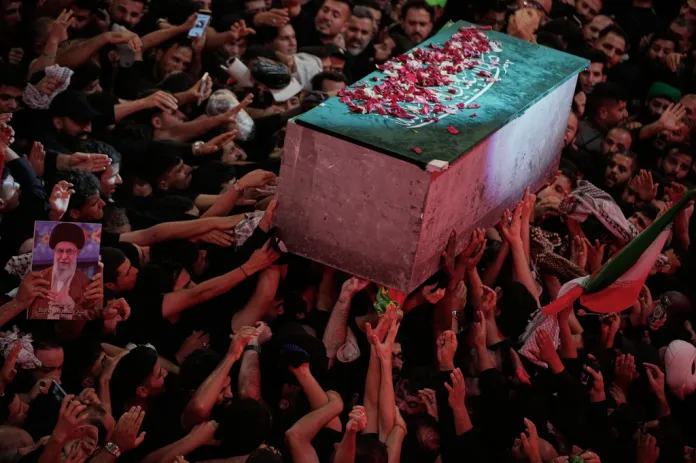
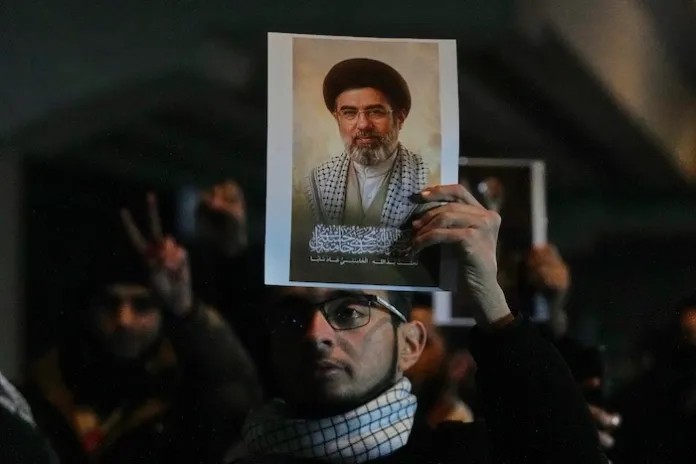
The Assembly of Experts — Iran’s deliberative body responsible for selecting the nation’s supreme leader — announced this week that the assassinated Ayatollah Ali Khamenei will be succeeded by his son, 56-year-old Mojtaba Khamenei.
While not a shock to international observers, the decision to select the late ayatollah’s son to replace him is a distinct break from the principles of the Islamic Republic — a violent uprising that succeeded in toppling the system of hereditary monarchy under the shah.
“They are violating a basic rule in their system, where the hereditary order is not an Islamic Republic order,” Zineb Riboua, research fellow at the Hudson Institute’s Center for Peace and Security in the Middle East, told the Washington Examiner.
When the Islamic Republic of Iran was established by Ayatollah Ruhollah Khomeini in 1979, the country embraced the rogue holy man’s philosophy of Velayat-e Faqih, or the “Guardianship of the Jurists.” In this system, Islamic legal scholars hold the highest authority in both religious and social affairs.
Under the Islamic Revolutionaries’ own ideology, it is supposed to be the most competent and well-formed Islamic scholar who leads in a firm, explicit rejection of the hereditary monarchy of the toppled Mohammad Reza Pahlavi.
Maryam Rajavi, president of the Paris-based National Council of Resistance of Iran, issued a scathing rebuke of the decision, highlighting the irony of Khamenei’s father-to-son transfer of power.
“Tonight, the absolute clerical rule has effectively turned itself into a hereditary monarchy by placing Mojtaba Khamenei on the throne,” Rajavi wrote. “But it cannot save the shipwrecked vessel of religious fascism.”
The National Council of Resistance of Iran — born out of the militant, Islamo-Marxist People’s Mojahedin Organization of Iran — is one of many Iranian diaspora opposition groups that have sought the overthrow of the ayatollah for decades.
In the statement written by Rajavi, the group denounced Mojtaba Khamenei’s appointment as a recommitment to the Islamic Republic’s most repressive ideological tenets.
“For more than three decades, Mojtaba Khamenei, alongside his father, has been among the principal architects of repression, the export of fundamentalism and terrorism, and the plundering of the Iranian people’s wealth,” she said. “In practice, he has long functioned as his father’s de facto successor.”
Mojtaba Khamenei has indeed enjoyed an influential career in Tehran under the wing of his late father, though he largely stayed away from formal offices and maneuvered in the background.
“Mojtaba has long been an important figure in the Supreme Leader’s Office, with some observers alleging that he often influenced and even controlled access to his father. He seemed to operate largely in the shadows even when seeking to shape momentous decisions,” according to the Washington Institute for Near East Policy.
The institute further asserts: “As part of his long record as a behind-the-scenes power broker in the Office of the Supreme Leader, Mojtaba has cultivated influence across Iran’s security, intelligence, military, and religious institutions, including deep ties with [Islamic Revolutionary Guard Corps] networks.”
For all the prestige and power that supreme leadership offers, it comes with one significant downside amid “Operation Epic Fury” — the ayatollah’s life is forfeit.
President Donald Trump has been explicitly opposed to Mojtaba Khamenei filling his father’s shoes, telling Time magazine last week that he is “not going through this to end up with another Khamenei.”
Following the announcement of Mojtaba Khamenei’s ascension, Trump was even more blunt.
“I think they made a big mistake,” Trump told NBC on Monday. “I don’t know if it’s going to last. I think they made a mistake.”
The Israeli military has also left no ambiguity about its intentions, warning Iranian leaders: “We want to tell you that the hand of the State of Israel will continue to pursue every successor [to the supreme leader] and every person who seeks to appoint a successor.”
Members of the Assembly of Experts have been forced to meet digitally after the Israeli military bombed their offices in Tehran and Qom last week.
" Conservative News Daily does not always share or support the views and opinions expressed here; they are just those of the writer."
*As an Amazon Associate I earn from qualifying purchases