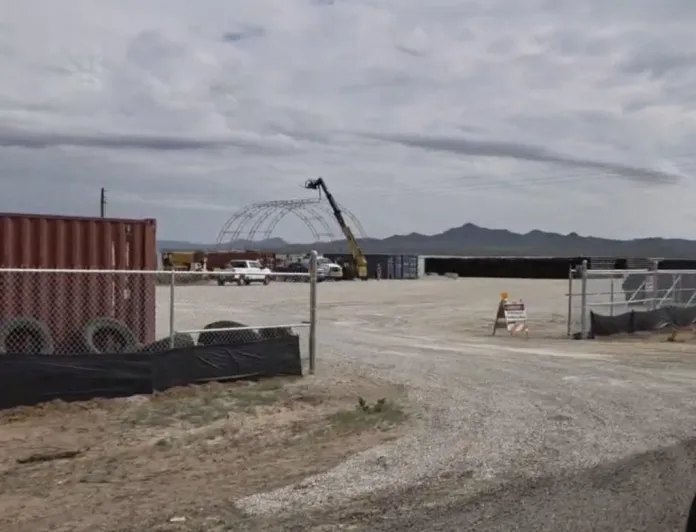
Use Of National Defense Resources To Protect The Border Is Legal
The article explains that recent legal actions allowing the military to enforce border trespassing laws beyond property lines are rooted in longstanding statutes and historical land designations. Specifically, a legal opinion from the Justice Department clarified that U.S. troops can apprehend individuals trespassing just outside protected federal areas without violating the Posse comitatus Act, as this law restricts civilian policing, not perimeter security. The background traces back to 1907, when President theodore Roosevelt established border strips to combat smuggling. Recently,portions of these areas have been designated as national Defence Areas,enabling military support along the border with over 20,000 troops involved,primarily for logistical and surveillance tasks.
Legal mechanics involve statutes making unauthorized entry onto military or defense property a misdemeanor, regardless of motive, with additional immigration charges if applicable. Critics often claim this broadens military authority improperly; however, experts and courts have upheld these measures as property defense rather than police action, emphasizing that military personnel are protecting installations, not enforcing civilian law.
Significant impacts include a dramatic drop in border crossings, suggesting that the military’s targeted approach is effectively deterring illegal activity. Civil libertarian concerns about the zones’ size and signage are acknowledged, with recent court actions dismissing charges due to insufficient warning or knowledge of restricted zones-highlighting the importance of better signage and operational adjustments.
the policy leverages existing laws and historical land reservations, not constitutional amendments or new legislation, reflecting a governmental effort to secure the border with the tools already available. While vigilance against mission creep is necessary,current operations are legally grounded and focused on safeguarding national borders rather than conducting general policing. This approach demonstrates a return to fundamental sovereignty principles,with authorities establishing clear boundaries and legal legitimacy.
On Friday, the Justice Department’s Office of Legal Counsel told the Pentagon it can chase illegal border crossers a few extra steps past a property line before losing the authority to grab them. That is the entire controversy in a sentence, and if you read the coverage this week, you’d think the Army was about to start running immigration checkpoints in Topeka. Deputy Assistant Attorney General William Hyde wrote that troops arresting trespassers just outside a National Defense Area does not violate the Posse Comitatus Act, given the “military purpose of a commander’s traditional protective power” over federal installations. I graduated from Marine Corps Officer Candidates School, and no officer I served with needed a law review article to explain that a commander secures his own perimeter. That’s basic doctrine, not a novel legal theory.
Here is the background the wire stories skip. On May 27, 1907, President Theodore Roosevelt reserved a 60-foot strip of land running along the Mexican border in California, Arizona, and New Mexico. He did it to stop opium smugglers and customs cheats, and to give federal officers a patrol corridor Congress hadn’t gotten around to funding properly. That strip is called the Roosevelt Reservation, and it has sat there quietly for over a century. Last year the Trump administration transferred segments of it, plus adjoining federal tracts, to Defense Department control and started calling the results National Defense Areas. There are now six of them across Arizona, California, New Mexico, and Texas, and Friday’s opinion lets the military designate more. The Pentagon has rotated in more than 20,000 troops to support the border mission since the effort began, a number that sounds like an occupation until you remember it’s spread across roughly a third of a 2,000-mile line and includes engineers, logistics staff, and surveillance crews, not just riflemen standing at checkpoints.
Simple Legal Mechanics
The legal mechanics are simpler than the outrage suggests. Two federal statutes do the work: 18 U.S.C. § 1382 makes it a crime to enter a military installation for an unlawful purpose, and 50 U.S.C. § 797 punishes willfully violating a Defense Department security regulation. Both are misdemeanors. Neither statute cares whether the trespasser is a smuggler, a drunk hiker, or an illegal alien. If you’re on Defense Department property without authorization, you’re trespassing, the same way you would be at Camp Pendleton. Add a Title 8 immigration charge if the trespasser also happens to be here unlawfully, and you have the full menu prosecutors have been using since April 2025, when the first charges started landing.
Point one, and the one that gets buried: this is not the military conducting civilian law enforcement. It is a base commander protecting his fence line, which the Posse Comitatus Act has never touched. The Posse Comitatus Act bars troops from acting as a national police force, not from securing the property they have been assigned to guard. Nobody accused the Marines at Yuma, Arizona, of violating the act when they kept trespassers off the bombing range there before this whole thing started. Reclassifying a border strip as Defense Department land and then applying the same rule that already governed every other military installation in the country is not a constitutional innovation. It is bureaucratic housekeeping with better optics.
Point two is the part that should embarrass the critics rather than the administration. Border Patrol logged roughly 2 million apprehensions in fiscal 2023 and 1.5 million in fiscal 2024. In fiscal 2025 that number fell below 240,000. This year, with two months still on the clock, it’s tracking near 81,000. You can credit the National Defense Areas, the asylum reforms, or the simple fact that word travels fast when the price of a border crossing has gone from a wrist slap to a federal trespassing charge. Whatever the mix, the policy is producing the outcome it was designed to produce, and a lot of the same voices who spent four years demanding “root causes” solutions are now furious that a solution actually arrived.
Precision Not Blunt Military Force
Point three: Civil libertarians at the ACLU and legal scholars at Just Security have raised exactly that concern, noting that some of these zones run for hundreds of square miles and that hikers, ranchers, and hunters near the border could stumble into a federal case without ever seeing a warning sign. That is not a frivolous complaint. In May of last year, a federal magistrate in Las Cruces dismissed trespassing charges against 98 people arrested in the first National Defense Area in New Mexico, and an El Paso magistrate followed with a similar ruling days later, both because the government couldn’t prove the defendants had any way of knowing they had crossed into a restricted zone.
That’s the system working as designed rather than the system failing. A magistrate judge, appointed under Article III’s supervisory umbrella, looked at a due process problem and tossed the charges. That’s the check the Constitution provides, and it functioned exactly as James Madison would have wanted it to. The fix isn’t to abandon the National Defense Area theory. It’s to post better signs in Spanish and English, which the Defense Department is already doing at several sites, and to keep the zones tethered to actual high-traffic corridors rather than letting them balloon for their own sake. A broadsword used carefully, with judicial oversight trimming the edges, starts looking a lot more like a scalpel.
Administration Willing to Act
None of this required a constitutional amendment or a new act of Congress. It required a president willing to use statutes sitting on the books since before most of us were born, applied to federal land the government already owned. Compare that to the prior administration, which watched more than 10 million people enter the country without authorization and called it compassion. Securing 60 feet of federal dirt with the same trespassing law that protects Fort Bliss is not martial law. It is the bare minimum definition of a sovereign nation, and it took a change in leadership to remember we still had the tools.
The critics warning about mission creep aren’t wrong to watch closely. Every expansion of government authority, military or civilian, deserves that scrutiny, and I’d rather see conservatives keep asking hard questions than wave through anything with the word “security” attached to it. But watching closely and shutting it down are different exercises. The National Defense Areas are producing lower crossing numbers, running through a court system still willing to check the government’s work, and resting on legal authority that predates the controversy by more than a century. That’s a policy doing exactly what it says on the label. The border was never supposed to be a courtesy. It’s a line, and for the first time in a long time, somebody is actually standing on it, 60 feet of Roosevelt’s old dirt at a time, with the paperwork to prove he has every right to be there.
Jay Rogers is a financial professional with more than 30 years of experience in private equity, private credit, hedge funds, and wealth management. He has a B.S. from Northeastern University and has completed postgraduate studies at UCLA, the University of Pennsylvania, and Harvard. He writes about issues in finance, constitutional law, national security, human nature, and public policy.
" Conservative News Daily does not always share or support the views and opinions expressed here; they are just those of the writer."
*As an Amazon Associate I earn from qualifying purchases