Ukraine faces loss of half its heavy ammunition supply
Ukraine may face reduced access to large-caliber ammunition after several countries involved in a Czech-led supply effort stopped contributing. Czech President Petr Pavel said that nine of the 18 participating nations have withdrawn, and he warned that the ammunition cannot be easily replaced.While Pavel didn’t name specific countries, a Western official indicated that Germany and some Nordic countries were still funding.
One driver of the pullout was a political change in the czech Republic: Andrej Babis became premier in December 2025 and signaled a shift away from prioritizing Ukraine aid toward domestic relief amid the energy crisis. The program, which began in early 2024 as U.S. willingness to provide ammunition declined, delivered about 1.5 million artillery rounds in 2024 and 1.8 million in 2025, with 500,000 already supplied in 2026 so far. The Czech Ministry of Defense told Reuters that roughly 1 million additional large-caliber rounds are still expected by year’s end through contracted deliveries under existing mechanisms, though the longer-term impact of reduced coalition funding is unclear.
The article also notes that Russia has maintained a much larger artillery advantage due to extensive Soviet-era ammunition stockpiles and increased defense production, including assistance from North Korea. Europe has worked to raise output, with major contributions coming from companies in Germany and the Czech Republic. It adds that Ukraine faces extra strain because it uses many different artillery and munition types, citing an interoperability problem involving 17 types of 155-millimeter howitzers. The overall demand for artillery and explosives has contributed to a global TNT shortage.
Ukraine could face an ammunition shortfall after half the member nations of a Czech-led ammunition supply effort stopped contributing.
In an interview published Tuesday, the hawkish Czech President Petr Pavel revealed to the Financial Times that nine of the 18 member nations of the effort had stopped contributing, jeopardizing the supply of large-caliber ammunition to Ukraine.
Recommended Stories
“It cannot be replaced easily by anything else,” Pavel said.
Pavel would not say which countries withdrew and which were staying, but a Western military official told the outlet that Germany and some Nordic countries were still contributing.
The main reason for the pullout was the accession of Andrej Babis to the Czech Republic’s premiership in December 2025. Babis sang a very different tune on Ukraine, pledging to stop prioritizing aid to Ukraine and instead divert funds to relieve pressure on Czech citizens hurt by the global energy crisis.
The Western military official told the Financial Times that “some countries now feel that it is strange to pay for something that is not even properly supported by the ruling politicians of the lead country.”
The program began in early 2024, buoyed by increasing U.S. hesitance to supply ammunition to Ukraine and increasing Russian gains on the battlefield. Russia has held a massive firepower advantage throughout the entire war, thanks in large part to its deep Soviet-era stocks of heavy artillery ammunition.
Through the Czech-led program, officials said Ukraine had been supplied with 1.5 million artillery rounds in 2024, 1.8 million in 2025, and 500,000 so far this year — a pace close to that of last year. It’s unclear how soon the withdrawal of funds from the coalition will be felt, but the Czech Ministry of Defense told Reuters on Tuesday that an estimated 1 million more large-caliber rounds will be supplied through the end of the year.
“At the moment, supply of approximately 1 million large-caliber ammunition pieces is predicted through all valid mechanisms with the ammunition initiative at the helm. … This concerns ammunition that has already been contracted and will be supplied by the end of this year,” the Czech ministry said.
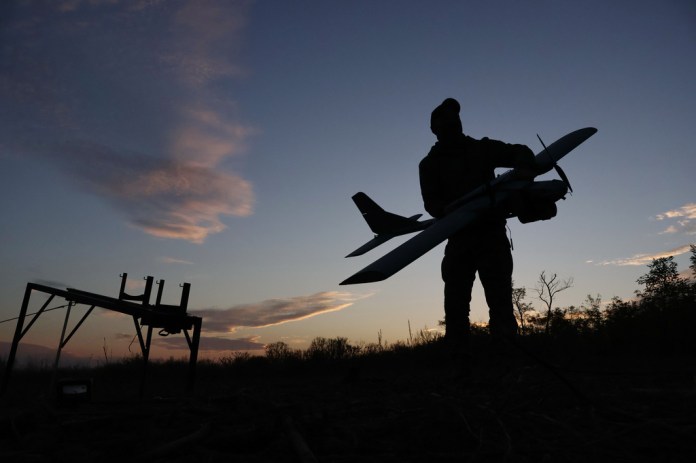
Together, Russia and Ukraine are estimated to have fired tens of millions of artillery shells throughout the nearly four-year war. Russia has fired several times more shells than Ukraine — a frequently cited CNN report from March 2024 said that Russia fired around 10,000 shells a day compared to just 2,000 a day from Ukraine. A Forbes report from February 2025 claimed that Ukraine had boosted this to roughly 5,000 155-millimeter shells daily, while a November 2024 Royal United Services Institute report found that Russia’s average ranged from 10,000 to 36,000 rounds per day.
Russia’s investment in its defense industry since the war’s beginning and North Korea’s help have allowed it to outpace Ukraine and all of its allies combined in terms of shell production. Europe has tried to boost its own production in response, with military industrial companies in Germany and the Czech Republic supplying much of Ukraine’s total.
WAR IN UKRAINE CAUSING GLOBAL TNT SHORTAGE
Ukraine’s artillery is at a further disadvantage due to the variety of munitions and artillery it uses. The U.S. Military Academy’s Modern War Institute reported that Ukraine operates 17 different types of 155-millimeter howitzers manufactured by both NATO and non-NATO nations.
The hunger for artillery and explosives has been so great that it has triggered a global TNT shortage.
" Conservative News Daily does not always share or support the views and opinions expressed here; they are just those of the writer."
*As an Amazon Associate I earn from qualifying purchases