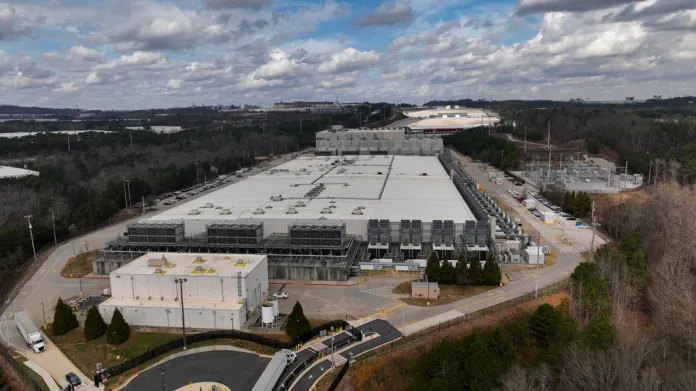
Top Democrat proposes excise tax on data centers
Senator Ron Wyden (D-OR), the leading Democrat on the Senate’s tax-writing committee, has proposed a new tax on data centers, signaling increasing political opposition to the expansion of these facilities, which are essential for advancing artificial intelligence. Wyden announced this plan through a five-page white paper, seeking public feedback, and although specific tax rates are not detailed, the proposal outlines the framework for legislation. The white paper emphasizes the significant growth of the data center industry, with investments around $700 billion-exceeding Argentina’s entire GDP-and highlights public concerns about land use, environmental impact, and local disruptions. Wyden’s proposals aim to address these issues by removing current tax incentives for data centers and introducing a new excise tax based on gross receipts,targeting operators at a low rate with mechanisms to prevent avoidance. The tax would primarily apply to assets constructed after 2024, with some exemptions for pre-2024 assets, especially for smaller data centers. Wyden asserts that these measures won’t hinder the United States’ leadership in AI technology but will help fund impacted communities and workers affected by industry growth. The plan also extends to space-based data centers proposed by Elon Musk and Jeff Bezos. this initiative reflects a cautious approach to managing the rapid proliferation of data centers amidst growing environmental and social concerns.
Sen. Ron Wyden (D-OR), the top Democrat on the Senate’s tax-writing panel, is proposing a tax on new data centers, the latest sign of rising political headwinds to the massive build-out of the facilities, which are crucial to the advancement of artificial intelligence.
Wyden, the ranking member of the Senate Finance Committee, announced the pitch on Thursday as a five-page white paper and is asking the public for feedback on the proposal. The plan doesn’t include specific details of how much the data centers would be taxed, but provides contours and lays the groundwork for a legislative push.
Recommended Stories
ABBOT’S DATA CENTER MORATORIUM STIRS MIXED REACTIONS IN TEXAS
Data center construction has exploded as AI proliferates, and investment has poured in. But members of the public have increasingly aired out fears about land usage, questions about how data centers affect electricity bills, and worries about their environmental impact.
“American communities are rightfully questioning whether the rapid buildout of data centers across the nation will benefit them, as local disruptions rise and Americans grow concerned about the long-term career prospects of millions of workers,” Wyden said. “These proposals are a first step towards safeguarding taxpayer dollars and ensuring there are resources to support American workers displaced by the coming disruptions to the economy.”
The white paper highlights two possible revenue streams from the data center buildout.
The first is removing existing investment incentives in the tax code that can be applied to data centers, and the second is the creation of a “data center public investment excise tax” that would apply to new data centers.
The Wyden white paper emphasizes that hyperscaler spending on data centers is expected to be roughly $700 billion, “with no end in sight.” For reference, that is more than Argentina’s entire GDP.
The white paper also stresses the concerns about data centers that many voters have.
“Houses go unbuilt as data center developers scoop up land near major markets,” the paper reads. “Redevelopment and new manufacturing projects stall as data centers monopolize investment dollars and the time of skilled labor. Data centers are rapidly popping up in already water-stressed regions that will struggle with the new demand and disrupting local communities with persistent noise pollution.”
In the first part of the proposal, Wyden wants to remove existing tax incentives for constructing data centers, for instance, making it so that assets purchased for data centers are not immediately eligible for write-off. Many capital expenditures can be immediately deducted from taxable income under the One Big Beautiful Bill Act.
The other half of Wyden’s proposal would be the excise tax, which the paper indicates would generate revenue designed to “support workers and communities nationwide.”
The tax would be a gross receipts tax on data center operators, which the white paper says would be at a low single-digit rate “and include mechanisms to properly target the tax and prevent avoidance.”
The white paper notes that the data center boom began in earnest by the end of 2023, so assets from before the start of 2024 will be less affected by the new tax.
“For all but the largest actors, the share of assets in a data center that represent pre-2024 assets (using unadjusted basis) will be exempted from the tax,” the paper reads. “For example, if a data center included $1 million of assets placed in service in 2023, and $4 million of assets placed in service in 2025, then the tax would be reduced by 20 percent.”
Wyden’s white paper contends that the new tax burden will not stop data center development or put at risk the United States’s being the global leader in AI and related technologies.
AS DATA CENTERS SPROUT ACROSS THE US, GUBERNATORIAL HOPEFULS LOOK TO EASE VOTER FEARS
“Rather, they will ensure we have the resources to help the communities and workers most impacted as data center construction continues,” it reads.
The document also specifies that the tax would apply to any data centers located in space. SpaceX CEO Elon Musk and Amazon CEO Jeff Bezos have proposed orbital data centers.
" Conservative News Daily does not always share or support the views and opinions expressed here; they are just those of the writer."
*As an Amazon Associate I earn from qualifying purchases