John Thune tees up doomed votes on data centers and stock trading
Ahead of the November elections, the Senate is set too pass votes on two key bills-the Ratepayer Protection Act and a bill restricting stock trades by members of Congress-aimed at demonstrating Republican messaging on issues like affordability and corruption. However, both bills are expected to fail to become law due to the Senate’s 60-vote filibuster, with Democrats planning to oppose them. The House recently passed these bills,but Senate Democrats view them as flawed – the energy bill as merely symbolic and the stock trading bill as incomplete,especially due to a voter ID requirement. The debate highlights ongoing partisan clashes as the parties contend over issues that resonate with voters, especially amid a tense political season ahead of upcoming midterms. Additionally, bipartisan negotiations on permitting reforms and cryptocurrency legislation have stalled, reflecting broader political gridlock. Some bills, like the insulin price cap, remain unconsidered, while the GOP is leveraging certain measures, such as the data center and stock trading bills, to bolster campaign efforts. the conflicts underscore the struggle to pass meaningful legislation before the elections, with a focus on portraying tough on issues like corruption and energy costs.
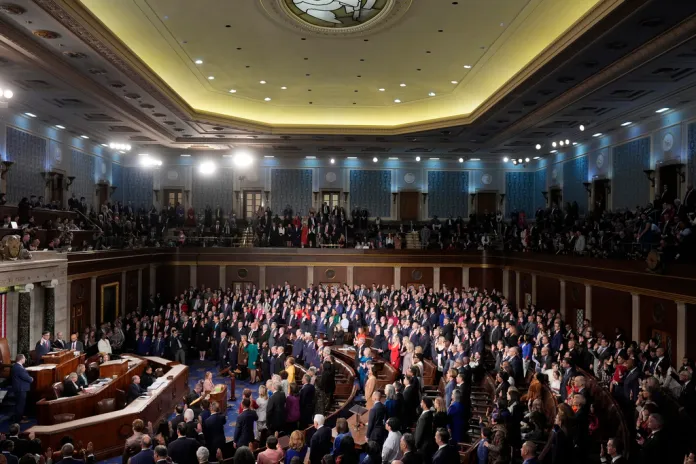
The Senate’s final votes before the November elections will give Republicans a message they can take on the campaign trail, but don’t expect either of the bills up for consideration to become law.
Both the Ratepayer Protection Act and a second bill restricting stock trading by members of Congress are slated to fall victim to the 60-vote filibuster on Wednesday, when senators hope to leave Washington and spend the next five weeks at campaign events and fundraisers.
Stay informed.Stay ahead.
Join Washington Examiner for unlimited access to the news, analysis, and commentary that matter most.
Already a member? Log in
The bills passed through the House, one of them almost unanimously, but Senate Democrats plan to line up against them and deny Republicans a win on two issues that have come to dominate the midterm elections: affordability and corruption.
In the case of the Ratepayer Protection Act, Republicans were searching for an answer to Democratic attacks on data centers and the higher energy prices consumers fear will come from their construction.
The bill’s guardrails are voluntary, the chief critique of Senate Democrats, but are aimed at blocking those energy spikes.
The Stop Insider Trading Act, meanwhile, bans lawmakers and their spouses from buying stocks. It is being brought to the floor at a time when a record number of voters say government corruption is “widespread” — and that they trust Democrats more to address the issue.
Notably, the bill allows members to keep their current portfolio and leaves officials in the executive branch untouched. It also includes language on voter ID borrowed from the SAVE America Act. The bill only received the support of 13 House Democrats when it passed the chamber earlier this year.
“Both pieces of legislation strike at the very heart of issues that the American people care deeply about, passionately about, and we’ll see if the Democrats are willing to take ‘yes’ for an answer,” Senate Majority Leader John Thune (R-SD) said on Tuesday.
Senate Minority Leader Chuck Schumer (D-NY), in turn, called the data center legislation a “toothless messaging bill” and said the stock trading measure was “built to fail” due to its voter ID provision.
“The bill is just another desperate Republican attempt to pretend they’re fighting corruption when what they really want is to score political points,” he said.
Schumer is expected to be joined by the overwhelming majority of Democrats in voting to oppose the legislation, which will be considered alongside a vote on President Donald Trump’s nominee for labor secretary.
The rhetorical sniping comes as both men wait to see which party wins control of the Senate in November and whether they will lead their conferences in the majority or not. Republicans can lose no more than three seats this cycle and are defending more than half a dozen in battleground states.
It’s also a sour note after weeks of guarded optimism that both parties could set aside election-year politics and reach a deal on permitting reform and cryptocurrency legislation.
Permitting legislation, in particular, was viewed as a way to address the cost of living, given its focus on streamlining energy projects. Negotiations on both fell apart earlier this month but could still be revived in the lame duck session.
There have been moments of bipartisan success in recent weeks. The Senate just finished passing a bill regulating college sports and honored the late Sen. Lindsey Graham with a new Russia sanctions package last month.
But the collapse of other priorities has left rank-and-file Republicans clamoring for votes they can cut into campaign ads and use to rebut Democratic attacks.
A vote on the Ratepayer Protection Act is particularly helpful for Sen. Jon Husted (R-OH), a vulnerable incumbent who has been pummeled over the issue relentlessly by his Democratic opponent, former Sen. Sherrod Brown.
On Tuesday, Husted called his legislation the only data center bill that can become law and noted it passed the House 417-3.
“I’m not looking for a win for me,” he said of Democratic skepticism in the Senate. “I’m looking for a win for the American people. They have a chance to give that to them. It’s just a question of whether or not they’re going to choose to do so.”
The stock trading bill similarly helps Sen. Pete Ricketts (R-NE), who is running for his first full term in Nebraska, a red state where independent Dan Osborn is mounting a competitive challenge for the second cycle in a row.
Ricketts is the cosponsor of the Senate version of the bill that passed the House in July.
THE GOP’S KEN PAXTON RESCUE MISSION TOPS $100 MILLION IN TEXAS
Left off the Senate calendar is a bill from Sen. Susan Collins (R-ME) that would cap the price of insulin at $35 for certain consumers. Thune told reporters Monday that he’s heard repeatedly from her on the legislation, but that he wasn’t sure “what the traffic will bear for the duration of the week.”
At the executive level, Trump is contemplating his own actions to address affordability, including a ban on diesel exports, which has prompted fierce pushback from the oil and gas industry. The rise in prices, driven by the wars in Iran and Ukraine, has led to GOP fears that farm country is suddenly in play for the midterm elections.
" Conservative News Daily does not always share or support the views and opinions expressed here; they are just those of the writer."
*As an Amazon Associate I earn from qualifying purchases