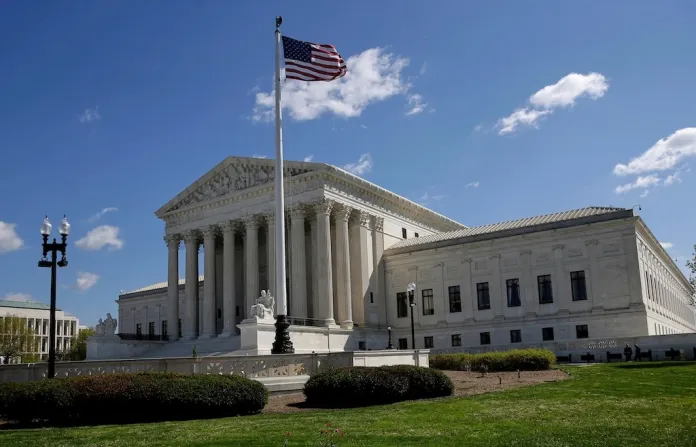
Supreme Court Rules in Favor of Arrested Christian Street Preacher
A Mississippi street preacher, Gabriel Olivier, challenged a Brandon city ordinance that barred preaching outside a designated protest area near an amphitheater. He had been arrested in 2021 for violating the ordinance, pleaded no contest, paid a $304 fine, and completed probation; he did not appeal his conviction.
The U.S. Supreme Court unanimously ruled that Olivier can move forward with his lawsuit seeking to block future enforcement of the ordinance, clarifying that the Heck v. Humphrey rule (which limits post-conviction challenges) does not bar a constitutional challenge aimed at preventing future violations. The court emphasized that Olivier’s suit is prospective, not an appeal of his past conviction, and therefore can proceed under 42 U.S.C. §1983 to vindicate the Free Speech Clause of the first Amendment.
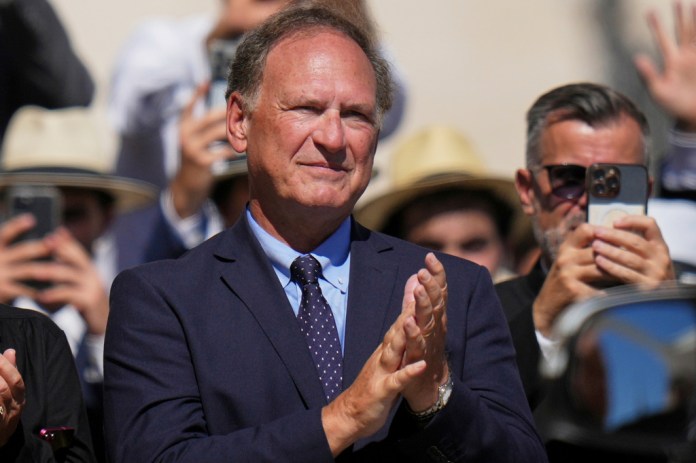
In its opinion, Justice Elena Kagan noted Olivier’s belief that sharing his faith in public is an important part of his exercise of faith, and supporters framed the decision as a win for the right to challenge unconstitutional laws and for religious speech in public settings. The ruling moves the case forward to determine whether the ordinance violates the First Amendment in future applications.
A Mississippi street preacher who sued a community over a law that banned him from preaching near an amphitheater has won his battle to challenge the law.
Gabriel Olivier claimed his arrest under a law passed by Brandon, Mississippi, violated his First Amendment rights, according to the Associated Press.
The city said he had shouted insults, and invoked the law to fine Olivier and slap him with a year of probation. Olivier paid the fine and completed his probation.
The decision allowed Olivier to move forward but does not ensure he will win the suit.
“This is not only a win for the right to your faith in public, but also a win for every American’s right to have their day in court when their First Amendment rights are violated,” Kelly Shackelford, president, CEO, and chief counsel for First Liberty Institute, said in a news release on First Liberty’s website.
“We’re delighted that the Supreme Court unanimously affirmed Gabe’s right to his day in court. It’s just common sense that a citizen who is arrested under an unconstitutional law should be able to challenge that law. As people of faith, we look to the judiciary to protect our constitutional right to spread the gospel,” Allyson Ho, co-chair of First Liberty’s nationwide Appellate and Constitutional Law Practice Group, added.
“No American should be criminally charged for sharing their faith in public,” Nate Kellum, senior counsel at First Liberty, remarked. “This is a wonderful day for Gabe and for the First Amendment.”
Olivier himself said that “my goal from the beginning was to be granted my rights as an American citizen under our great Constitution.”
“Now all people with deeply held Christian religious beliefs who are called to the good news can do so in the public arena.”
As noted by SCOTUSBlog, Olivier was battling an argument from the city that a 1994 ruling, Heck v. Humphrey, should be used to block his lawsuit. The ruling limits challenges convicted criminals can bring against a law under which they were convicted.
But the court ruled that Olivier was not appealing his conviction, which would have been within the purview of Heck v. Humphrey. He was challenging the law so that no one else would be convicted.
“Petitioner Gabriel Olivier is a street preacher in Mississippi who believes that sharing his religious views with fellow citizens is an important part of exercising his faith. His vocation sometimes took him to the sidewalks near an amphitheater in the City of Brandon, where he could find sizable audiences attending events,” the court wrote in its ruling. Justice Elena Kagan wrote the opinion for the unanimous court.
“In 2019, the City adopted an ordinance requiring all individuals or groups engaging in ‘protests’ or ‘demonstrations,’ at around the time events were scheduled, to stay within a ‘designated protest area.’ In 2021, Olivier was arrested for violating that ordinance. He pleaded no contest in municipal court. The court imposed a $304 fine, one year of probation, and 10 days of imprisonment to be served only if he violated the ordinance during his probation. Olivier did not appeal, paid the fine, and served no prison time,” the ruling said.
“Because he still wanted to preach near the amphitheater, Olivier filed suit against the City in federal court under 42 U. S. C. §1983, alleging that the city ordinance violates the Free Speech Clause of the First Amendment by consigning him and other speakers to the amphitheater’s protest area. The complaint seeks, as a remedy, a declaration that the ordinance infringes the First Amendment and an injunction preventing city officials from enforcing the ordinance in the future,” the ruling added.
“Olivier seeks neither the reversal of, nor compensation for his prior conviction,” the ruling said.
“Olivier’s suit seeking purely prospective relief — an injunction stopping officials from enforcing an ordinance in the future — can proceed, notwithstanding Olivier’s prior conviction for violating that ordinance; Heck does not hold otherwise.”
The ruling continued that “there is no looking back in Olivier’s suit; both in the allegations made, and in the relief sought, the suit is entirely future oriented — even if success in it shows that something past should not have occurred.”
Advertise with The Western Journal and reach millions of highly engaged readers, while supporting our work. Advertise Today.
" Conservative News Daily does not always share or support the views and opinions expressed here; they are just those of the writer."
*As an Amazon Associate I earn from qualifying purchases