Poland offering US ‘firsthand experience’ to help transition Cuba from communism
Teh article says the United States and Poland both see an chance to help cuba move away from communism toward democracy and a market economy. Polish Foreign Minister Radosław Sikorski argues that poland is well positioned to advise Cuba as Poland successfully transitioned from a Soviet-backed, centralized system in 1989-though it was difficult for society and not fully satisfactory psychologically.
poland’s government is also portrayed as actively supporting pro-democracy Cuban figures, including work connected to granting Cuban dissident Berta Soler Fernandez the Lech Wałęsa Solidarity Prize. The piece notes that U.S.Secretary of State Marco Rubio attended the award ceremony, which Sikorski cited as evidence of a shared focus on Cuba’s future.
Simultaneously occurring, the article describes rising tensions between Washington and Havana, including claims that Cuba has received large numbers of attack drones from Iran and Russia, and Cuban President Miguel Díaz-Canel’s warning that any U.S. military action coudl lead to a “bloodbath.” Polish defense officials reiterate interest in sharing Poland’s “conversion” experience if Cuba moves toward political change, while also discussing broader regional instability and the impact of U.S. actions and energy price shocks on Cuba’s economy.
Warsaw, Poland — The United States wants nothing more than to transition Cuba away from its decades of failed communist economics, and Poland is reminding the White House that they know a thing or two about the process.
Polish Foreign Minister Radosław Sikorski, speaking with reporters at the ministry building in Warsaw on Tuesday, said his country is perfectly equipped to help transform centralized states into free markets — a task they accomplished themselves just a generation ago.
Recommended Stories
“Poland can leverage its firsthand experience from the 1989 transition and the Solidarity movement to advise Cuba through a peaceful, democratic transition and market reform,” Sikorski told the Washington Examiner.
Sikorski, who is also a deputy prime minister under head of government Donald Tusk, said Poland’s own transition was “successful but uncomfortable for Polish society,” offering a variety of lessons that could be implemented in helping other countries make the same transformation.
Poland was ruled by a Soviet-backed puppet government between the end of World War II and 1989. Unlike many other former Soviet states, Poland abandoned communism with a rapid and tactical transition that shocked the national economy but ultimately paved the way for its ongoing rise in wealth and influence.
Communist politicians mostly faded away with the unpopular policies in the post-Soviet era, instead of being sacked or even killed like in other former bloc states. Almost all of them escaped any sort of punishment for their compliance with the Soviets.
The “negotiated transition” was “bloodless,” but “not entirely satisfactory, psychologically,” Sikorski recalled.
As Poland grows in clout in the European Union and NATO due to their generous defense spending and strategic position on the Western border of war-torn Ukraine, its government has been telegraphing its desire to use its expertise to aid the U.S. efforts to transform Cuba.
The Polish foreign ministry helped select Cuban political dissident Berta Soler Fernandez to receive the nation’s Lech Wałęsa Solidarity Prize last year. Fernandez is the leader of the nation’s Ladies in White, a pro-democracy group founded by the wives and female relatives of jailed activists on the island.
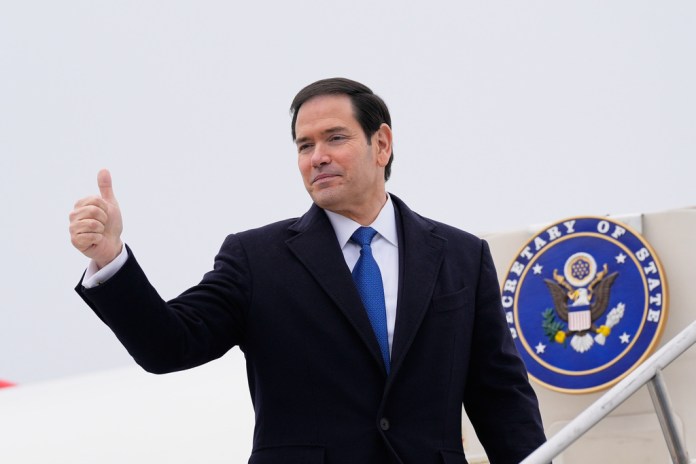
U.S. Secretary of State Marco Rubio appeared at the award ceremony in Coral Gables, Florida, where fellow Lady in White Irma Santos de Mas accepted it on her behalf.
Sikorski boasted that Rubio’s attendance at the ceremony shows a “joint US-Poland focus on Cuba’s future.”
The U.S. secretary of state, a son of Cuban immigrants, has hardly been shy about his contempt for the communist government’s stranglehold over the island.
“Their economic model doesn’t work, and the people in charge can’t fix it, and the reason they can’t fix is not just because they’re communists,” he told reporters at a press meeting in the White House earlier this month. “That’s bad enough, but they’re incompetent communists. The only thing worse than a communist is an incompetent communist.”
The situation has grown most tense since then.
A report emerged over the weekend claiming that the communist regime in Cuba has received over 300 attack drones from Iran and Russia in recent years, raising concerns in Washington about its capacity to attack the U.S. mainland.
President Miguel Diaz-Canel warned on Monday that if the U.S. carries out military action against the island, it could result in a “bloodbath with incalculable consequences.”
Polish Deputy Minister of National Defense Paweł Zalewski affirmed to reporters at a dinner in Warsaw on Monday night that the government is keen on “presenting the Polish experience of transformation from the communist system to democracy and the market economy” in the event that change is possible in Cuba.
“Our foreign affairs minister is very much interested in development in Cuba and is very much supporting the democratization of the state,” he said, adding that Sikorski has already “discussed it with Rubio.”
CUBAN PRESIDENT WARNS OF ‘BLOODBATH’ IF US ATTACKS AS TENSION RISES
Asked whether he expects acting Venezuelan President Delcy Rodríguez to govern like her deposed predecessor, President Nicolas Maduro, Zalewski speculated to reporters that “the best way for her to keep power is to not change the system.”
“Like [former leader of the Soviet Union] Mikhail Gorbachev, right?” he explained. “When you are starting to change the system in a positive direction, the processes you start usually make you leave office. But if the processes are well-designed, the country benefits.”
Venezuela, as a “source of problems and unrest in South America,” was a nation of particular concern for Poland prior to the U.S. operation to extract Maduro.
The capture of Maduro and subsequent termination of sweetheart oil deals — coupled with the worldwide spikes in energy prices caused by the closure of the Strait of Hormuz — has all but crippled the Cuban economy.
" Conservative News Daily does not always share or support the views and opinions expressed here; they are just those of the writer."
*As an Amazon Associate I earn from qualifying purchases