SpaceX Is The Dutch East India Company Of The Space Age
The article discusses Elon musk’s recent status as the world’s first trillionaire and argues that the true significance of SpaceX’s IPO extends beyond Musk himself, highlighting the enduring power of free-market capitalism. It traces past parallels, such as the Dutch East India Company’s pioneering of the joint-stock corporation in 1602, which democratized investment and fostered global trade, and compares Musk’s venture to past innovations like Edison’s electric lighting, Ford’s assembly line, and Netscape’s role in popularizing the internet-each of which expanded access and accelerated technological progress. The piece emphasizes that private enterprise has historically driven down costs and made innovations accessible to society at large,as seen in SpaceX’s reduction of launch costs and Starlink’s satellite internet service. It also notes that market valuations frequently enough reflect future potential rather than current earnings, exemplified by the immense valuation of SpaceX and the internet boom of the 1990s. Ultimately, the article advocates viewing these milestones not as isolated achievements of individual billionaires but as evidence of a resilient system that promotes innovation, economic growth, and societal progress.
The headlines were predictable. Elon Musk, they breathlessly announced, is the world’s first trillionaire.
Cable news will continue debating whether one man should be allowed to accumulate that much wealth. Democrat politicians will demand hearings. The wealth of one man will consume the conversation, and thus the media will miss the actual story.
The SpaceX IPO is not primarily about Musk. It is about a system. It is about four centuries of evidence that free-market capitalism is the greatest engine of individual and societal flourishing ever devised. To understand why the SpaceX IPO belongs in the history books rather than merely the business pages, one must go back to Amsterdam in 1602.
History Repeats Itself
When the Dutch East India Company (VOC) offered shares to the public in 1602, it did something revolutionary: It invited ordinary citizens to co-own a great enterprise, share its risks, and share its rewards. The VOC was one of the first companies to offer its shares for public sale as a joint-stock corporation and, by extension, an early model of the modern IPO. It created the instruments needed to fund ambitions that were too large for any single investor to bear. The result was the opening of global trade routes and the birth of a financial architecture that still underlies much of the world economy.
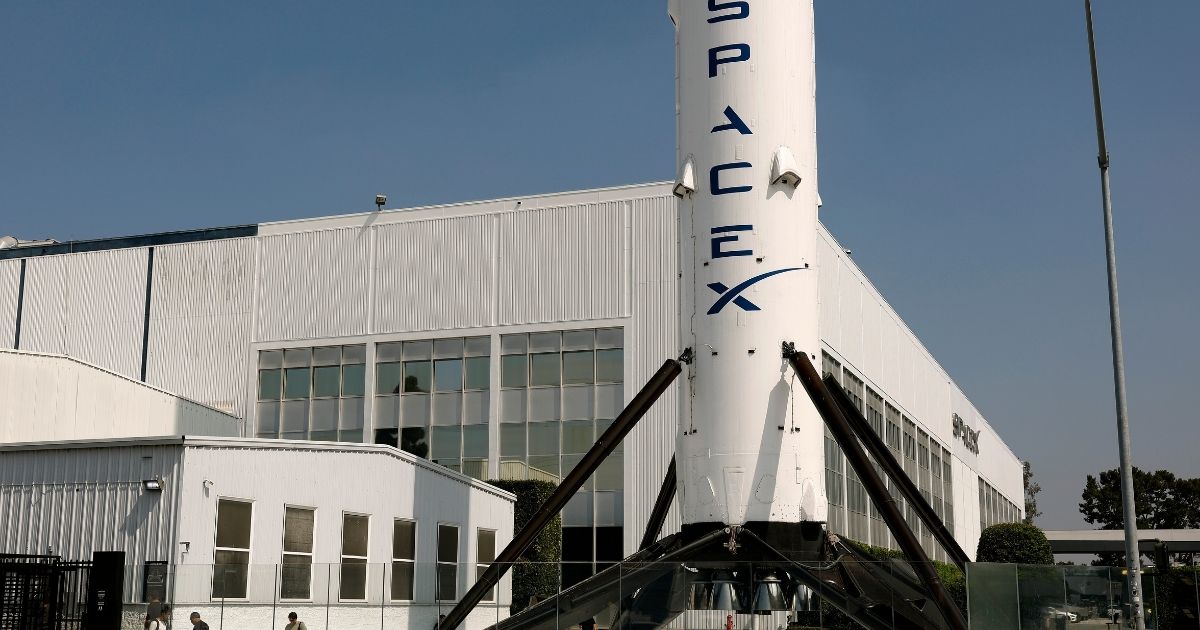
As CNBC reported, SpaceX initially targeted up to 30 percent of its IPO shares to retail investors, at least three times the industry norm, deliberately inviting ordinary investors to own a piece of the frontier. Given the heavy interest among institutional investors, the final allocation settled around 20 percent, still well above the norm. Just as the VOC opened the world’s oceans, SpaceX is opening the cosmos.
Likewise, the Industrial Revolution did not begin in a government ministry. It began with James Watt, who redesigned an inefficient steam engine through a private partnership with manufacturer Matthew Boulton and brought a commercially viable engine to market. The barrier to industrialization was never the absence of vision; it was the prohibitive cost of energy. Private enterprise solved it.
SpaceX has done the same for the cost of reaching orbit. According to NASA, the Space Shuttle costs approximately $54,500 per kilogram to deliver a payload to low Earth orbit. Falcon 9, powered by reusable booster technology, has driven that figure down to about $2,720 per kilogram, a roughly 95 percent reduction. Governments spent decades making space access expensive until one private company, operating under the discipline of a profit motive, made it affordable.
More Analogues
On Sept. 4, 1882, Thomas Edison threw a switch in lower Manhattan and in less than one month’s time had lit up 59 customers. What he built was not merely a power plant; it was an infrastructure layer upon which the 20th-century economy would be constructed. Electrification was not a federal mandate but rather the product of competition, investor capital, and entrepreneurial risk.
SpaceX’s Starlink constellation is doing the same thing for the 21st century. According to SpaceX, Starlink generated $11.4 billion in revenue in fiscal 2025, growing about 50 percent year over year, and now serves more than 10 million subscribers in more than 150 countries. For billions who still lack reliable broadband, Starlink is the Pearl Street Station of the digital age.
And note that when J.P. Morgan consolidated Carnegie Steel into United States Steel Corporation in 1901, capitalized at $1.4 billion, the press reacted with “uneasiness over the magnitude of the affair.” It was the first billion-dollar corporation in American history. The initial SpaceX offering carried a valuation of nearly $1.8 trillion. Critics will call it overvalued, but they said the same about U.S. Steel.
What both moments share is the market’s willingness to price the future rather than the present and to recognize that some enterprises are not merely companies but mark economic epochs. Free-market capital makes that distinction; central planners do not.
Or consider Henry Ford’s moving assembly line, which not only sped up automobile production but also democratized it. By 1924, the price of a Ford Model T had dropped to $260, putting car ownership within reach of the workers who built them and helping to create a robust American middle class. Ford’s success reflected the self-reinforcing logic of free-market capitalism: lower costs, expand markets, fund the next innovation.
SpaceX’s reusable rocket is Ford’s assembly line. Every recovered booster drives down the cost of access until what was once the exclusive province of governments becomes available to everyone. That is capitalism’s promise, kept repeatedly across four centuries.
In August 1995, a company that had never turned a profit went public on Nasdaq. Netscape’s shares, priced at $28, closed at $58.25 on their first day. What the market was pricing was not earnings but the internet itself.
The SpaceX IPO is that moment for the space economy. According to SpaceX estimates, its total addressable market is approximately $28.5 trillion. A joint report by the World Economic Forum and McKinsey & Company, however, projects the global space economy will reach only $1.8 trillion over the next decade. But skeptics said the same about the internet in 1995. They were wrong then, and they are wrong now.
Focus on the Real Story
The time from America’s first millionaire (John Jacob Astor) to its first billionaire (John D. Rockefeller) to Elon Musk as the first trillionaire spans some 200 years. At each milestone, critics focused on the man at the top rather than the system that made him possible.
Free markets are not perfect. The question is whether they are better — better at converting ingenuity into flourishing, better at raising living standards across society, and better at making the extraordinary ordinary. The steam engine was born in a private workshop. Pearl Street was a commercial bet. Ford’s assembly line was a cost-cutting decision. Netscape placed the internet at our fingertips. In each case, free markets permitted ambitious people to bet on a better future and sorted the winners from the losers.
The SpaceX IPO is the latest, and most ambitious, iteration of that wager, not because of what it means for one man’s net worth but because of what it means for ours.
Richard D. Kocur is an associate professor and chair of the Department of Management & Marketing at Grove City College.
" Conservative News Daily does not always share or support the views and opinions expressed here; they are just those of the writer."
*As an Amazon Associate I earn from qualifying purchases