Big polling miss in Michigan Democratic Senate primary
A notable polling error occurred in Michigan’s Democratic Senate primary, raising concerns about the reliability of election polls despite the expected candidate winning. Progressive Abdul el Sayed narrowly defeated Rep. Haley Stevens, contrary too polls predicting a decisive victory for her. Polling inaccuracies may have stemmed from various factors, including underestimating younger, lower-propensity voters, overrepresentation of college-educated voters, and potential herding effects among pollsters influenced by campaign money.Experts highlighted that predicting primary outcomes is notably challenging due to late swings and difficulty in identifying likely voters. Even though el Sayed ultimately won,the discrepancy between polls and actual results suggests that polling methods and assumptions may need reevaluation,with implications for future races. Additionally,other socialist candidates underperformed,indicating that Democratic resistance to socialist challengers remains strong.The election results underscore the complexities of polling accuracy and the importance of interpreting survey data cautiously.
There was a big polling miss in Tuesday’s Michigan Democratic Senate primary that raises questions about how much we really know about the midterm elections, even though the expected candidate ultimately won.
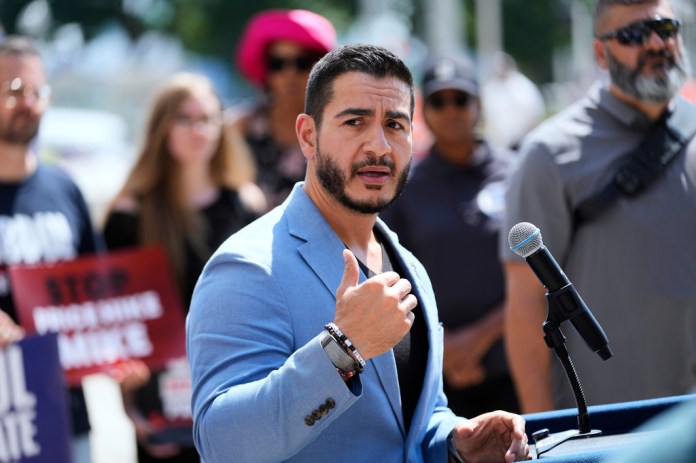
Progressive Abdul el Sayed defeated Rep. Haley Stevens (D-MI) by about 1 point with 95% of the vote reported. But the polls predicted a resounding, double-digit victory for el Sayed, punctuating the socialists’ long march through the Democratic Party. Instead, the Associated Press didn’t call the race until Wednesday morning as Stevens outperformed her poll numbers.
Recommended Stories
El Sayed led in the RealClearPolitics average of polls by 10.2 points heading into Election Day. The last three polls showed the socialist-adjacent candidate leading by 14, 15, and 10 points. One of these was conducted by a pollster who previously had Stevens ahead by the narrowest of margins, prompting el Sayed to tell MS Now, “That poll seems to be funded by AIPAC.”
The poll was not actually funded by the American Israel Public Affairs Committee, though a number of the polls showing el Sayed headed for a landslide were paid for by super PACs aligned with his campaign. So what happened?
“Money matters,” Republican pollster Brent Buchanan said. “Tens of millions were spent for Stevens and against el Sayed.”
“Also, the coalition that supports socialists like el Sayed are younger and lower-propensity to vote,” he added. “They may excitedly answer a survey, but they’re not as easy to get to turnout to the polls.”
Longtime Democratic strategist Brad Bannon offered a similar assessment.
“Predictive primary polling is a tricky business,” he said. “Without party ID as markers, voters are subject to larger late election swings than you see in general elections. There was clearly a significant last-minute swing towards Stevens, perhaps because of the big bucks behind her.”
“Primary polling is extremely challenging when it comes to determining likely voters,” Republican pollster Neil Newhouse said. “The recent polls showing el Sayed in the lead may have increased the likelihood of those voters who were lukewarm against him. But, mainly, el Sayed may have been [opposed] by Republicans and independents deciding to vote in the Democratic primary.”
Republican Senate nominee Mike Rogers, who narrowly lost to Sen. Elissa Slotkin (D-MI) in 2024, did not face a competitive primary.
A third GOP pollster told the Washington Examiner that it “seems like possibly a failure to get the right rural working-class voters.”
Others noted pollsters projecting an electorate that was too young, too white, and too college-educated.
“A lot of the pollsters in Michigan are herdy and/or s***ty,” elections analyst Nate Silver wrote on X. “But it’s a legit hard race to poll. Black voters, especially working-class Black voters, can be hard to reach. Young voters may be underrepresented in traditional surveys, but now we’ve mostly shifted to online panels.”
At one point in July, el Sayed led by just 1.6 points in the RealClearPolitics average. Stevens was seen as having momentum, with a Detroit News-Glengariff poll showing her walloping el Sayed among black voters, long a key anti-socialist constituency, and Gov. Gretchen Whitmer (D-MI) endorsed her.
El Sayed maintained his slim lead in the average thanks to a Data for Progress poll that gave him a 13-point advantage over Stevens. Then a spate of polls with big el Sayed leads followed, giving him an aura of inevitability heading into the election.
This raises the possibility that Democratic pollsters flooded the zone, just as GOP-aligned polls helped make the averages in some competitive 2022 Senate races closer than the final election result. Other pollsters may then have taken these results into account when crunching their own numbers, a practice known as herding, to which Silver alluded.
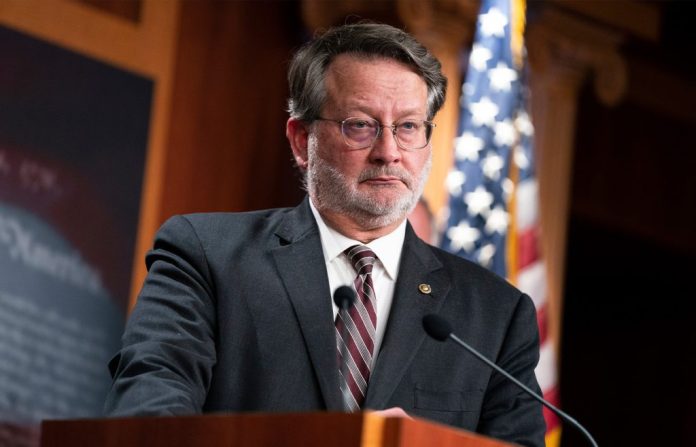
“Campaigns try to get polls that are favorable to them and put them out … get polls of questionable accuracy, but if they look good for you, get them to have media folks pick them up and report them in order to try to create like a bandwagon effect, which is a technique as old as politics itself,” outgoing Sen. Gary Peters (D-MI), who backed Stevens, complained to reporters on Wednesday. “We saw polls that were questionable right from the start for me.”
Why does it matter since el Sayed won anyway? If anything, the perception he was going to win by more hurt him in the expectations game at a time when he should be celebrating his triumph.
But if the polls are oversampling college-educated progressives, that could have implications for other races across the country, much like when President Donald Trump outperformed his poll numbers to varying degrees in the last three presidential elections. And the actual election results expose vulnerabilities in the Democratic coalition that might give Rogers a fighting chance in November. Even though Trump’s approval ratings are low, it figures to be a good year for Democrats overall, and Michigan hasn’t sent a Republican to the Senate since Spencer Abraham won in the historic GOP wave year of 1994.
ABDUL EL SAYED DEFEATS HALEY STEVENS IN MICHIGAN SENATE PRIMARY
Other socialists fell short on Tuesday, suggesting the Democratic establishment still has some fight left. Former Rep. Cori Bush did worse in her rematch against Rep. Wesley Bell (D-MO) than she did two years ago. State Sen. Jeremy Moss beat Aisha Farooqi by double digits in Michigan’s 11th Congressional District. Socialist Donavan McKinney’s defeat of incumbent Rep. Shri Thanedar (D-MI) in the 13th District was much closer than expected.
Socialists won the marquee race of the night, but Democrats hoping to capture the Senate will contemplate why the polls were off for the next few months.
" Conservative News Daily does not always share or support the views and opinions expressed here; they are just those of the writer."
*As an Amazon Associate I earn from qualifying purchases