What to know about Ceuta, the Spanish port thousands of Moroccan migrants are swarming
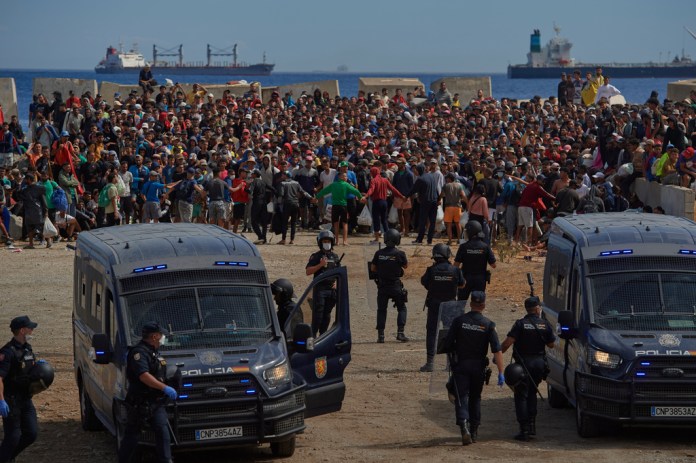
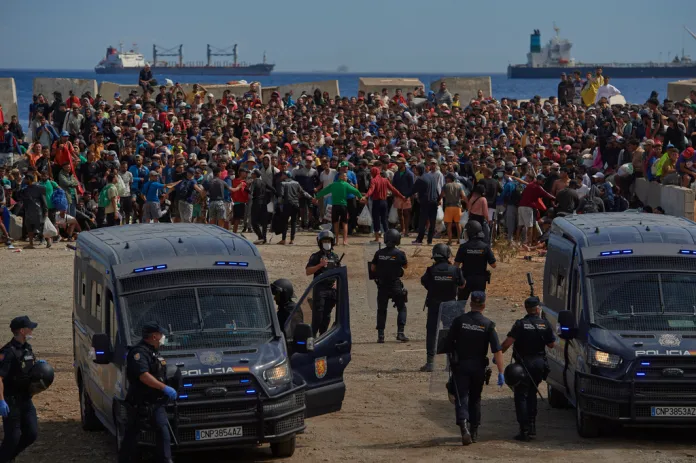
Dozens of people have died following a mass migrant surge from Morocco into teh Spanish enclave of Ceuta, a small territory bordered by Morocco and the European Union. the influx, which began recently and is significantly larger than previous migrations, has overwhelmed local authorities, with estimates of at least 60,000 migrants entering as Thursday and at least 34 deaths reported. Migrants are crossing into Ceuta by land and sea, seeking proximity to mainland Spain and easier access to Europe. Spain’s government has responded by deploying additional police and armed forces and is considering declaring a state of emergency due to the unprecedented scale of the crisis. The situation has drawn international concern, with EU leaders calling for urgent measures to control border crossings and dismantle smuggling networks. Historically,Ceuta has experienced border tensions,but this current surge is among the most severe in recent memory,exacerbated by neighboring countries’ border policies and migration pressures.
Dozens of people have died after mass migrant crossings from Morocco into the Spanish port territory of Ceuta reached a boiling point overnight.
The eyes of the European Union have been fixated on the seven-square-mile city of Ceuta this week as thousands of migrants have poured into the city from Morocco and neighboring African countries. Ceuta, not attached to mainland Spain, is one of just two cities in the European Union to share a land border with Africa — the other being Melilla, Spain, situated a few hundred miles southeast of Ceuta and bordering Morocco — and has a history of tensions over its border with Morocco.
Recommended Stories
Spanish Prime Minister Pedro Sanchez and several Spanish authorities traveled to Ceuta on Friday in an effort to address the migration crisis in the port territory, as multiple EU officials jumped in to comment on the worsening situation. Juan Jesus Vivas, the local leader of Ceuta, estimated that at least 60,000 migrants had illegally rushed into the country from Morocco since Thursday, he said in a Friday press conference.
Vivas has been pushing for Spain to declare a national emergency over the mass migration, calling the situation “absolutely unsustainable.”
As the situation continues to unfold on Friday, here’s what to know about Ceuta and the current migrant crisis facing the city.
When did Ceuta’s current migrant crisis start?
There have been many flare-ups of migration tensions between Morocco and Ceuta since Spain first colonized the territory in the 17th century, as Rabat has historically loosened its border controls surrounding the city on several occasions, putting pressure on Madrid.
This happened recently in 2021, when approximately 10,000 migrants illegally flooded the border into Ceuta over a two-day period. However, this week’s crisis has been substantially more consequential based on initial estimates than the situation in 2021, with the expected number of migrants reaching at least six times that amount.
The current surge appears to have begun on Thursday, with officials saying migrants were accessing Ceuta both by land through the Moroccan border and by swimming ashore after traveling by sea. Vivas estimated that throughout the past month, about 60 bodies have washed up on Ceuta beaches.
At least 34 people have died since Thursday, according to the latest numbers from the Associated Press.
Why Cueta?
Migrants are rushing to Ceuta, likely largely because of its close proximity to mainland Spain, which is just across the Strait of Gibraltar from the city. Moroccan officials have also been known to loosen restrictions on the city’s border in the past, making it likely more attractive to migrants seeking to reach Europe.
Ceuta’s border with Morocco is about 5 miles long, as the city largely juts out into the Alboran Sea.
What has the response been so far?
Sanchez, who hurried to Ceuta on Friday amid calls for an emergency declaration, said his country sent the armed forces and 400 additional police officers to the city on Friday to mitigate the crisis, according to the New York Times. He has not yet declared a national emergency.
“The situation is absolute chaos,” Rachid Sbihi, who is in charge of Spain’s Civil Guard, which polices the Ceuta-Morocco border, said Thursday. He added that the border has “totally collapsed,” in comments to the Associated Press.
“The Government of Spain is fully committed to providing an immediate response to the situation in Ceuta,” Sanchez said on Thursday. “We are mobilizing all necessary resources, working with Moroccan and international authorities, and preparing the necessary measures to restore normalcy as soon as possible.”
Morocco has not released any official statements responding to the crisis yet.
THOUSANDS OF MIGRANTS BULL-RUSH SPANISH BORDER, SPARKING ‘TOTAL HUMANITARIAN AND SOCIAL EMERGENCY’
EU President Ursula von der Leyen is one of several EU leaders to have called for swift action on the crisis.
“The images coming from Ceuta are unacceptable,” von der Leyen said Friday on X. “We cannot allow anyone to come to our Union without abiding by our rules. Dangerous crossings must stop immediately. Smuggling networks must be dismantled. And returns must be swift, as our rules allow.”
" Conservative News Daily does not always share or support the views and opinions expressed here; they are just those of the writer."
*As an Amazon Associate I earn from qualifying purchases