Virginia Supreme Court Denies Dem Request for Redistricting Vote to Be Certified as Case Proceeds
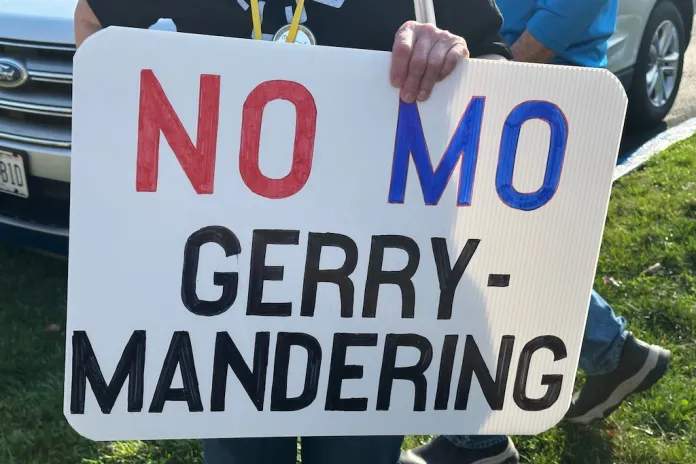
A Virginia redistricting referendum held on April 21 passed with about 51.7% in favor, which opponents argued would shift congressional districts toward Democrats. though, Republicans challenged the referendum’s constitutionality, and on April 22 a Tazewell County judge issued an injunction stating that votes on the amendment were ineffective as the referendum was void “ab initio” (from the beginning), preventing the state Board of Elections from certifying the results.
on Tuesday, the Virginia Supreme Court denied Democrats’ emergency request to pause the injunction. Commentators-citing former Republican Attorney General Ken Cuccinelli and legal analysis-say the court’s action suggests skepticism about upholding the referendum, though it is not yet a decision on the merits. Justice questions during oral arguments reportedly also focused on whether the “yes” vote matters legally, and on alleged procedural and constitutional problems, including concerns about how the amendment was introduced and approved, required timing, and whether the proposed districts meet constitutional standards for contiguity and compactness.
The Virginia Supreme Court offered a potentially good indication that it will find the state redistricting referendum that passed last week unconstitutional.
Virginians voted on April 21, approximately 51.7 percent to 48.3 percent, to allow the redrawing of the state’s congressional districts, taking the current party breakdown from a 6-5 Democrat-Republican split to a potential 10-1 Democratic Party advantage.
However, a legal case brought by Republicans challenging the constitutionality of the process used to put the referendum on the ballot had already been in the court system for months.
Further, on April 22, Wednesday, Tazewell County Circuit Court Judge Jack Hurley issued an injunction, concluding, “Any and all votes for or against the proposed constitutional amendment in the April 21, 2026, special election are ineffective.” The judge wrote that the referendum question was void “ab initio” — Latin for “from the beginning.”
The ruling blocked the state Board of Elections from certifying the referendum results, according to WRIC-TV in Richmond.
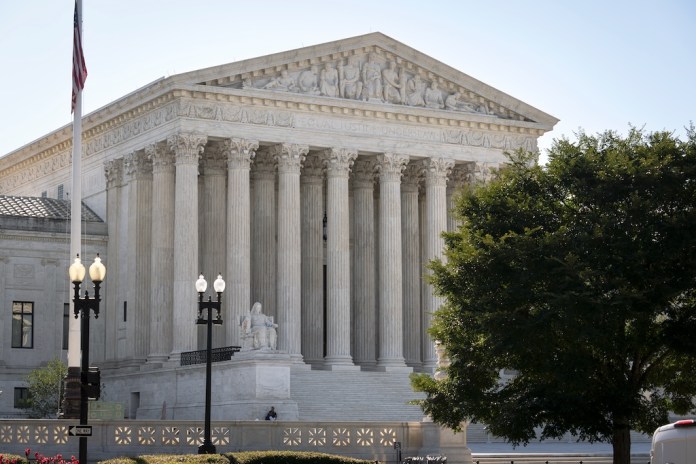
On Tuesday, the Virginia Supreme Court denied an emergency request by Democratic officials to stay the injunction.
Former Republican Attorney General Ken Cuccinelli posted on X in response, “In the ‘tea leaves’ category, this is as positive a ‘tea leaf’ as one might imagine!”
“If #SCOVA thought they would let the referendum stand, then logically they would have lifted the injunction on counting & certifying the votes,” he added. “Caveat: this is still just tea leaves, but it’s a good sign.”
Major Virginia Redistricting Case update:
The Virginia Supreme Court (#SCOVA) has DENIED the emergency request to stay the injunction of certification of last week’s Gerrymandering referendum!
In the ‘tea leaves’ category, this is as positive a ‘tea leaf’ as one might imagine!… pic.twitter.com/fw0wedtbEu
— Ken Cuccinelli II (@KenCuccinelli) April 28, 2026
George Washington University law professor Jonathan Turley reemphasized Cuccinelli’s caveat, but also noted the challenges Democrats are facing.
In a post on the social media platform X, he wrote, “As he notes, that is not a ruling on the merits, as we await the court’s decision. In order to uphold the new map, the Supreme Court will have to reject a myriad of flaws in the language and process behind the gerrymandering.”
Justices did not give a clear indication of how they will vote during oral arguments on Monday. WRIC pointed out that at least some of the seven justices “do not view the ‘yes’ vote as determinative and have technical questions about the redistricting process.”
Fox News reported that Justice Wesley Russell’s first question to Democrat attorneys Matthew Seligman and Richard Hawkins “was whether the vote Tuesday in which the ‘Yes’ camp won even mattered in a legal setting.”
Cuccinelli told Fox the justice “got counsel for the defendants to concede ‘no the vote outcome does not matter.’”
Following last week’s vote, Cuccinelli published a social media post that listed four constitutional issues where the referendum was legally flawed and predicted to CNN’s Jake Tapper that the Virginia Supreme Court would vote 7-0 to strike it down.
The “yes” vote has won Va’s redistricting referendum — but the legal fight is just beginning. Four Va Constitutional challenges are now teed up:
THREE challenges to the amendment process itself:
1️⃣ First passage was invalid. The amendment was taken up during a special session…— Ken Cuccinelli II (@KenCuccinelli) April 22, 2026
In the post, he first noted the referendum seeks to change the congressional districts through a constitutional amendment, but the amendment was taken up during a special legislative session to address the budget last fall, which was not allowed under Virginia law.
“Expanding it to include a constitutional amendment on redistricting required a two-thirds vote that never occurred,” Cuccinelli wrote.
Second, the amendment must be approved by two separate votes of the legislature, with an election between the votes. Early voting in last fall’s election was already underway when the proposed amendment passed the legislature.
Additionally, Cuccinelli wrote that the Virginia Constitution requires “every electoral district shall be composed of contiguous and compact territory,” explaining the “proposed congressional maps violate this contiguity requirement (rather badly).”
The new map would create multiple districts that originate in Democrat-heavy northern Virginia around Washington, D.C., and extend south.
5 districts in Virginia now start in this circle…
Tentacles from DC reaching across the state. pic.twitter.com/Ek4InrNcxl
— Geiger Capital (@Geiger_Capital) April 22, 2026
Finally, the Virginia Constitution requires “the amendment be submitted to voters ‘not sooner than ninety days after final passage by the General Assembly.’ The timeline from the second passage to the April 21 vote did not satisfy this requirement,” Cuccinelli wrote.
Advertise with The Western Journal and reach millions of highly engaged readers, while supporting our work. Advertise Today.
" Conservative News Daily does not always share or support the views and opinions expressed here; they are just those of the writer."
*As an Amazon Associate I earn from qualifying purchases