Vance invites Rubio comparisons with briefing room jokes
JD Vance filled in at the White House press briefing while Karoline Leavitt was on maternity leave, taking a turn in front of reporters as part of a broader comparison to Marco Rubio’s earlier performance. Vance-at one point denying he’s angling to be a future candidate-gave a wide-ranging 50-minute update covering topics such as fraud investigations, compensation for victims of a “weaponized” Justice Department, AI regulation, Iran negotiations, UK politics, Kurdistan, and China-linked electric cars, along with media-focused advice on how reporters should ask questions.
The piece argues that the contrast between Vance and Rubio was stark: Rubio had more seasoned political experience and handled the room’s chaos with easy humor,while Vance came across as more earnest and sometimes less fluid under pressure. There were also repeated, knowingly similar jokes between the two, including comments about using a cheat sheet and, if reporters asked multiple questions, guaranteeing he woudl answer only one.
during Q&A, Vance pushed back against a reporter’s long analysis of Trump’s stock trades by insisting on the nature of “what a question” should be, ultimately reiterating his stance that public-service facts shouldn’t be used for stock trading. The article closes by noting how quickly Trump and major events can overshadow briefing-room appearances-citing Trump’s actions and announcements that undercut Rubio’s earlier coverage and highlighting why Leavitt typically schedules briefings on quieter days.
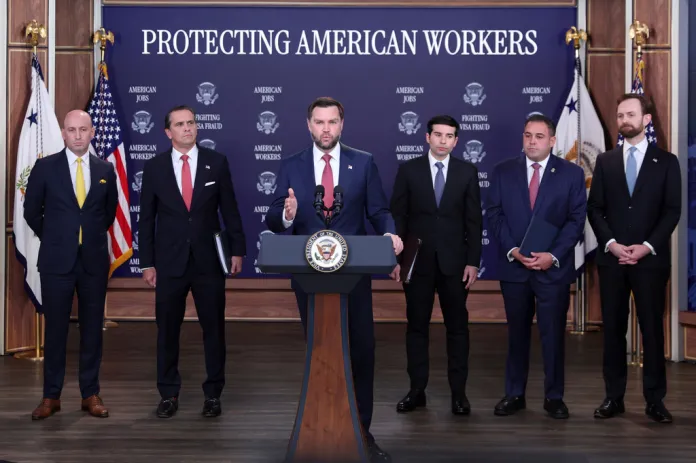
When JD Vance took the podium in the White House briefing room on Tuesday, he wasn’t just standing in for press secretary Karoline Leavitt, who is on maternity leave.
He was the second of two presidential hopefuls to audition in front of the assembled White House press corps.
Recommended Stories
The vice president was ready with his denial when a reporter hinted at the shadow campaign underway.
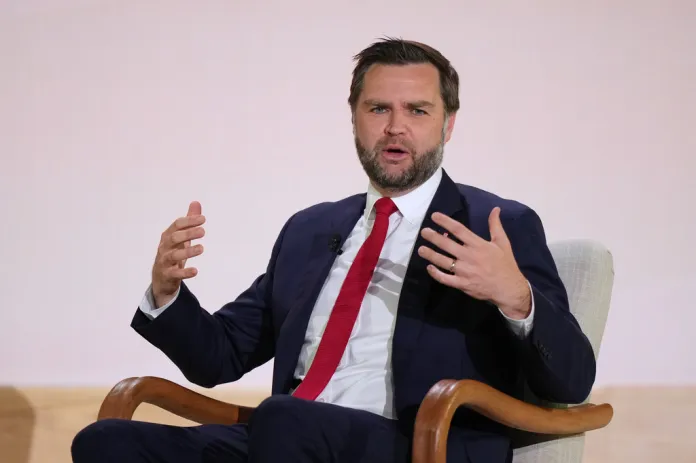
“I’m not a potential future candidate, I’m a vice president, and I really like my job, and I’m going to try to do as good of a job as I can,” Vance said.
No one believed him, which is as close as you can get to a formal qualification for standing at the lectern in the briefing room.
Vance ran through his wide-ranging brief for 50 minutes. He updated reporters on his work chasing fraud, the new fund to compensate victims of a weaponized Justice Department, his thoughts on AI and its regulations, the latest in the Iran talks (such as they are), the United Kingdom’s politics, Kurdistan, electric cars from China and, this being a figure known for a pugilistic approach to the media, a seminar on how reporters should be asking their questions.
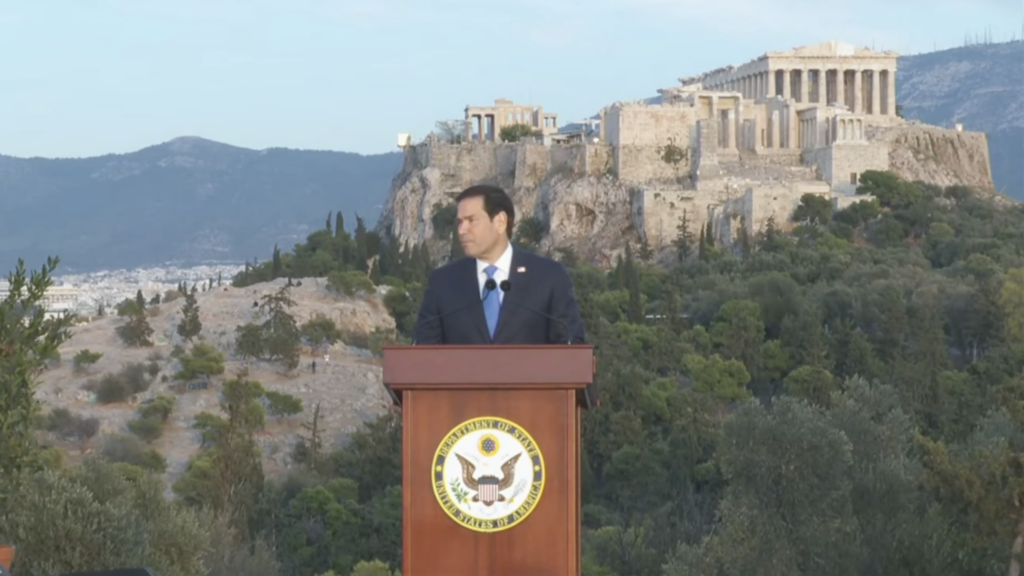
None of that matters as much as the straight comparison. Was he better or worse than Marco Rubio, who stood in the same place two weeks earlier?
It didn’t help that he cracked the same jokes.
As he opened the floor to questions, he mentioned that he had a cheat sheet so he would know which reporters to call on.
“And more importantly, who not to call on,” he said to groans, much as Rubio had done two weeks earlier.
When a reporter announced they planned to ask two questions, Vance stepped in just as his rival did.
“If you ask two questions, I can only guarantee I’ll answer one,” Vance said. “In fact, I’m a politician. Maybe I won’t even answer one.”
The two had obviously compared notes.
“Marco’s right, this really is chaos,” he said as hands shot up in front of him, and dozens of voices implored the vice president to look in their direction.
“You guys have got to behave.”
The contrast was clear. Rubio has an extra decade of political experience. He navigated the chaos with an easy humor, nodding along at the absurdity of the situation.
Journalists stood three deep in the aisles for the secretary of state. The excitement was palpable at the prospect of a cameo from one of Washington’s more likable characters, and reporters responded with their own lighthearted questions.
Vance is a more earnest character. He has not been smoothed by the sandpaper of Washington just yet. There were pockets of space at the back of the room for latecomers to stand, and reporters tried to test him with the sort of incremental questions that even correspondents of inside baseball would balk at.
Vance responded with a novel technique for the briefing room. He actually tried to answer the questions.
When the Independent’s Andrew Feinberg launched into a lengthy analysis of Trump’s stock market trades vis-a-vis his championing of certain businesses, the administration’s position on members of Congress owning shares, with reference to what Vance had said during his campaign in 2022, the vice president wasn’t the only one irritated.
“What’s your question,” one of the other journalists shouted.
Vance hurried him along, too.
“This is a hell of a question,” he said, before launching into his own theory of journalism.
“I want to just observe there are different ways to ask a question,” he began. “You could just ask a question, try to get your answer, or you could do like a speech where you say, you know, Mr. Vice President, you’re a terrible human being, so is the president, so is the entire Cabinet, and … then your question is: How dare you?”
Several journalists had to freeze their faces in thoughtful poses lest a snigger escaped their lips.
His eventual answer, that no one should be using proprietary information gained from public service to buy and sell stocks, was a restatement of his existing position.
He was gone not long after.
It took the president less than two hours to walk all over Rubio’s appearance in the briefing room, announcing a halt to Project Freedom in the Strait of Hormuz almost as soon as his secretary of state had announced it.
Vance was stepped on before he even reached the podium. Trump invited the media up to the White House roof to see work on the ballroom and then announced his endorsement in the closely watched Republican Senate race an hour before Vance started speaking.
It was a reminder that Trump is the headline-maker-in-chief.
And a reminder of why Leavitt schedules her briefings for days when the president has no public events.
You are reading a bonus edition of Washington Secrets, a guide to power and politics in D.C. and beyond. It is written by Rob Crilly, who you can reach at [email protected] with your comments, story tips, and suggestions. If a friend sent you this and you’d like to sign up, click here.
" Conservative News Daily does not always share or support the views and opinions expressed here; they are just those of the writer."
*As an Amazon Associate I earn from qualifying purchases