The Wealth Gap Is Real, And Washington Created It
Gabriel R. Llanes, a veteran of Republican politics, reflects on his grandparents’ history of fleeing conflicts in Spain and Cuba, warning that when the middle class declines, false solutions surface. He argues that economic inequality in America is worsening, citing data that shows the top 1% controlling nearly 32% of wealth, surpassing the middle class combined, while the lower half owns just 2.5%. Llanes criticizes government policies such as excessive borrowing, quantitative easing, and inflationary money printing, which have disproportionately enriched asset owners and widened the wealth gap-a process he attributes to government actions rather than free markets. He highlights college costs and student debt as another outcome of government intervention, and warns that such economic mismanagement poses threats to national security, similar to historical precedents. To address these issues, he advocates for a renewed “contract with America” focused on balancing the federal budget, reducing dependence on inflationary policies, deregulating housing, and making colleges share the financial risks of unproductive loans. Emphasizing that past generations successfully managed similar challenges through fiscal discipline, Llanes urges Americans to embrace sound money, limited government, and obligation, believing these principles can restore America’s middle-class prosperity.
My grandparents fled two collapses. They escaped Spain as civil war tore it apart, rebuilt their lives in Cuba, and then watched Fidel Castro confiscate everything they had rebuilt. When they finally reached America, they carried little besides a warning I have never forgotten: When the middle class dies, the men selling simple answers arrive.
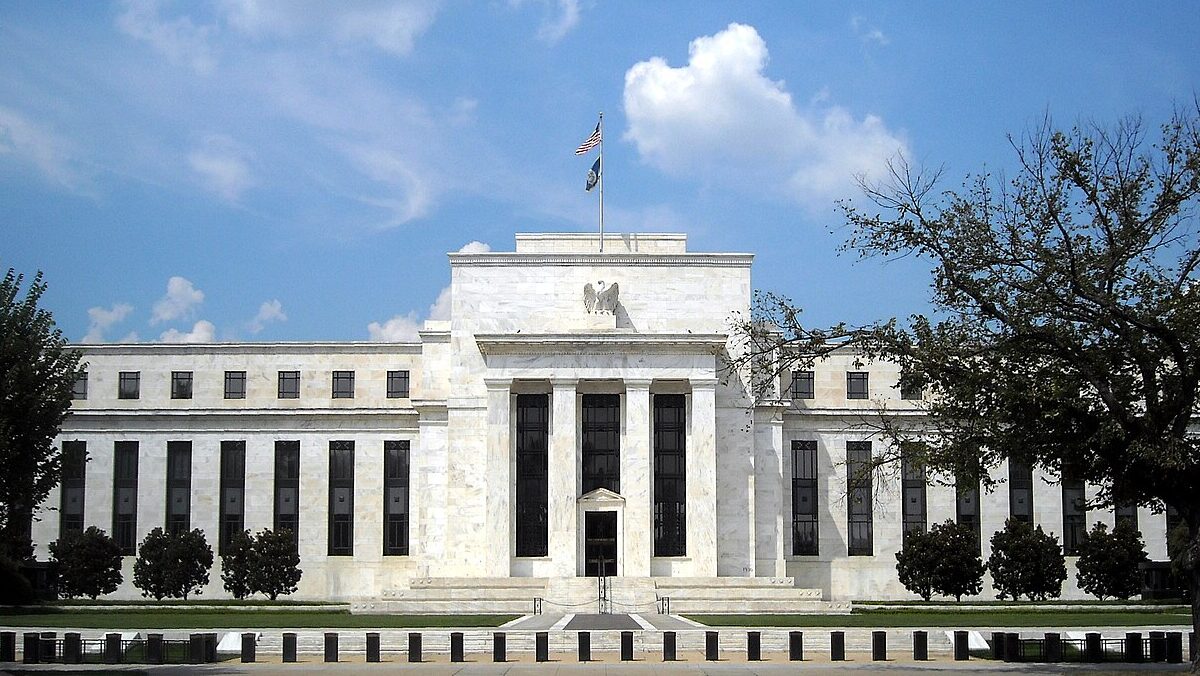
I have spent 17 years in Republican politics, and I owe my party a hard truth: The desperation those men feed on is arriving here. The gap between the wealthy and the middle class is real, it is growing, and it is unsustainable. Federal Reserve data now shows the top 1 percent of households holding nearly 32 percent of the nation’s wealth — more than the entire American middle class, the 50th through 90th percentiles, combined. The bottom half of the country holds 2.5 percent. Seven months ago, New York City, the capital of American capitalism, inaugurated a democratic socialist mayor. Voters are not imagining the disease. They are being sold the wrong diagnosis — and a cure my family has already survived twice.
Here is what actually happened. For decades, Washington spent money it did not have; the national debt has now crossed $40 trillion, and the government spends $1.33 for every dollar it collects. To keep that borrowing painless, the Federal Reserve turned to quantitative easing, creating trillions of new dollars to buy government bonds. The flood shows up in a statistic called M2, the total money in the economy: cash, checking, and savings. After 2020, M2 exploded by roughly 40 percent in two years, growth rates the St. Louis Fed notes exceeded even the inflationary 1970s.
When money multiplies that much faster than the goods it chases, prices rise, but never evenly. The new dollars land first in asset markets — stocks, bonds, real estate — and reach paychecks last. Economists have understood this since the 1700s; the Austrian school calls it the Cantillon effect. If your wealth was a portfolio and a home, the flood lifted you. If your wealth was a wage and a savings account, it drowned you. The wealth gap was not built by free markets. It was built by a government printing press, the largest quiet transfer of wealth from the middle class to the asset-holding class in American history.
Washington ran the same experiment on the middle class’s escalator: college. Once federal student loans became effectively unlimited, universities did what any subsidized industry does: raised prices. A Federal Reserve Bank of New York study found that roughly 60 cents of every additional dollar of subsidized federal lending passes straight through into higher tuition. Adjusted for inflation, tuition has more than quadrupled since the early 1960s, and Americans now carry $1.65 trillion in student debt, much of it financing degrees the job market never asked for.
This is not merely an economic problem. Adm. Michael Mullen, then chairman of the Joint Chiefs of Staff, said it plainly in 2010: “The most significant threat to our national security is our debt.” He was early, not wrong. Washington now spends nearly $1 trillion a year on interest alone — more than the entire defense budget. And history’s darker lesson, the one my grandparents lived, is that a hollowed-out middle class is itself a security threat. Spain in the 1930s did not burn because ordinary Spaniards were radicals; it burned because ordinary families stopped believing the system could work for them.
Republicans have the answer, but only if we have the nerve to run on it. In 1994, we offered the Contract with America and delivered the first balanced budgets in a generation. It is time for a new Contract for America.
First, balance the federal budget on a fixed timeline and march debt held by the public (now roughly 100 percent of GDP, a full year of the nation’s entire output) back toward 60 percent. That’s the level Europe’s treaties set as the outer bound of prudence and safely below the roughly 77 percent tipping point where World Bank researchers find debt starts eating growth.
Second, let the Fed keep shrinking its balance sheet so the money supply grows with the economy, not the political calendar.
Third, deregulate housing: Government rules now add about $132,000 to the price of a new home — roughly a quarter of its cost, homebuilders’ 2026 data shows.
Fourth, end the blank check for tuition by making colleges share the losses on loans their degrees cannot repay.
I will not insult you: The cure has a cost. Balanced budgets and honest money mean a leaner Washington and, for a season, slower growth. But every generation that took the cure was repaid. Postwar America carried debt above 100 percent of GDP and marched it down to roughly a quarter of GDP by the mid-1970s, the very decades that built the greatest middle class in human history. In 1948, Ludwig Erhard scrapped Germany’s price controls and introduced sound money almost overnight; the German economic miracle followed. In 1995, Canada, deep in a debt spiral much like ours, cut program spending outright, balanced its budget within three years, and spent the next decade among the strongest economies in the G7. Short-term pain, generational payoff.
The Austrian economist and Nobel laureate F.A. Hayek warned that “history is largely a history of inflation, usually inflations engineered by governments for the gain of governments.” The socialist pitch never changes: Your neighbor’s success caused your struggle, so give government more power — the same government whose printing press and subsidies caused the struggle. It is a simple story, and simple stories win by default when no one tells the true one.
My grandparents crossed an ocean twice, fleeing where that story ends. They believed America was different — the country where sound money, limited government, and rewarded work built a middle class the world envied. It can be again. The window is open, the choice is still ours, and the contract is ours to write.
Gabriel R. Llanes is the president of Vae Victis Strategies and a 17-year veteran of Republican politics. His grandparents fled the Spanish Civil War and, later, Fidel Castro’s Cuba.
" Conservative News Daily does not always share or support the views and opinions expressed here; they are just those of the writer."
*As an Amazon Associate I earn from qualifying purchases