In France, Pope Leo Rebukes Secular Europe
The article discusses Pope Leo XIV’s recent visit to France, highlighting a powerful image of him blessing a severely disabled girl, symbolizing Christ’s compassion and contrasting with secular European attitudes toward disabled individuals. During his visit, the Pope emphasized the importance of respecting and elevating disabled persons, notably selecting children with Down Syndrome as altar servers, opposing practices like prenatal genetic testing and abortion that seek to eliminate such lives. He condemned assisted suicide, directly challenging France’s recent law permitting euthanasia, asserting that causing death is morally wrong and that life is inherently valuable.
The article criticizes modern European society’s utilitarian view of human dignity, where lives that do not meet certain standards are deemed unworthy of life. It cites the netherlands’ recent case of euthanizing a two-year-old with disabilities, portraying this as a revival of child sacrifice rooted in de-christianized pagan practices. The author argues that this reflects a hazardous abandonment of the Christian doctrine of the imago Dei-that every human is made in God’s image and possesses inherent dignity.
Through the story of a Catholic family that adopted and cares for a severely disabled girl, Marie-Garance, the article underscores the Christian view that impairments do not diminish human worth. Pope Leo’s message at Lourdes-welcoming the disabled-reinforces the importance of viewing every person as precious. The overarching message is that Western civilization’s foundation lies in the Christian understanding of human dignity, and abandoning this leads to barbarism. The author asserts that only Christianity can oppose the pagan practices of dehumanization and euthanasia now spreading across parts of Europe.
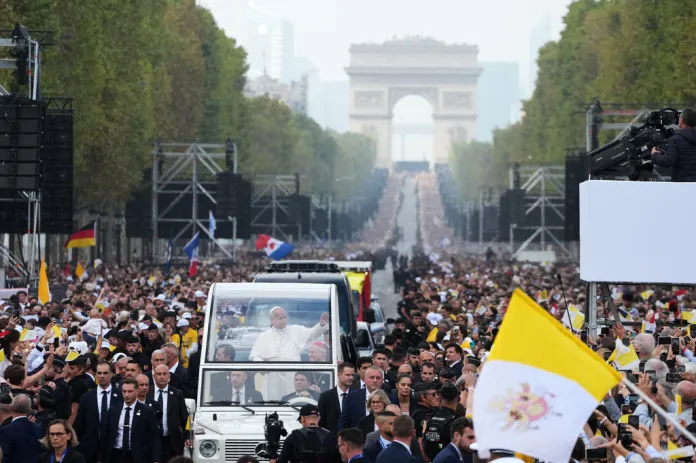
The iconic image of Pope Leo XIV blessing a severely disabled girl during his papal visit to France last week grabbed the world’s attention for a couple reasons. It was not only a profound manifestation of Christ’s love and compassion, but also a stinging condemnation of secular liberal European society, which increasingly has no use for such children.
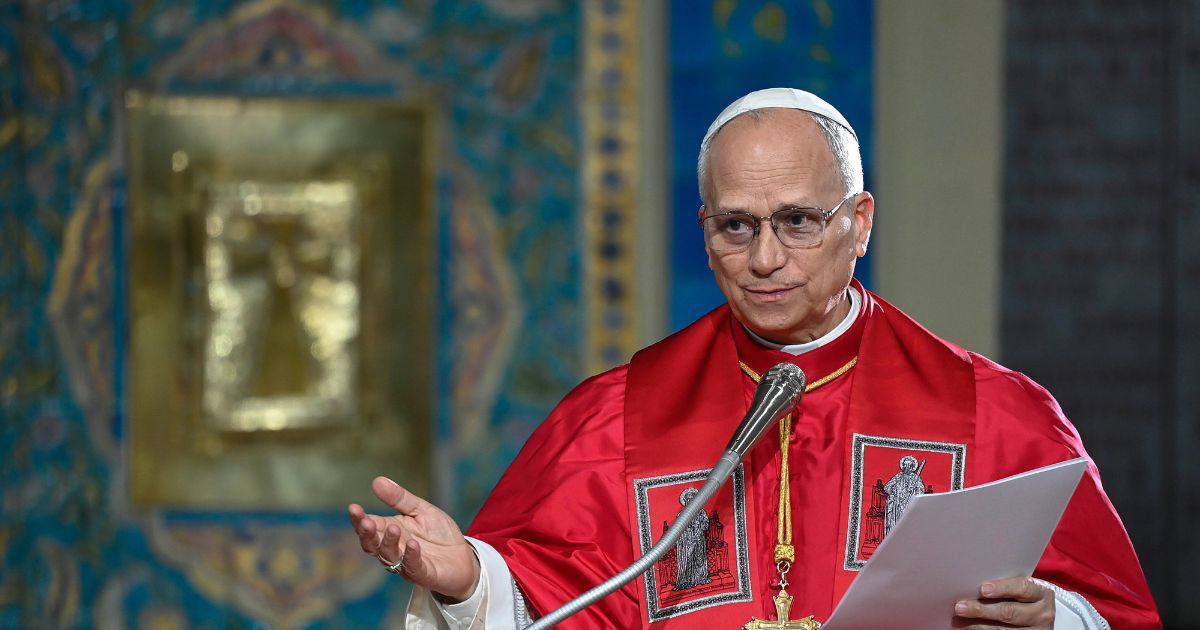
The elevation and embrace of disabled people, the affirmation of their humanity, is about as countercultural as it gets in Europe today, and it was without question the overarching theme of the pope’s visit. At an open-air Mass in Paris, he chose six men and boys with Down Syndrome to be his altar servers — a clear rebuke to European states that are systematically eliminating people with Down Syndrome through prenatal genetic testing and abortion.
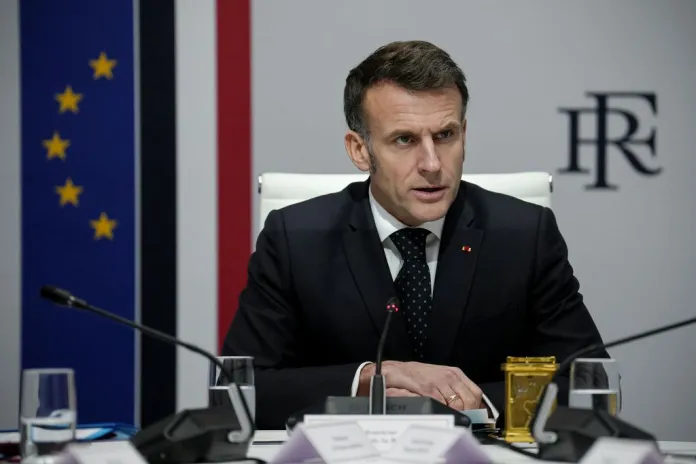
He openly condemned assisted suicide a month after France formally passed an “aid in dying” law, urging the French to reject the “false compassion” of euthanasia and abortion of the disabled. French President Emmanuel Macron pushed for the assisted suicide law and celebrated its passage last month. Leo rebuked him to his face in an official address at Macron’s residence. “It is impossible to regard causing death as something normal. What is legal is not necessarily moral,” he said. “The protection of the right to life constitutes the indispensable foundation of every other human right.”
These words and the convictions behind them stand in the starkest possible contrast to modern European society, which has embraced a utilitarian, neopagan view of the human person. According to this view, the dignity of the human person is not immutable but contingent. In practice that means some people’s lives aren’t worth living, which is just another way of saying some people aren’t fully human.
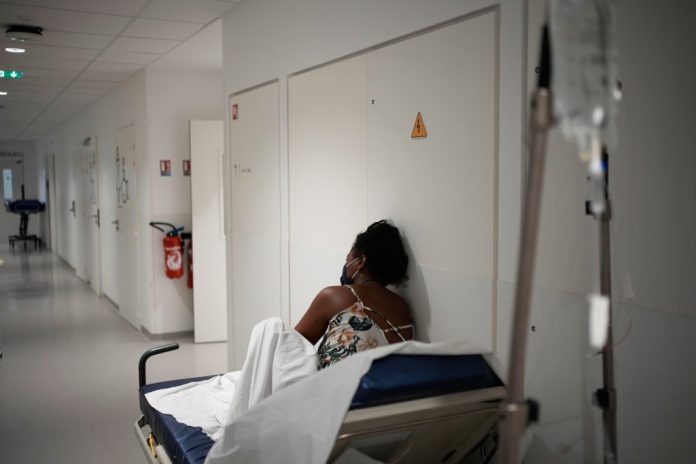
Late last year, for example, doctors in The Netherlands killed a two-year-old disabled child under that country’s expanded euthanasia regime. The child in question, a boy, was born with severe disabilities but was not terminally ill when his parents and doctors decided to end his life. The killing marks a dark milestone in The Netherlands, where some form of euthanasia has been legal for 25 years: this is the first case of euthanasia of a child, after a 2024 rule change allowed doctors in The Netherlands to euthanize children under 12.
It is hard to think about these things, or even speak of them. And yet a few things must be said, if only so we know where we stand in the West, and where we are going.
The involuntary euthanization of a toddler is a form of child sacrifice, a practice we westerners long ago left behind in our pagan past. It was banished with the arrival of Christianity and the doctrine of imago Dei, that every human being is an image-bearer of the Creator and therefore possesses inherent dignity and worth.
But now child sacrifice is back. It goes under a different name, perhaps, and is accompanied by the trappings of the medical establishment and government officialdom. But in its essentials The Netherlands has revived a practice not seen in northwestern Europe for a thousand years. This is the direct and inevitable result of the de-Christianization of the continent. It shocks, but should not surprise us.
Abortion has long been spoken of as a form of child sacrifice, and rightly so. But there is something different about euthanizing a toddler — not morally, but as it relates to the victim. An unborn child, like an infant tossed into the furnaces of Molech by the Canaanites of old, does not know what is about to happen to her until the moment arrives. The toddler, on some level, knows.
Likewise, in an abortion the killing is hidden to a certain extent. We can tell ourselves, as we have for decades, that the unborn child is not really a human being because it is unborn. This might be incoherent, but advocates of abortion must tell themselves something to hide the monstrosity of the act, even if only from themselves. However there is no hiding from the euthanasia of a two-year-old disabled boy. It is an outright killing, and everyone knows it.
One can almost hear the doctors and government ethicists scoffing at this charge. There is no pain or fear, they insist. This was no killing but a merciful act, an act of compassion. It was in the boy’s best interest to die. His life was not worth living.
The official government body in The Netherlands charged with reviewing this case goes by the anodyne yet diabolical name, the Assessment Committee for Late-Term Abortion and Termination of Life in Newborns and Children Ages 1 to 12. In its official assessment, released earlier this month, it wrote this: “All facets of ‘being human’ — regarding motor skills, behavior, and personality — were severely impaired and were not going to improve,” the committee’s report stated. “Despite all medical and non-medical interventions, the parents and the doctor observed no improvement in the child’s condition and were convinced that the child was suffering unbearably and without prospect of relief.” Hence the committee concluded that the doctor made the right assessment and “strictly adhered to all due-care requirements.”
Here we get a glimpse into the worldview of these people. “Being human,” according to them, has to do with “motor skills, behavior, and personality.” Rather than something ontological and immutable, a child’s humanity is something measurable, something that must meet a certain threshold or achieve certain metrics. If “improvement” on those metrics is not possible or likely, the child can be licitly killed.
Against this bloodless barbarism stands Pope Leo XIV and the Catholic faithful. The little girl he stopped to bless as he rode down the Champs-Elysees in Paris, Marie-Garance, is precisely the sort of person who might be killed under The Netherlands newly expanded euthanasia regime.
Her story is an indictment of the neopagan barbarism of secular Europe. She was once a ward of the state but was adopted, at only 16 months old, by a Catholic couple, Clotilde and Nicolas Noël, who have six biological children and three adopted children. All their adopted children have severe disabilities, and all of them were wards of the state.
Today, Marie-Garance requires significant daily care, medication, and a gastronomy tube to eat. Two years after adopting Marie-Garance, Clotilde Noël wrote a book, Tombée du Nid (Falling from the Nest), about her experiences raising a large family and especially taking care of her disabled adopted children. That book inspired an organization of the same name, founded by Clotilde and her husband, that supports and connects adoptive parents raising children with disabilities.
In 2023, Noël gave an interview to Aleteia about her family life. At one point, she said this: “When we decided to go on the road to adoption, I understood the phrase: ‘I have called you by your name’ (Is 43, 1). It was as if God were saying to me, ‘I’m calling on you. You are the one I have chosen.’ I have accepted that I have to trust Him and I receive incredible graces. Once you say ‘yes’ to God, everything happens naturally. He never abandons us.”
All of which to say, this family took in Marie-Garance as a direct response to their Catholic faith, which proclaims that this little girl is a human being, created in God’s image, who deserves love and affection and tenderness. Perhaps, in the parlance of the euthanizing doctors of The Netherlands, she is severely impaired in her motor skills and in her behavior. But Clotilde and Nicolas Noël know what the doctors do not: that these impairments cannot affect or in any way diminish Marie-Garance’s humanity. In fact quite the opposite.
At Lourdes, Pope Leo told a crowd of 150,000 pilgrims that, “Here, no one is turned away due to their frailty. Your crutches, your wheelchairs and your hidden tears are not obstacles; instead, they are the very place where you are fully respected and welcomed, and where you can experience a transforming encounter with the infinite love of God.”
These days we often debate what it means to preserve western civilization, to defend the West and so on. It’s easy to lose sight of what, exactly, we seek to preserve and defend. In the end, it is an account of the human being as a creature made in the image of a loving God, whose eternal destiny and purpose is to be in fellowship with God and with one another. Everything follows from there. If suffering comes, or “impairments,” they cannot diminish the dignity of the human person.
Christianity alone holds this to be true. It is why the West is different from the rest of the world. It is why Marie-Garance is part of a loving family. When the image of Pope Leo and Marie-Garance went viral, one French commentator on X said what everyone in France knows, that apart from devout Catholics, “no one adopts disabled children.”
Without this Christian account of the human person, without the imago Dei, not only are disabled children not adopted, they are cast aside, hidden, forgotten. And now, at least in The Netherlands, they are killed.
Make no mistake: the only thing that stands against this pagan savagery — the only thing that has ever stood against it — is the Christian faith. What it means for us is straightforward: we can have a society where little girls like Marie-Garance are loved and cared for, or we can return to pagan barbarism. There is no third road.
John Daniel Davidson is a senior editor at The Federalist. His writing has appeared in the Wall Street Journal, the Claremont Review of Books, The New York Post, and elsewhere. He is the author of Pagan America: the Decline of Christianity and the Dark Age to Come. Follow him on Twitter, @johnddavidson.
" Conservative News Daily does not always share or support the views and opinions expressed here; they are just those of the writer."
*As an Amazon Associate I earn from qualifying purchases