NYT: 25 Years Later, The Real Victims Of 9/11 Are Muslims
Twenty-five years after the 9/11 terrorist attacks, which resulted in the deaths of 2,977 innocent Americans, discussions have emerged highlighting the ongoing impact on Muslims. Articles, such as one from the New York Times, focus on the challenges faced by Muslim Americans like Mayor Mamdani, who navigates post-9/11 hostility and Islamophobia, partly fueled by political and religious controversies involving figures like Imam Siraj Wahhaj and Mamdani’s father, Mahmood Mamdani. Critics argue that the narrative emphasizing Muslims as victims often downplays the actual tragedy of 9/11, where thousands lost their lives, by instead framing the story around perceived Muslim victimization and Islamophobia. The coverage has been criticized for overshadowing the memories of the victims and their families, emphasizing the prolonged struggle of Muslim communities rather than acknowledging the true scope of those who suffered and perished on that day.
Twenty-five years ago, 2,977 souls were murdered in the 9/11 terrorist attacks. They weren’t the only victims, either. Their parents, spouses, siblings, loved ones, communities, and every single person affected by their loss were victims too. But according to The New York Times, the real victims were — and continue to be — Muslims.
One article from Maya King and Jeffrey C. Mays reads “Facing Islamophobia, Mamdani Keeps Focus on 9/11 Victims.”
“As New York’s first Muslim mayor, Mr. Mamdani has been forced to navigate a delicate dynamic. He must speak about Sept. 11 as the city’s top elected official, but also as a member of a religious group that has faced hostility and suspicion since the attacks, and is still being vilified by right-wing factions of the Republican Party,” King and Mays write.
The Times article then quotes Husein Yatabarry, executive director of the Muslim Community Network, who claims that “there’s a right-wing angst to bring back that level of Islamophobia against prominent Muslims in political life or even in regular daily life.”
King and Mays then describe the “added layer of pressure and scrutiny” Mamdani supposedly faces due to his religion.
“He was 9 years old when the attacks took place and had been living in the United States for two years after moving with his family from Uganda,” they write. “He has called the day a horrific tragedy for all Americans and one where a Muslim like him was officially marked as an ‘other.’”
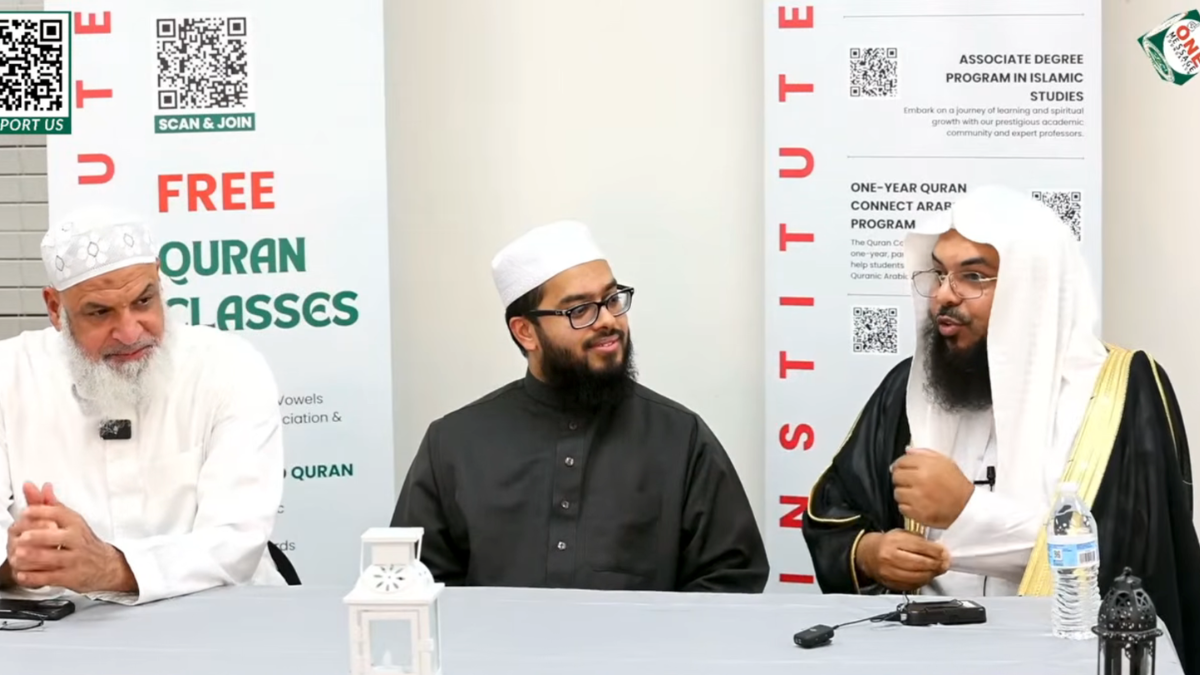
But maybe — just maybe — the scrutiny surrounding Mamdani’s role in the 9/11 anniversary has something to do with the fact that he publicly called Imam Siraj Wahhaj “one of the nation’s foremost Muslim leaders and a pillar of the Bed-Stuy community.” Wahhaj testified as a character witness for Omar Abdel Rahman, who was convicted of planning the 1993 World Trade Center bombing, and fundraised for the legal defense of El Sayyid Nosair, who was “convicted of seditious conspiracy in connection” with the terror attack.
Maybe the anger and grief come from the fact that Mamdani pals around (and had an Eid dinner) with leftist streamer Hasan Piker, who said that “America deserved 9/11.”
Or perhaps New Yorkers are troubled by the fact that Mamdani’s father, Mahmood Mamdani, wrote in his 2004 book Good Muslim, Bad Muslim: America, the Cold War, and the Roots of Terror that suicide bombers are not barbaric. “We need to recognize the suicide bomber, first and foremost, as a category of soldier. … Suicide bombing needs to be understood as a feature of modern political violence rather than stigmatized as a mark of barbarism,” the passage reads.
Obviously those facts make it difficult to take seriously the Times’ narrative that objections to Mamdani’s presence at the memorial services are simply the product of “Islamophobia.”
Nonetheless, The New York Times is so invested in the narrative that Mamdani and other Muslims are the true victims of 9/11 that the paper gave additional airtime to this inverted claim.
“After 9/11, Islamaphobia Shaped a Generation of Muslim New Yorkers,” King wrote, alongside Liam Stack, in another piece.
“Once-friendly neighbors started to keep their distance. Undercover police officers began to monitor community events. And passers-by would give them dirty looks on the street, and sometimes harass them, when they left home in hijabs or other religious garb,” they wrote in the first paragraph of a story about 9/11.
No mention of the actual victims of that awful day.
“Many American Muslims have faced a quarter-century of suspicion and hostility since the Sept. 11 attacks, which reshaped life for all Americans,” the article continues, and two paragraphs later adds, “anti-Muslim prejudice still endures, echoing the Islamophobia that arose in the earliest days after Sept. 11.”
The article then talks about how 9/11 “left many Muslim American communities scarred.” But nowhere in the article does it mention the 2,977 people murdered that day. It includes no testimony from families who lost a parent, a spouse, a sibling. There is no mention of the heroic firefighters or police officers who ran into burning buildings but never came back out.
Sept. 11 is the anniversary of 2,977 innocent people murdered by 19 Islamic terrorists and countless families forced to live with that loss in perpetuity. These murdered innocents and their families — not Mamdani and the Muslims so beloved by the Times — are the true victims of 9/11.
Brianna Lyman is an elections correspondent at The Federalist. Brianna graduated from Fordham University with a degree in International Political Economy. Her work has been featured on Newsmax, Fox News, Fox Business and RealClearPolitics. Follow Brianna on X: @briannalyman2
" Conservative News Daily does not always share or support the views and opinions expressed here; they are just those of the writer."
*As an Amazon Associate I earn from qualifying purchases