If You Didn’t Get A Top Education, It’s Never Been Easier To Fix It
The article highlights how the customary view that a top-tier college education is necessary for serious study in the humanities is changing. Advances in technology and the democratization of knowledge allow anyone with internet access to engage with classic texts, lectures, and discussions outside the confines of elite institutions. The author, who grew up in rural Louisiana and attended a small state university, emphasizes that a passion for learning and self-education can lead to profound understanding and personal growth, irrespective of one’s background or formal educational prestige. Examples of self-taught Americans like George Washington and Abraham Lincoln illustrate that intellectual virtue and achievement are accessible without elite schooling. modern platforms and podcasts enable people to connect with scholars and mentors worldwide, fostering a renewed culture of curiosity and conversation. Ultimately, the future of liberal arts depends on ordinary individuals continuing the pursuit of knowledge, demonstrating that the classics belong to all who are willing to wrestle with them.
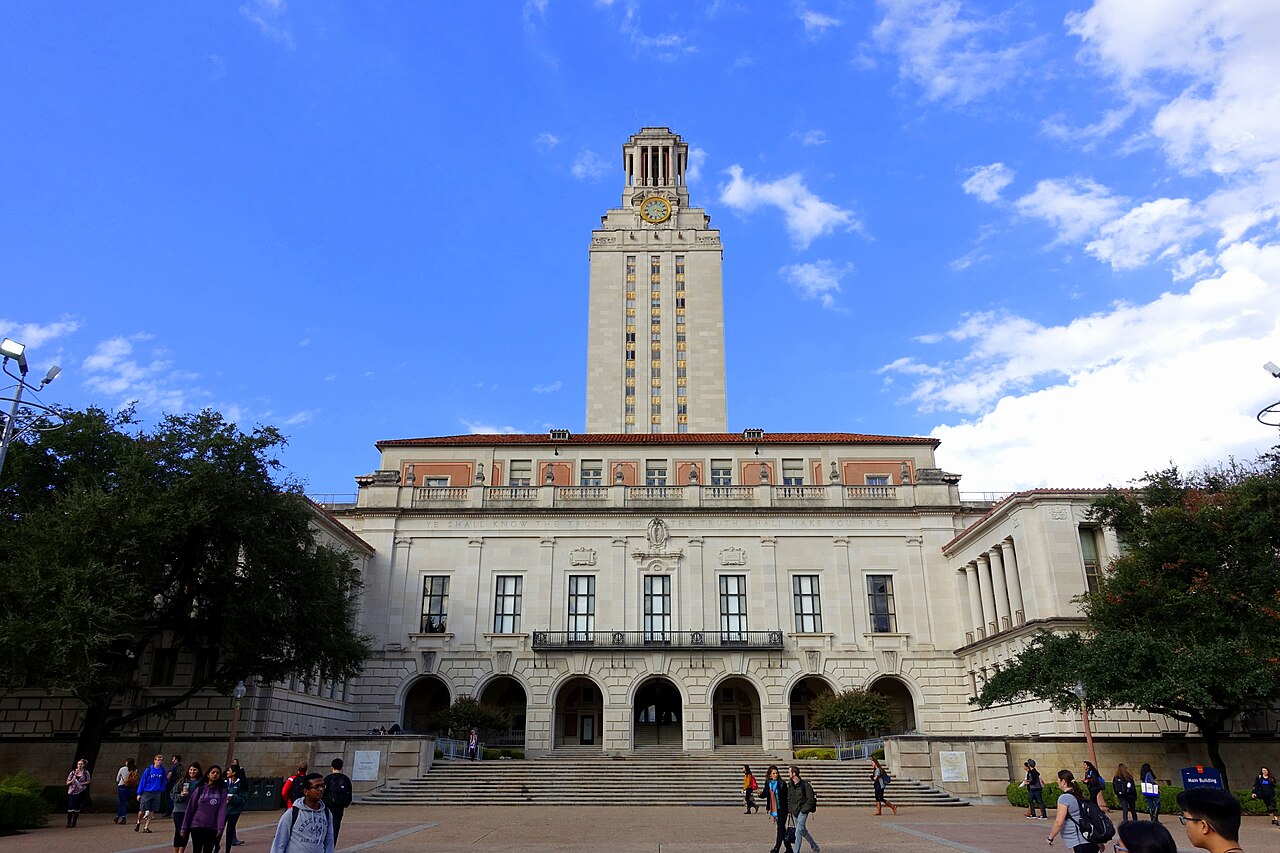
Many Americans have assumed that if you want a serious education in history, philosophy, or literature, you must go to college, preferably a highly rated one. The Harvards, Yales, and Princetons of the world have theoretically been where the classics were taught, great ideas debated, and intellectual life was supposed to flourish.
That assumption is beginning to change, and not just because of headlines like “The Elite College Students Who Can’t Read Books.” The “academy” no longer has a monopoly on serious learning— if it ever truly did. Today, someone can listen to a lecture on Aristotle while commuting to work, join an online reading group on The Lord of the Rings after dinner, and spend an evening discussing The Federalist Papers over a Zoom call.
This means those of us in the majority of Americans who have been deprived of an excellent education have never had more opportunities to remediate ourselves. As a rural Louisiana native, I didn’t grow up immersing myself in the classics. Like many of the kids I grew up with, I was more preoccupied with watching the Louisiana State University Tigers on Saturday and the New Orleans Saints on Sunday, not whether Socrates was right about virtue. In fact, I distinctly remember trudging through The Hobbit bored to tears.
Now, I find myself drawn to these great works of fiction. I find myself glued to a two-hour YouTube video dissecting Fyodor Dostoyevsky’s The Brothers Karamazov. Now most of my nights are spent peering into the lives of dead statesmen and philosophers.
This occurred not because I attended some prestigious, navy-blazer-and-Sperry-wearing university in the Northeast, but because of my genuine desire to learn something greater than myself. I attended Nicholls State University, a small state school in Louisiana where there are quite possibly more alligators than humans (ironically, Nicholls has affectionately earned the honorific title of “Harvard on the Bayou”).
Just like most Americans, my college experience was not centered on conversations about ethics, virtue, or beauty. My school was dominated by classic blue-collar studies — the oil and natural gas fields, manufacturing, maritime shipping, and construction. My community valued hard work and cared little for the writings of Plato or Aristotle, or the musings of St. Thomas Aquinas or Alexis de Tocqueville.
These professions are as honorable as they are necessary, but in a predominantly blue-collar state, there was little demand for a robust, classical liberal arts education. I’m not a rice farmer, a tugboat captain, or a petroleum engineer. But I know what it’s like to assume the liberal arts belong to someone else — students at Hillsdale, Princeton, or Oxford rather than people from towns like mine. I was wrong.
Like many recent political science graduates, I made the pilgrimage to Washington, D.C., immediately after receiving my diploma. After encountering classically formed young conservatives, I quickly realized there were enormous gaps in my education. I had opinions, but I lacked the intellectual foundation to explain why I believe what I believe.
The more time I spent around these conversations, the more I realized my desire to deepen my faith, sharpen my reason, and cultivate virtue. This led me to the classics.
While technology, specifically social media, has undoubtedly contributed to our cultural fragmentation it also democratized the pursuit of wisdom in ways that past generations could hardly imagine. Now, a person with internet connection can listen to university lectures, subscribe to thoughtful newsletters, and spend countless hours listening to historians, philosophers, and theologians unpacking text once inaccessible. Wisdom confined to Cambridge, Oxford, and New Haven — or at least self-study through a Great Books set or correspondence course — is now cultivated in places such as Lafourche Parish, Louisiana.
My experience is not unique. Stephen West, creator of the Philosophize This! podcast, is not a tenured academic. He is a warehouse worker who developed a passion for philosophy and shared his love and musings on Nietzsche, Kant, and Aristotle to millions of listeners.
His success speaks to the growing phenomenon of intellectual curiosity returning to its historical norm of flourishing even outside classrooms. Trust in many traditional institutions, particularly higher education, has declined, and many Americans, like me, are beginning to look elsewhere for intellectual formation.
Organizations like Interintellect host online discussions led by scholars on literature, history, philosophy, and theology that anyone can join for a monthly streaming subscription. Princeton-trained classicist Nadya Williams regularly interviews leading scholars, giving her listeners free access to conversations typically confined to the lecture hall. Every weekday, I spend at least an hour listening or reading some philosophical, theological, or historic text.
This, of course, reminds me of one of America’s oldest traditions: the self-educated citizen. George Washington, my hero and perhaps the preeminent example of virtue in American public life, studied with a private tutor from age 11 to 15 and did not attend a college or university. Despite his embarrassment at being one of the least-educated of the deeply classically trained Founding generation, and making up for that lack for his step-children by providing them the teaching he’d been deprived of, he went on to lead 13 American colonies to victory against Great Britain and become our country’s first president.
Abraham Lincoln, another great American statesman, received no less than a year of formal schooling in his entire lifetime, self-educating his way through the Illinois state legislature, Congress, and eventually the presidency. While these are unusual men whose abilities were clearly far beyond the norm, they offer an American model of the importance of internal motivations to exemplary achievements even when lacking the advantages of a good education.
The great conversation has never been a monologue. Aristotle had Plato. Plato had Socrates. Every student benefits from mentors who were once where they are now. The democratization of classical learning allows Americans like me to find mentors outside classrooms that have largely shut themselves off from real learning. In my experience, some of the most influential mentors are in my emails, Zoom calls, podcasts, and even in my DMs on X.
The republic thrived not merely thanks to an educated elite but thanks to ordinary citizens who believed that cultivating the mind was part of cultivating character. Perhaps this tradition never disappeared; rather, it simply found a new medium.
The future of liberal arts cannot depend on whether elite universities recover their former prestige. It must depend on something much older and more hopeful: ordinary people who continue the pursuit of knowledge for what is good, true, and beautiful. These “blue-collar philosophers” prove that the classics belong to anyone willing to wrestle with them.
Cooper Moore is a 2026 Chesterton Media Fellow at New Guard Press and works in government affairs. Outside of the office, Cooper enjoys hiking, going to Mass, and pondering life’s greatest questions. Follow Cooper on X at @cwmoore00.
" Conservative News Daily does not always share or support the views and opinions expressed here; they are just those of the writer."
*As an Amazon Associate I earn from qualifying purchases