I Lived The Systemic Medical Abuse Of Trans Kids
This individual shares a personal and harrowing account of her experience with medical interventions related to gender transition during her childhood. At age 11, she developed negative feelings about her body, struggles with mental health, and was bullied. Turning to the internet, she explored LGBT identities and, by age 12, began to identify as a boy.Her therapist supported her, and at 13, she was prescribed testosterone and underwent breast removal surgery. Many years later, investigations revealed systemic issues within the medical system, including deceptive billing practices, questionable diagnoses, and financial incentives that prioritized procedures over patient well-being. She reflects on how her distress was handled inadequately,with interventions pushed despite her young age and lack of full understanding,leading to irreversible physical consequences. She criticizes the medical and legal systems that restrict accountability for such harm, emphasizing the importance of scrutinizing how treatments are authorized and the influence of profit motives. Her story underscores concerns about the vulnerability of children subjected to irreversible gender-related surgeries and urges reform to prevent similar cases in the future.
I was just 11 years old when I decided I hated my body — my whole identity, really.
My struggles had begun years earlier. I started therapy in first grade after developing what I can only describe as all-consuming thoughts about death. Then puberty came earlier for me than for most of my classmates. As school kids do, they bullied me for it. I was consumed by thoughts of suicide.
So I turned to the internet for comfort. I scrolled through countless forums, including Tumblr, Instagram, and everything in between, to find an outlet for my insecurities. That’s how I stumbled upon Tumblr posts about LGBT identities.
Because of my ongoing struggle, I found it helped to try on this new persona of being a boy. At this time, I was 12 years old. I confided in my therapist, who affirmed my so-called gender identity and never told my parents. Before I knew it, I was fast-tracked to “transition.” When I was 13, I was put on testosterone, and a surgeon removed my healthy breasts.
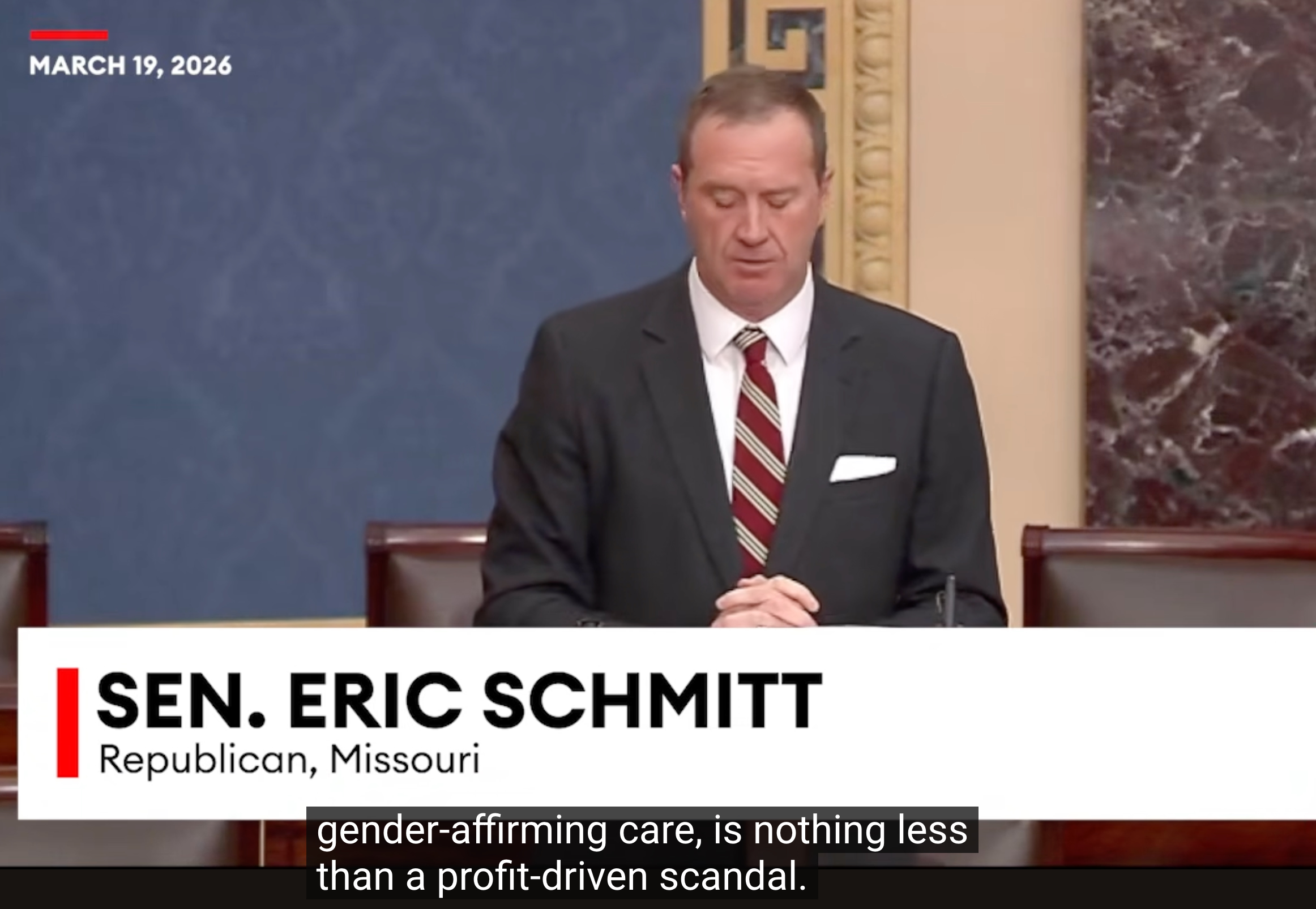
More than a decade later, the Department of Health and Human Services is exposing the medical system that allowed stories like mine to unfold. Its new report, “Wolves in White Coats: How Doctors and Hospitals Pushed and Profited From the Fraud of ‘Gender Medicine,’” details allegations of deceptive billing practices, questionable diagnoses, and financial incentives surrounding medical interventions on gender-distressed children. What happened to me was intensely personal, but the report makes clear why the questions raised by my experience are much larger than one patient or one doctor.
I was convinced “transition” was the right decision and that it would finally make me happy. I was still young and learning who I was. I was impressionable, searching, and uncomfortable in my own skin. I was confused, vulnerable, and looking for relief from feelings I did not yet have the language to understand. What I needed was assurance that the discomfort I was feeling in my body was normal for girls my age. What I received instead was what Abigail Shrier dubbed “irreversible damage.”
Looking back, it feels like drugs and surgeries were the only path doctors even considered the second I expressed even the slightest amount of confusion about my body. The doctors made their money, and I am left to deal with the consequences. How was this allowed to happen?
The answer is not as simple as a single doctor making a bad call. What I experienced was a system that rewards secrecy and deception. Families are told that social affirmation and medical interventions are precautions against their child committing suicide and that if they question the medical system at all, they are effectively murdering their child.
This emotional blackmail is bolstered by medical fraud. Medical language is carefully curated to ensure insurance coverage. Providers are coached on how to frame distress in ways that unlock access to these irreversible interventions. Then those providers coach their patients on how to make sure their insurance believes them.
In other areas of medicine, these decisions and workarounds would raise red flags. When diagnoses and outcomes are skewed to secure insurance coverage, that is considered medical fraud. When patients are directed toward a single course of action without full disclosure, that is failure of informed consent. Yet in wrongly named “gender-affirming care,” fraud and lack of informed consent are par for the course.
I recognize the consequences of that system because I lived through them. Looking back, drugs and surgery seemed to become the path doctors considered the second I expressed confusion about my body. But my distress did not begin with so-called gender. I had been struggling since I could remember with bullying, early puberty, and suicidal tendencies. Those facts should have prompted deeper questions.
To put it into perspective, when I was 13, I truly didn’t believe I would make it until I was 18. But when I turned 17, I realized I would live to see adulthood. I began to realize I didn’t want to live my life like this anymore.
After doing some research on my own, I came across one of my doctors who had treated me at the “Proud Clinic” in Oakland, California. She had a one-star review with a comment: “Terrible doctor. Being sued by Chloe Cole.”
My curiosity helped me that day, as I found the law firm representing Cole, the first public child detransitioner. I resonated so deeply with her story that, shortly after, I met with the firm to pursue legal action.
My lawyers believed I had a strong case, but two years into legal action, it got thrown out due to the rigid statute of limitations laws in California. For detransitioners, those laws are especially backward. A child can consent to an intervention without possessing the maturity or life experience to comprehend what is being taken from them, only to understand the magnitude of that loss years later. By the time regret sets in and they recognize what happened, the legal clock may already have expired.
California law stipulates that for a victim to sue, it must be within three years of the harm being performed. But what the law doesn’t account for is that the harm itself does not expire. I do not experience the consequences of these interventions as if they were something that happened once a long time ago; I live every day with nerve pain, genital atrophy, and the permanent effects of testosterone on my body.
Trans regret, especially for minors, usually occurs more than three years after the fact. According to the Society for Evidence-Based Gender Medicine, “The median time for surgical regret has been reported to be as much as 8 years.” Thus, especially for pediatric patients, rigid statute of limitations laws must be changed.
I can’t change what happened to me, but I can fight against these egregious laws that enable adults to groom children to be something they’re not and irreversibly damage them in the process. Every performed surgery and prescribed puberty blocker is given to a real human being. Those procedures and drugs affect real lives that are permanently shaped by these decisions. I will have to live with these consequences — pain, atrophy, and even liver damage from the testosterone — for the rest of my life.
If we are serious about protecting children, we must be willing to examine the actors behind the scenes. We must ask how diagnoses are made, how treatments are approved, and whether financial and institutional incentives are influencing care in ways we don’t know.
I was 13 when doctors decided to cut off my breasts. I believed the adults who spoon-fed me information I thought would help me but instead hurt me in ways I am still processing. The HHS report has begun exposing the system. I will keep fighting to make sure another vulnerable child never becomes its next patient.
Layla Jane is a detransitioner whose story was featured in Independent Women’s Features docuseries “Identity Crisis.”
" Conservative News Daily does not always share or support the views and opinions expressed here; they are just those of the writer."
*As an Amazon Associate I earn from qualifying purchases