America Can’t Make National Treasures Like Dolly Parton Anymore
dolly Parton will be remembered as a uniquely unifying figure in American history, admired across political divides as a national treasure and icon. Unlike some contemporary female contry stars like Kacey Musgraves, who have openly engaged in political activism and alienated certain fans, parton maintained her faith and values without partisan attacks, choosing instead to focus on kindness, community, and entertainment. She avoided politicization, rejected awards like the Presidential Medal of Freedom when politicized, and prioritized uplifting her audience over engaging in political battles. Her approach exemplifies a rare ability to bridge differences, preserve shared cultural experiences, and prioritize love and faith over division-traits that are increasingly absent in today’s celebrity and political landscapes.
In the days and weeks ahead, Dolly Parton will be honored for many of her accomplishments and wonderful characteristics, but one in particular will be her place in American history as a figure that spanned the divide of politics. We will watch both the left and the right hail her as a “national treasure” and an “American icon” in a way that we may never see again. The beloved country music star’s death is another heartbreaking reminder that, for many reasons, America can no longer produce stars or heroes that can earn or sustain a wide cultural fan base comparable to Parton’s.
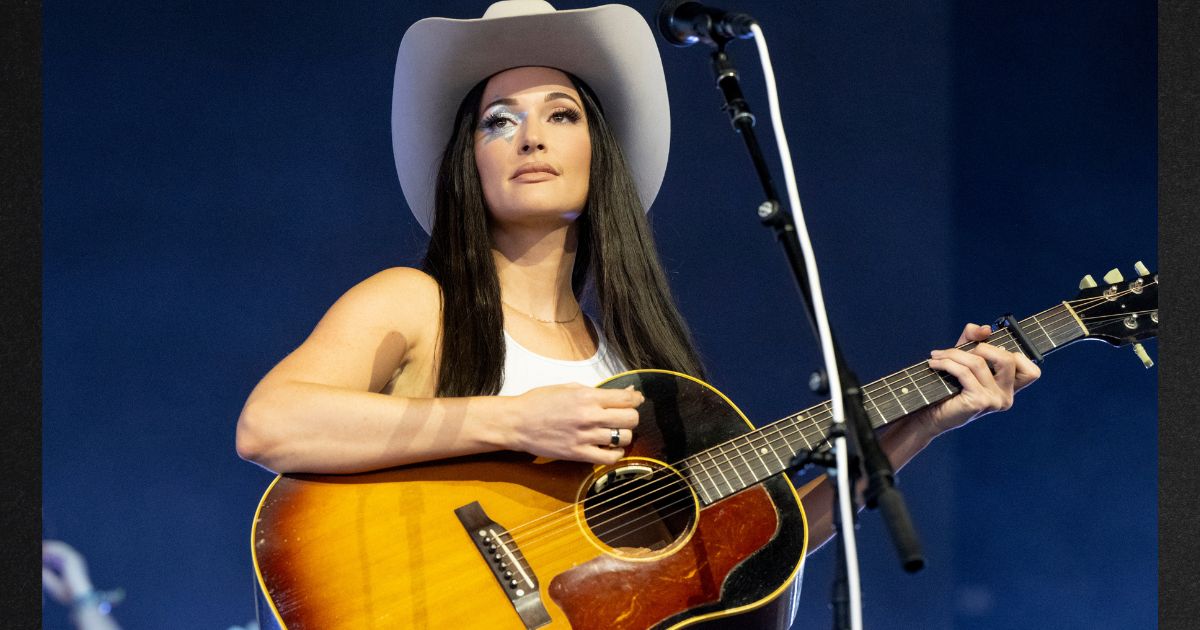
Consider today’s female country music stars, such as Kacey Musgraves, who like Parton came from a small rural town, but unlike Parton, quickly abandoned her hometown’s values. Just this week, Musgraves kicked off a concert in Chicago by suspending from the ceiling sitting on a testicle-shaped disco ball, and then asking fans to donate to a charity for children “whose parents have been deported unfairly.” She’s also had her share of angry tweets at the president and calls for gun control.
In contrast, Parton refused to alienate fans on either side of the political aisle, and not just because it was financially savvy to do so. She was an outspoken Christian her entire life, and openly cited her faith in God as the motivation behind every personal and career move she made.
“I never do anything that I don’t pray about. And I always ask God to lead me and show me and direct me. To do things that would glorify him and uplift mankind,” Parton said.
In 2017, Parton joined her ’80s co-stars Jane Fonda and Lily Tomlin on stage at the Emmys to present an award. While Fonda and Tomlin went all in on using their microphone to attack President Trump as “a sexist, egotistical, lying, hypocritical bigot boss,” Parton refused to join in, standing next to them silently.
Parton was asked about that moment on stage a few years later on a podcast. Parton shared that what she didn’t say on stage, but wanted to. “I wanted to say, ‘Let’s pray for the president. Why don’t we pray for the president? If we’re having all these problems, let’s just, you know, why don’t just we pray for Mr. President?”
In another interview in 2019, an interviewer tried to get Parton to take the bait on political discourse when it came to women’s rights, considering her role in the movie 9 to 5.
Parton recognized the reality of harassment in workplaces and affirmed her consistent backing of equal pay for women, though she stopped short of embracing the label of feminism.
“I don’t consider myself a feminist,” she said, “but I’m feminine. And I believe that women should be treated with respect and be allowed to do whatever.”
And yet none of these examples are intended to make the case that Parton was a closeted conservative or secret Trump supporter. Quite the opposite. She rejected Trump’s attempt to honor her with a Presidential Medal of Freedom, not once but twice. On the left, LGBT activists long considered Parton an “ally” and a “gay icon.” On the day of her passing, the official account of the Democratic Socialists of America honored Parton as “a hero of the working-class.”
“I don’t believe that I should offend people that don’t have that same opinion by voicing my own opinion,” she told the Los Angeles Times in 2019. “I’m an entertainer; I can live it, I can write about it, I can joke, lift people up in my own way. But I don’t see no reason for me to get involved in political fights.”
Parton understood something that modern-day Hollywood and Nashville have forgotten: You don’t have to choose between erasing your values or becoming a partisan megaphone. She preserved a rare common ground for all fans, but without backing away from her faith or her mountain roots. She simply rose above the political fray and doubled down on taking care of her community and her fans.
Celebrities on both sides of the political spectrum raise money and “awareness” for their culture war item of choice and their favorite flavor of politician, while Parton spent decades mailing millions of books to poor children in Appalachia and beyond. Where today’s artists see an audience to be lectured, Parton saw people to be entertained, comforted, and loved.
America has lost more than just a famous singer or songwriter. We are mourning the loss of shared cultural experiences. Parton is a relic of a different country — one that is much different now than the one she entered.
Madeline Osburn is an editor at The Federalist. Contact her at [email protected] or follow her on Twitter.
" Conservative News Daily does not always share or support the views and opinions expressed here; they are just those of the writer."
*As an Amazon Associate I earn from qualifying purchases