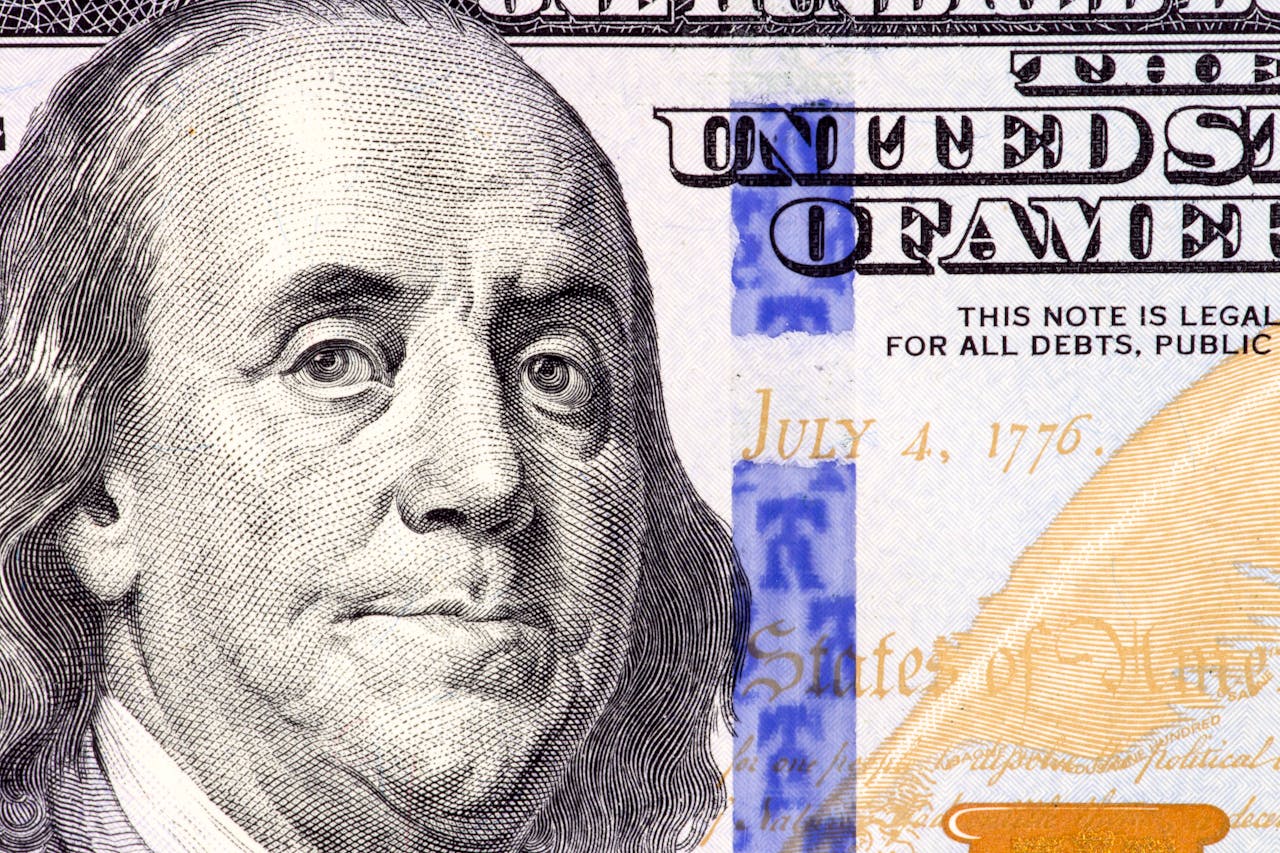
US National Debt Exceeds GDP for First Time Since the Immediate Aftermath of WWII
The article says the U.S. national debt has surpassed 100% of GDP, reaching about 100.2% after March 31,driven by debt held by the public of $31.27 trillion versus estimated nominal GDP of $31.22 trillion. It quotes the Committee for a Responsible Federal Budget saying the next major milestone could be the post-World War II peak (106% of GDP),arguing that deficits remain high due to “bipartisan” inaction.
It also cites a Congressional Budget Office projection that the deficit would be about $1.9 trillion for the current fiscal year (about 5.8% of GDP) and that the debt held by the public could rise to 108% of GDP by 2030. The piece then presents the Trump management’s view from officials such as kevin Hassett, who claims the deficit has been cut by roughly $600 billion through higher growth, tariff revenue, and reductions in the federal workforce (including 360,000 roles), and argues tariff revenue increased sharply.
Additional figures are provided on federal revenue growth (including a $5.2 trillion total for FY 2025) and on reported year-to-date deficits cited from Treasury Secretary Scott Bessent, who says the administration aims for targets like reducing deficit spending to 3% of GDP, growing the economy, and increasing oil production. the text contrasts rising debt-to-GDP wiht claims that deficit and fiscal conditions are improving under the current administration.
The national debt exceeded 100 percent of the gross domestic product at the end of March and is on a path to reach a level not seen since the end of World War II.
The Committee for a Responsible Federal Budget said in a Thursday news release, “Debt held by the public on March 31 was $31.27 trillion, while nominal GDP was an estimated $31.22 trillion over the prior 12-month period.”
That pushed the debt-to-GDP ratio to 100.2 percent, according to Fortune.
CRFB president Maya MacGuineas said, “With debt now above 100% of GDP, it’s only a matter of time until we pass the all-time record of 106% reached in the immediate aftermath of World War II. This time the borrowing isn’t borne from a seismic global conflict, but rather a total bipartisan abdication of making hard choices.”
To address the spending issue, she asserted, “One option among many is to follow the bipartisan momentum towards bringing deficits down to 3% of GDP, which would help bring the debt below 100% of GDP over time. What’s most important is turning this pattern of inaction around — there is no time to lose.”
The Congressional Budget Office estimated in February that the deficit will be $1.9 trillion this current fiscal year, making the total 5.8 percent of GDP.
The CBO further calculated that the debt held by the public will rise to 108 percent of GDP by 2030, therefore surpassing the post-World War II high-water mark.
In February, Trump’s Director of the National Economic Council, Kevin Hassett, made the case that the administration is taking strong steps to cut the deficit.
“We were in a fiscal situation that was completely out of control when [Trump] came into office, and now we’ve reduced the deficit by about $600 billion this year, because of high growth, tariff revenue, and reducing the federal workforce,” he told CNN.
The Federal Reserve Bank of Richmond reported that the federal government took in $287 billion in tariff revenue in calendar year 2025, up from approximately $79 billion in 2024.
The total federal revenue was $5.2 trillion in fiscal year 2025, up from $4.9 trillion in FY 2024, during Joe Biden’s last year in office. Through the end of March, the federal government has taken in approximately $2.5 trillion in taxes this fiscal year, but that does not include the all-important tax revenue month of April.
Hassett also noted, “We’ve reduced federal workers by 360,000 people, and that’s, like, almost $30 billion a year in savings. What President Trump is doing is taking a big step towards getting closer to a balanced budget.
“That kind of fiscal responsibility is something that people have been asking governments of both parties to do for a long time,” Hassett said.
KEVIN HASSETT: “We’ve reduced federal workers by 360,000 people, and that’s like almost $30 billion a year in savings … We were in a fiscal situation that was completely out of control when @POTUS came into office, and now we’ve reduced the deficit by about $600 billion …” pic.twitter.com/OQ7pPYPIPo
— Trump War Room (@TrumpWarRoom) February 11, 2026
Treasury Secretary Scott Bessent posted on social media in December, “The current calendar year-to-date deficit is $1.52 trillion, which compares to a deficit of $1.93 trillion for the comparable period last year under Biden, a 21% drop.”
“Not only is the deficit smaller under President Trump – the economy is also bigger. The full 2025 calendar year budget deficit to GDP [ratio] may total only 5.5%, substantially lower than the unsustainably high 6.8% in calendar year 2024 under Biden,” he added.
Bessent concluded, “Under @POTUS’ leadership, we will grow our way out of debt and into prosperity.”
Thanks to President Trump, the health of the U.S. government’s finances is improving.
The current calendar year-to-date deficit is $1.52 trillion, which compares to a deficit of $1.93 trillion for the comparable period last year under Biden, a 21% drop.
Not only is the deficit…
— Treasury Secretary Scott Bessent (@SecScottBessent) December 15, 2025
Bessent told Fox Business in November 2024, shortly after Trump’s election, that the administration wants to implement an economic agenda that results in achieving 3-3-3: bring deficit spending to GDP back to 3 percent by the end of Trump’s term, grow the economy by 3 percent per year, and increase U.S. oil production by 3 million barrels per day to bring down inflation.
The GDP to debt ratio is approximately 5.8 percent, down from 6.4 percent under Biden. GDP grew at 2 percent during the first quarter of 2026. Oil production is up approximately 500,000 barrels per day since January 2025, the month Trump took office.
Advertise with The Western Journal and reach millions of highly engaged readers, while supporting our work. Advertise Today.
" Conservative News Daily does not always share or support the views and opinions expressed here; they are just those of the writer."
*As an Amazon Associate I earn from qualifying purchases