Two different paths for Democrats in fight over socialism
Two polls present contrasting narratives about the internal Democratic Party struggle between the establishment and far-left candidates. In Wisconsin,efforts by establishment Democrats to prevent state Rep. Francesca hong,a Democratic Socialists of America member,from securing the gubernatorial nomination have led to a resurgence for Hong,who currently leads with 44% of the vote,well ahead of her main competitors,Crowley and Barnes. Despite attempts to unify the non-socialist vote behind Crowley, support remains divided.
Meanwhile, in Michigan, a new poll shows Republican Senate candidate Mike Rogers leading progressive Democrat abdul el Sayed by a meaningful margin, raising concerns among Democrats about el Sayed’s general election viability. in contrast, other polling sources suggest el Sayed still maintains a slight edge nationally, but Democratic insiders worry about the growing socialist influence within the party, especially in key battleground states like Michigan and Wisconsin.
The Maine Senate race also reflects similar tensions, with Democrats anxious over socialist candidates performing strongly and perhaps affecting the party’s prospects. in response, Democrats are taking measures such as supporting more moderate candidates and reshuffling their primary and campaign strategies. these developments highlight ongoing debates within the Democratic Party about it’s ideological direction and electoral strategy ahead of upcoming primaries and the 2024 elections.
Two different polls tell two competing stories about the fight between the Democratic establishment and the far-left candidates who have increasingly been winning the party’s primaries.
In Wisconsin, establishment Democrats have been working to deny state Rep. Francesca Hong, a Democratic Socialists of America member, their party’s gubernatorial nomination by luring Milwaukee County Executive David Crowley back into the race and nudging Lt. Gov. Sara Rodriguez out.
Recommended Stories
A new State Navigator poll suggests this bid to consolidate the non-socialist vote behind Crowley and against Hong isn’t working yet. Hong leads with 44% of the vote, well ahead of Crowley, who is at 15%. Former Lt. Gov. Mandela Barnes is right behind Crowley at 14%, suggesting the non-socialists haven’t quite coalesced. Rodriguez is still drawing 4%. Hong has tried to distance herself from aspects of the DSA platform.
In Michigan, came a new Glengariff poll showing Republican Senate candidate Mike Rogers leading progressive Democrat Abdul el Sayed by 49% to 38.7% while narrowly trailing the more establishment-friendly Rep. Haley Stevens (D-MI) with 44.7% to her 45.5%.
While that isn’t a poll measuring how Michigan Democrats will vote in the Senate primary, it ought to give some of those voters pause about nominating el Sayed at the precise moment the momentum in the race appears to be shifting against him. The same pollster previously showed Stevens leading el Sayed in the primary by 7 points.
The RealClearPolitics polling average had recently been showing both Democrats faring about the same against Rogers, who narrowly lost to Sen. Elissa Slotkin (D-MI) in 2024, clinging to a slim 0.5-point lead.
Slotkin beat Rogers by 0.34 points nearly two years ago. President Donald Trump was at the top of the ticket and carrying Michigan at the time. But Slotkin was also a less progressive candidate than el Sayed, though his supporters argue Democrats would be demoralized by a Stevens primary win.
Other pollsters, like the Democratic firm Data for Progress, still have el Sayed way ahead, which contributes to his 1.6-point edge in the RealClearPolitics average. Justin Amash, a former Michigan Republican congressman who is neutral in the race, expressed skepticism that there would be such a big difference between el Sayed and Stevens in a general election against Rogers.
Democratic insiders are nevertheless nervous about el Sayed’s general election prospects in what has become a battleground state. They have the same feelings about Hong in Wisconsin, a state that — like Michigan — voted for Trump in two of the last three presidential elections.
The Maine Senate race made Democrats particularly jittery about the socialist surge within their party, as Graham Platner looked poised to fall behind Sen. Susan Collins (R-ME). Platner was pushed out, but replaced with a candidate much like himself.
With socialists dominating the headlines, some polls have found the Democrats’ generic congressional ballot advantage over Republicans narrowing. A CBS News-YouGov poll showed just 41% saying Democrats’ policies would help with affordability, a crucial issue in the midterm elections, to 59% who said either they won’t change anything or will actually hurt.
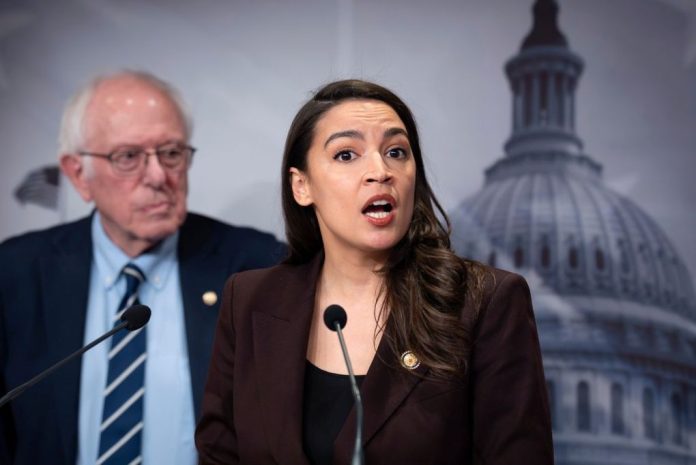
Since the Platner debacle, Democrats have made a number of moves aimed at pushing back against the left-wing trend. They have circled the wagons around Stevens in Michigan. They have attempted to shake up the governor’s race in Wisconsin. They have opted to kick off their 2028 presidential nomination contest in South Carolina, where black voters have twice decisively rejected Sen. Bernie Sanders (I-VT), rather than New Hampshire, where Rep. Alexandria Ocasio-Cortez (D-NY) led in a recent poll.
DSA ENDORSEMENT TRACKER: HERE ARE THE SOCIALISTS RUNNING FOR OFFICE ACROSS AMERICA
Some of these moves initially appear to be more successful than others, but time will tell.
The Michigan Democratic Senate primary is next Tuesday, while the Wisconsin Democrats’ gubernatorial contest is the following week.
" Conservative News Daily does not always share or support the views and opinions expressed here; they are just those of the writer."
*As an Amazon Associate I earn from qualifying purchases