Trump’s crisis communications skills tested by Iran war
An analysis of Donald Trump’s crisis communications during the Iran war shows that, while he plays multiple roles as commander-in-chief, his effectiveness as a crisis communicator has come under scrutiny as the conflict unfolds. The piece notes his public threats toward Iran-including a provocative Easter Truth Social post adn calls to pressure Tehran to reopen the strait of Hormuz-and argues that his words are aimed at domestic audiences who remain uncertain about his war aims. Polling cited suggests his iran-related approval hovered around the high 30s to 40% range.
Trump did not deliver an early prime-time rationale for the war; he spoke primarily to reporters and on social media until a major White House address about 32 days in, and later claimed progress while signaling that escalation would continue. The article compares his approach to the COVID-19 crisis,highlighting a pattern of shifting strategies and relentless optimism that can bolster political resilience but may erode voter confidence.It also draws a parallel to Ronald Reagan’s bold rhetoric, while noting that Trump’s public statements carry risks if adversaries doubt his seriousness.
Ultimately, the piece argues that what Trump does matters most, but what he says also shapes public perception and political support.
Trump’s crisis communications skills tested by Iran war
President Donald Trump plays many roles as commander-in-chief, but in the last few days his effectiveness as a crisis communicator during the Iran war has come under scrutiny.
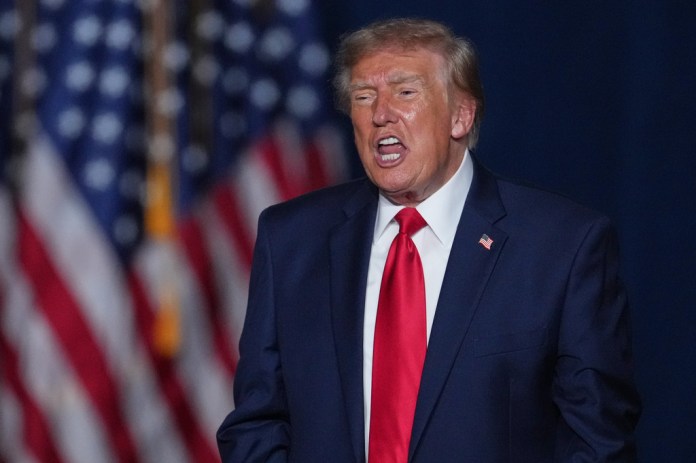
Trump threatened Tuesday morning that Iran’s “whole civilization will die tonight” absent a deal. This followed an Easter Truth Social post warning “Tuesday will be Power Plant Day, and Bridge Day, all wrapped up in one, in Iran. There will be nothing like it!!! Open the F***in’ Strait, you crazy bastards, or you’ll be living in Hell – JUST WATCH! Praise be to Allah. President DONALD J. TRUMP.”
Clearly, these comments are aimed primarily at the Iranians. Trump is trying to extract diplomatic concessions from Tehran, and reopen the Strait of Hormuz by any means necessary, so he can wrap up the war.
But what Trump says publicly is inevitably seen and heard by a domestic political audience that remains confused about his war aims. Trump’s efforts to keep enemies off balance could have the same effect on the public, with the RealClearPolitics polling average showing his Iran approval hovering around 39.5%.
When Trump began Operation Epic Fury, he did not deliver a prime-time television address laying out his rationale. He only briefly mentioned Iran in his State of the Union. He ultimately delivered a major speech on the war from the White House 32 days after it started, though he frequently spoke to reporters and posted on social media in the interim.
During Trump’s April 1 prime-time address, he said the war was effectively won already but would continue for some time longer. He said the war was mere weeks from conclusion but would escalate before it ended. Trump’s Easter morning Truth Social post about attacking Iran’s infrastructure partially overshadowed a daring — and successful — mission to rescue an American pilot.
Trump acknowledged the constraints public opinion placed on him while speaking to reporters at the White House Easter Egg Roll on Monday. “If I had my choice, what would I like to do? Take the oil, because it’s there for the taking and there’s not a thing they can do about it,” he said. “Unfortunately, the American people would like to see us come home.”
To some, it is reminiscent of the COVID-19 outbreak in 2020, during Trump’s first term. Back then, he was also criticized for erratic communications in a time of crisis. His job approval rating fell.
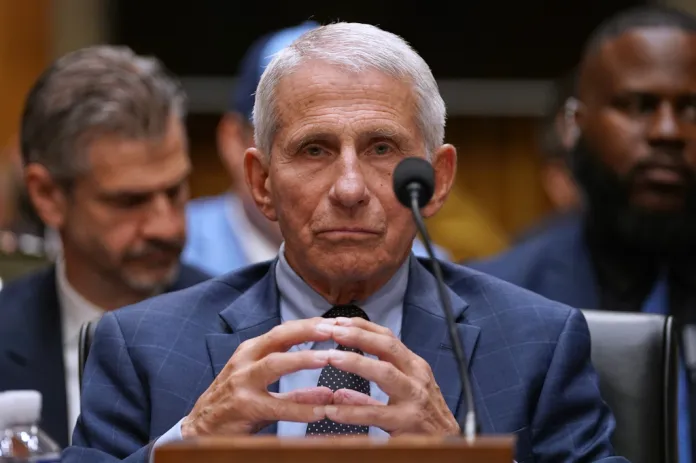
Trump initially embraced the expert class, which recommended lockdowns to reduce the spread of the virus. He made Anthony Fauci the public face of his pandemic response. But Trump also publicly expressed skepticism of their advice, especially as it became clear that the lockdowns were destroying the economic prosperity central to his case for reelection.
During COVID, there wasn’t necessarily a foreign adversary to try to keep guessing. Trump wasn’t looking to negotiate an end to the pandemic. But some of the same traits were evident: shifting strategies, changing deadlines, and relentless positivity about a terrible situation.
It’s an approach that has helped him politically persevere, returning to the White House after a four-year hiatus. It also often worked for him in business. “In the early ‘90s, I was in a ton of debt. I had gone from the smartest guy in town to a complete zero,” Trump recalled in his 2008 book Think Big. He described walking into a meeting and talking about making investments he could no longer afford. “I went into detail about them, painting a vivid picture of success,” he said. “My accountants all acknowledged later that they thought I had actually flipped out.”
What this mentality did not succeed at doing, however, was reassuring voters about the pandemic. Trump might find himself in a similar place with Iran, where his frequent declarations of victory are mixed with bellicosity.
Before presiding over a largely bloodless triumph over communism in the Cold War, then-President Ronald Reagan was also regarded by critics as a loose cannon who might precipitate a nuclear war. Months before he won reelection in a 49-state landslide, Reagan quipped during a mic check, “My fellow Americans, I’m pleased to tell you today that I’ve signed legislation that will outlaw Russia forever. We begin bombing in five minutes.” The comment leaked to the press.
WHAT ARE THE MOST IMPORTANT ENERGY ASSETS IN THE IRAN WAR?
Trump’s comments differ because they were meant for public consumption. There is a risk that he will rattle voters at home while the Iranians stop taking his threats seriously, although he has surely established his willingness to use military force against Tehran by this point.
What Trump does matters most, but what he says is also important.
" Conservative News Daily does not always share or support the views and opinions expressed here; they are just those of the writer."
*As an Amazon Associate I earn from qualifying purchases