Trump looking ahead to history as midterm elections approach
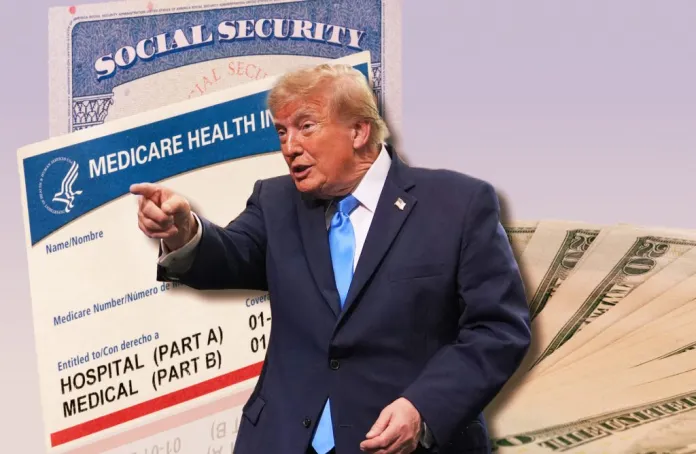
President Donald Trump is weighing his re-election legacy strategy alongside the upcoming midterm elections,with both he and Vice President JD Vance expected to stay highly visible on the fundraising and campaign trail for Republican candidates. Though, public priorities heading into November don’t always match Trump’s stated second-term focus. An Emerson College poll finds the economy is the top issue for 40% of likely voters, while concerns like threats to democracy, healthcare, immigration, and crime follow-along with increased economic disapproval of Trump compared to the prior month.
Foreign policy and the economy are both under pressure. People judge the Iran war more as a failure than a success, though most Republicans back the president’s military operation. At the same time, regional military action has contributed to higher energy prices and inflation returning to a higher rate than in recent months, leaving Republican lawmakers complaining Trump hasn’t helped them pass a bipartisan housing affordability bill.
Other polling suggests voters believe Trump is still not focusing enough on the economy, even as he has tried to shift attention to domestic affordability issues through tours and policy proposals (including prescription drug cost efforts).Yet the article argues that Trump’s approach has changed from his first term: earlier, he emphasized unemployment gains and low inflation, while now foreign policy has loomed larger in “Trump 2.0,” including escalations in the Iran conflict. In 2026, with term limits and “now or never” dynamics, the piece suggests Trump is also making moves aimed at legacy-such as branding projects like the Kennedy Center and White house remodeling-initiatives that may energize supporters but may not strongly influence down-ballot races.
President Donald Trump may have one eye on the midterm elections and the other on the history books as Republicans look to defend their congressional majorities in November.
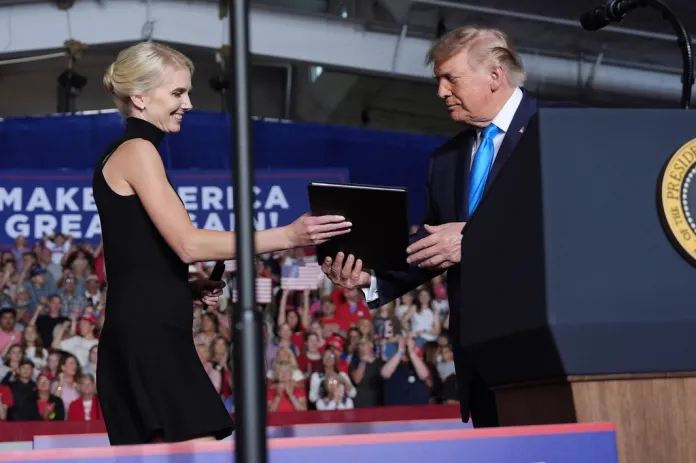
The White House has vowed that Trump will campaign for Republicans this fall as if he were on the ballot himself. Democrats are certain to do the same. Trump and Vice President JD Vance will be active on both the fundraising circuit and the campaign trail.
Recommended Stories
But Trump’s second-term priorities are not always in line with what voters tell pollsters they want months before Election Day.
An Emerson College poll released on Wednesday found that 40% of likely voters listed the economy as their top issue, followed by “threats to democracy” at 15%, healthcare at 13%, immigration at 12%, crime at 7%, and housing affordability at 4%.
According to this survey, disapproval of Trump on the economy increased 7 points compared to the previous month. Respondents judged the Iran war more of a failure than a success by a margin of 53% to 35%, though nearly two-thirds of Republicans are standing by the president on this military operation.
The short-term effects of the Strait of Hormuz being closed have increased energy prices, with inflation spiking to its highest rate in two years in March. That’s still well below the 41-year high it hit under former President Joe Biden, but noticeably above the average inflation rate during Trump’s first term and a reversal of the administration’s progress on both gas prices and inflation more generally in previous months. Republican lawmakers complain Trump hasn’t done much to help them pass their bipartisan housing affordability bill.
In January, an Economist-YouGov poll found that 38% thought Trump was focusing too much on foreign policy compared to 14% who said too little. On domestic issues, the results were the opposite: 11% said he was focusing too much on what’s happening at home, to 38% who said too little. On the economy, the numbers were even more jarring: 52% said he was paying too little attention to this pressing issue, with just 6% saying too much.
Voters don’t give Trump particularly high marks on either set of issues. Trump’s economic approval rating stands at 36.4%, according to the RealClearPolitics polling average, while 38.9% approve of the job he is doing on foreign policy in general and 40.5% on Iran specifically. Trump’s overall average approval rating is 40.9%.
Trump has attempted pivots to the economy. He and top administration officials went on an affordability tour after Democrats won last year’s elections largely campaigning on that issue. Republicans can point to big tax cuts and administration initiatives to lower prescription drug costs. He has also repeatedly described his Iran intervention as a short “excursion” rather than the kind of forever war he campaigned against in 2024.
But compared to Trump’s first term, there has been a notable shift. Then, he regularly touted record-low unemployment among various demographic groups, including women, black people, and Hispanics, which coincided with low inflation. When the pandemic disrupted this economic progress at the precise moment he was seeking reelection in 2020, Trump pivoted to pushing for economic reopening after initially elevating Anthony Fauci and backing the lockdowns.
Even in defeat, Trump still beat Biden 83% to 17% among voters who said their top issue was the economy, according to exit polls. Trump and Biden were tied on the question of who was the better candidate to handle the economy. Trump won voters who said it was more important to rebuild the economy than contain COVID-19 by 58 points.
Trump’s first-term military actions, highlighted by his smashing success in routing ISIS, tended to be more limited than Operation Epic Fury this time around. Trump took out Iranian Gen. Qasem Soleimani in 2020 but went no further. This time, he killed the ayatollah. From military action to international diplomacy, foreign policy has loomed larger in Trump 2.0.
But in 2020, Trump was seeking reelection and thought he might have another four years ahead of him to transform the Middle East. In 2026, he is term-limited and it’s now or never.
Trump has looked to leave his mark in smaller ways, too. He has put his name on the Kennedy Center and bulldozed ahead with plans to build a new White House ballroom, the latter project seemingly gaining momentum after the attack on the White House Correspondents’ Association dinner.
TRUMP WON A COALITION. NOW HE’S TESTING ITS LIMITS
These initiatives drive his critics crazy and might not move the needle for down-ballot Republicans in November. But they arguably make more sense if he is looking past the midterm elections toward his legacy.
Trump is the first president to serve nonconsecutive terms in the modern political era. The only precedent is Grover Cleveland in the 19th century. He has already made history and appears to realize has a limited amount of time to make more.
" Conservative News Daily does not always share or support the views and opinions expressed here; they are just those of the writer."
*As an Amazon Associate I earn from qualifying purchases