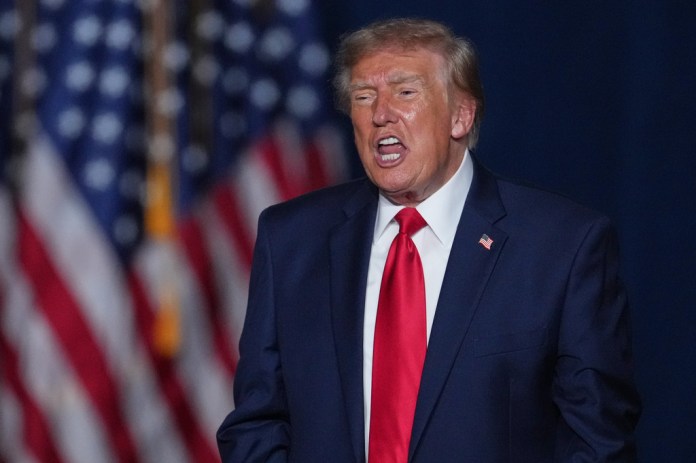
Trump Hits Europe with Hefty New Tariff, Alleging EU ‘Is Not Complying’ with Deal
President Donald Trump said he will raise tariffs on cars and trucks from the European Union to 25% next week, arguing the EU isn’t meeting terms of an agreed U.S.-EU trade deal. Trump and the European Commission previously reached an agreement in July that set a 15% tariff ceiling on most goods,but a U.S. Supreme Court ruling this year limited the administration’s legal basis for those tariffs-leading the administration to use alternative authorities and impose a 10% tax while pursuing further increases.
The move comes at a fragile time for the global economy,with inflation and slower growth concerns intensified by higher oil and gas prices following strikes that effectively disrupted shipping through the Strait of Hormuz. Domestically, Trump also faces political pressure ahead of November’s midterm elections, as inflation remains a key issue and a recent poll shows low approval for his handling of the economy.
The Trump administration’s proposed replacement tariffs could put the broader trade framework-often referred to as the “Turnberry Agreement”-at risk, tho the EU says the deal shoudl be honored and expects the U.S. to keep tariff increases within the agreed ceiling. The EU estimates the bilateral arrangement helps save European automakers about €500 million to €600 million per month, and it points to the depth of U.S.-EU trade,worth €1.7 trillion in 2024.
President Donald Trump said Friday that he will increase the tariffs charged on cars and trucks from the European Union next week to 25 percent — a move that could jolt the world economy at a fragile moment.
Trump said in a social media post that the EU “is not complying with our fully agreed to Trade Deal,” though he did not flesh out his objections in the post.
Trump and European Commission President Ursula von der Leyen had agreed to the trade deal last July. It set a tariff ceiling of 15 percent on most goods, though the Supreme Court this year ruled against the legal authority that Trump had used to charge that tax.
This left Trump looking for substitute authorities, and his administration has imposed a 10 percent tax while investigating trade imbalances and national security issues to put in new tariffs to make up for lost revenues.
The tariffs hit at a moment when the Iran war has crushed the world economy with expectations of slower growth and higher inflation, as oil and natural gas prices have risen due to the effective closure of the critical Strait of Hormuz after strikes by the U.S. and Israel began at the end of February.
At the same time, Trump faces political pressure in the U.S. going into November’s midterm elections because of rising levels of inflation.
Trump, a Republican, returned to the White House last year on the promise that he could quickly tame prices that jumped in the aftermath of the government’s response to the coronavirus pandemic, but higher energy costs pushed annual inflation in March to 3.3 percent, which was higher than what he had inherited.
Just 30 percent of U.S. adults approved of Trump’s handling of the economy, according to the latest poll by The Associated Press-NORC Center for Public Affairs.
Both the U.S. and the EU had previously confirmed their commitment to preserving the trade framework, known as the Turnberry Agreement, which was named after Trump’s golf course in Scotland.
The status of the 2025 deal was first cast into doubt after the Supreme Court this year ruled that the president lacked the legal authority to declare an economic emergency and charge tariffs on goods from the members of the EU and other states.
The alternative tariffs being explored by the Trump administration could ultimately put the agreement with the EU at risk of violation, though European Commissioner for Trade and Economic Security Maroš Šefčovič told reporters last week that the relationship with the U.S. had become more positive over the past year.
The EU had said it expected the bilateral deal would save European automakers about 500 million to 600 million euros ($585 million to $700 million) a month.
The value of EU-U.S. trade in goods and services amounted to 1.7 trillion euros ($2 trillion) in 2024, or an average of 4.6 billion euros a day, according to EU statistics agency Eurostat.
“A deal is a deal,” the European Commission said in February after the Supreme Court ruling. “As the United States’ largest trading partner, the EU expects the U.S. to honor its commitments set out in the Joint Statement — just as the EU stands by its commitments. EU products must continue to benefit from the most competitive treatment, with no increases in tariffs beyond the clear and all-inclusive ceiling previously agreed.”
The Western Journal has reviewed this Associated Press story and may have altered it prior to publication to ensure that it meets our editorial standards.
Advertise with The Western Journal and reach millions of highly engaged readers, while supporting our work. Advertise Today.
" Conservative News Daily does not always share or support the views and opinions expressed here; they are just those of the writer."
*As an Amazon Associate I earn from qualifying purchases