Trump Brushes Off Birthright Citizenship Loss, Celebrates ‘Most Consequential Decision’ That Gives ‘Tremendous Additional Power Back to the Presidency’
President Donald Trump discussed recent Supreme Court decisions, highlighting the ruling in the Trump v. Slaughter case that expanded executive authority by allowing the president to dismiss agency heads and overturn long-standing precedents. Trump praised this as a victory that restored presidential power, referencing historical battles over the balance of power, including efforts to “pack the Court.”
He noted setbacks in cases like birthright citizenship but indicated plans to seek legislative changes through Congress. Specifically, he mentioned proposed bills to reinterpret the 14th Amendment, aiming to grant citizenship at birth only to children with at least one parent who is a U.S. citizen, resident, or serving in the military, moving away from current protections.
Trump also criticized recent court rulings related to election procedures, urging Congress to pass measures like the Save America act and the Birthright Citizenship Act, emphasizing the need for stronger election integrity and immigration policies. He is actively pushing Republican leaders to support these initiatives amid ongoing legal and political battles, asserting that future legislation may be more influential than Supreme Court rulings in shaping policy and defending conservative agendas.
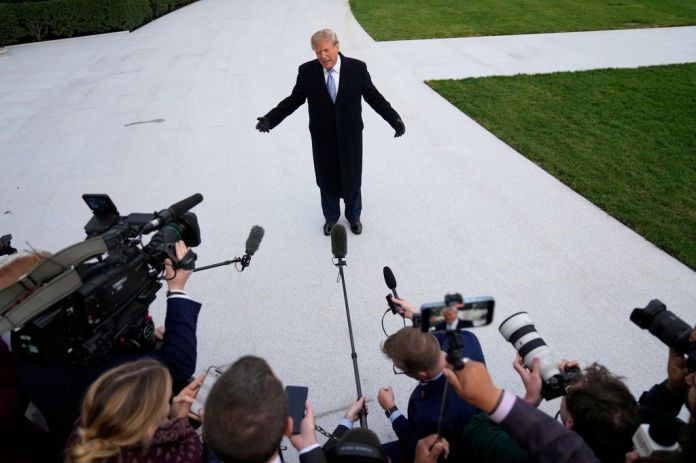
President Donald Trump declined to slam the Supreme Court Tuesday following a string of losses this week and instead celebrated the Justices’ decision to expand executive authority.
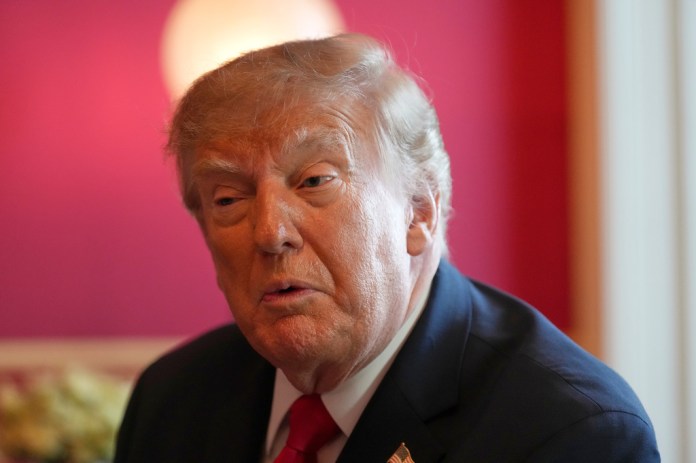
“The biggest and most consequential Decision issued by the Court, by far, is the Slaughter Case, which overturned the very famous Humphrey’s Executor Rule,” Trump wrote on . “This whole concept of ‘Power’ has been fought over for nearly 100 years, going all the way back to Franklin [Delano] Roosevelt, where a large slice of his Power was taken away.
“He fought to regain it, even wanting to ‘pack the Court,’ but was unsuccessful in doing so,” the president continued. “This Decision gives tremendous additional Power back to the Presidency, where it belongs. It is an Honor to be the sitting President who, after all these years, WON this very important, and hard fought, Case.”
Trump added, “We had other good Victories, too, and we also had the Birthright Citizenship loss, which we will work to correct in Congress, but the big SLAUGHTER, was SLAUGHTER. The Republican Party was treated very fairly by the United States Supreme Court.”
In the case of Trump v. Slaughter, the high court gave the president broad authority to fire heads of government agencies like the Federal Trade Commission, expanding executive power and overturning a 91-year precedent.
And despite suffering losses in several high-profile cases, Trump is already using public pressure to force congressional action on various issues.
When it comes to birthright citizenship, the commander in chief initially issued an executive order in January 2025, which said that the children of illegal aliens and visiting foreigners were never intended to benefit from this provision of the Constitution.
Chief Justice John Roberts authored the 6-3 opinion that struck down Trump’s order, and was joined by the three liberal Justices Elena Kagan, Sonia Sotomayor, and Ketanji Brown Jackson, along with Trump appointee Amy Coney Barrett.
Justices Clarence Thomas, Samuel Alito, and Neil Gorsuch dissented, while Brett Kavanaugh partially concurred with the majority opinion, but disagreed about Trump’s order violating the 14th Amendment.
Following that ruling, Trump posted a link on to a story in Just The News, which said that federal lawmakers are already discussing legislation that would mimic Trump’s original order.
The story cited “several bills,” but focused on “the Birthright Citizenship Act” introduced by Republican Rep. Brian Babin of Texas and GOP Sen. Lindsey Graham of South Carolina.
These measures would reinterpret the 14th Amendment’s “subject to the jurisdiction thereof” clause, thereby granting citizenship at birth to children who have “at least one parent who is a U.S. citizen, national, lawful permanent resident (LPR) residing in the U.S., or an LPR serving in the military.”
The same may be true for Trump’s Save America Act, which has stalled in the Senate, with Republicans refusing to terminate the filibuster — or use reconciliation — to get it passed.
After the justices sided with the state of Mississippi in its case against the Republican National Committee, allowing ballots that are postmarked by Election Day to be counted up to five days later, calls for congressional action have grown even louder.
Conservative activist Scott Pressler has been publicly pressuring Republican Senate Majority Leader John Thune for months to get the election integrity measure passed, and is now urging Republican House Speaker Mike Johnson to attach the SAVE America Act to the National Defense Authorization Act.
“@SpeakerJohnson, Please attach SAVE America Act to the text of the National Defense Authorization Act. This isn’t coming from just me — I’m speaking for millions of voters,” he wrote Tuesday on X.
Following the RNC case ruling, Trump wrote on : “The House of Representatives has approved this vital Act, THREE TIMES. The United States Senate seems unable to do so.
“In a time when there is a powerful Communist Movement taking place in our Country, one more dangerous than World War I, World War II, Pearl Harbor, or September 11th, all Dumocrats, and our five Republican Senate Hold Outs, Lisa Murkowski, Susan Collins, Thom Tillis, Bill Cassidy, and Mitch McConnell must vote to SAVE OUR COUNTRY. There can be no more excuses!”
Ironically, the high court’s rulings may end up forcing GOP lawmakers to enshrine their agenda into law, giving it more legitimacy and staying power than the nine justices ever could.
Advertise with The Western Journal and reach millions of highly engaged readers, while supporting our work. Advertise Today.
" Conservative News Daily does not always share or support the views and opinions expressed here; they are just those of the writer."
*As an Amazon Associate I earn from qualifying purchases