SCOTUS Doesn’t Have The Final Word On Birthplace Citizenship
The article discusses the implications of a recent Supreme Court decision on birthright citizenship and emphasizes the ongoing role of Congress and the broader political process in shaping constitutional interpretation. It draws ancient parallels to the 1857 Dred Scott case, illustrating how presidents like Abraham Lincoln responded to Supreme Court rulings that conflicted with their policies, highlighting the importance of legislative and executive actions beyond judicial decisions. The author argues that, despite the Court’s interpretation, constitutional questions should continue to be debated and addressed thru legislation and public discourse, not solely through judicial rulings. Justice Kavanaugh’s suggestion that Congress coudl enact laws to modify or clarify the citizenship clause is seen as an invitation to persistent constitutional conversation. The piece advocates for a balanced approach where all branches uphold their responsibilities, ensuring that constitutional development remains an active, democratic process. Ultimately, it stresses that the legitimacy of constitutional governance depends on public engagement and legislative deliberation, not just judicial pronouncements.
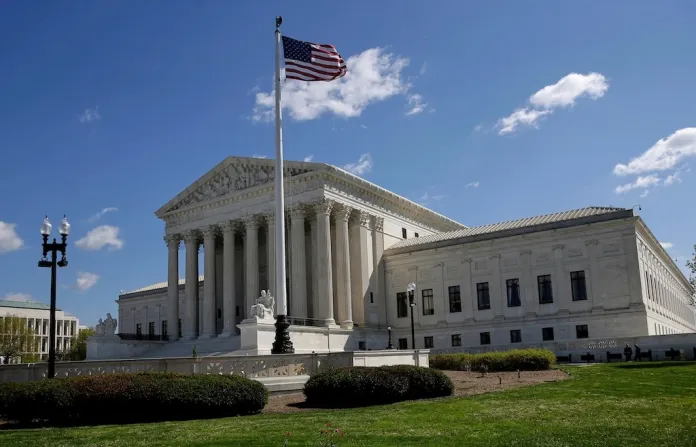
The Supreme Court has spoken. Now what?
That question has confronted the nation before. In 1857, the Supreme Court believed it had settled one of the most consequential constitutional controversies in American history. In Dred Scott v. Sandford, Chief Justice Roger Taney declared that persons of African descent could never become citizens of the United States and that Congress lacked authority to prohibit slavery in the territories. Many believed the court had spoken the final constitutional word.
Abraham Lincoln disagreed. His administration’s response to Dred Scott illustrates the point. President Lincoln did not disregard the court’s judgment in Dred Scott’s own case. But neither did he treat Taney’s opinion as binding executive or legislative policy for the future.
In 1862, for example, Congress passed, and Lincoln signed into law, An Act to secure Freedom to all Persons within the Territories of the United States, which prohibited slavery in the territories notwithstanding Dred Scott’s contrary constitutional holding. And the executive branch abandoned the Buchanan administration’s practice of denying passports to black Americans, including Frederick Douglass — a practice that had rested on Taney’s assertion that they could never be citizens.
These actions were foreshadowed in Lincoln’s First Inaugural Address, in which he warned that if “the policy of the Government upon vital questions affecting the whole people is to be irrevocably fixed by decisions of the Supreme Court,” then “the people will have ceased to be their own rulers.”
That warning deserves renewed attention after the Supreme Court’s birthplace citizenship decision.
Those of us who believe the court misread the citizenship clause should not pretend the decision does not matter. It does. Five justices have now embraced the view that the 14th Amendment itself requires citizenship for virtually everyone born on American soil, regardless of the immigration status of the parents and regardless of whether they are present in our country without the nation’s consent. Unless and until the court changes course, that constitutional holding governs.
But constitutional government does not — or at least should not — end when the Supreme Court issues an opinion.
One feature of the decision has received surprisingly little attention. Justice Brett Kavanaugh, writing separately, emphasized that “Congress could — consistent with the Fourteenth Amendment — amend §1401(a) or otherwise enact new legislation establishing exceptions to birthright citizenship for children born to foreign citizens unlawfully or temporarily in the country.” Some commentators have seized upon that concurrence as a roadmap for resolving the controversy through ordinary legislation. That observation is both promising and incomplete.
It is promising because it reminds us that the Constitution creates three coordinate branches of government, not one. Congress is not merely an observer of constitutional development. It possesses independent constitutional responsibilities, and its members take the same oath to support the Constitution as do federal judges.
But Justice Kavanaugh’s concurrence was only one vote. Five justices concluded that the 14th Amendment itself answers the constitutional question. If that understanding is correct, Congress cannot simply enact an ordinary statute that contradicts the Constitution as the court has interpreted it.
That is why the significance of Justice Kavanaugh’s concurrence lies elsewhere. It is an invitation — not to disregard the court but to continue the constitutional conversation through the political process.
That is precisely what Lincoln did after Dred Scott. Lincoln never argued that President Buchanan should ignore the judgment in Dred Scott. Nor did he suggest that federal officials were free to disregard judicial decrees. Instead, he distinguished between the binding effect of a judgment in a particular case and the broader constitutional principles that continue to be debated within a self-governing republic.
That distinction has largely disappeared from modern constitutional discourse. Today, too many Americans assume that once the Supreme Court decides a constitutional question, the debate is over. Yet our constitutional history tells a different story.
The court upheld racial segregation before it rejected segregation. It sustained broad restrictions on economic liberty before abandoning many of those doctrines. It approved compulsory flag salutes before recognizing that schoolchildren could not be forced to recite the Pledge of Allegiance. Constitutional meaning has often developed through an ongoing dialogue among the courts, Congress, the president, the states, and ultimately the American people themselves.
Originalists, of all people, should understand this. Originalism rejects the notion that constitutional meaning evolves merely because judges’ preferences change. But it does not require accepting judicial supremacy. The Constitution itself assigns interpretive responsibilities to each branch of government. Courts decide cases. Congress legislates. The president executes the laws while taking his own oath to preserve, protect, and defend the Constitution.
That shared responsibility becomes especially important when the court addresses questions that have divided the nation for generations. If Congress believes the court has misunderstood the original meaning of the citizenship clause, it should not simply shrug its shoulders and declare the matter closed. Nor should it engage in empty symbolic gestures destined to fail.
Instead, Congress should do exactly what Justice Kavanaugh’s concurrence implicitly invites it to do: legislate carefully, deliberately, and transparently.
Such legislation would undoubtedly be challenged. The Supreme Court might well strike it down. But that would not make the effort futile.
On the contrary, it would sharpen the constitutional questions, deepen the historical record, encourage additional scholarship, and require the court to confront arguments that may not have been fully developed in the present litigation. Constitutional law is not strengthened when difficult questions are insulated from further examination. It is strengthened when they are tested through the constitutional processes the framers created.
There is another reason Congress should act. Legislation requires public debate. Hearings would explore the history of the citizenship clause, the debates surrounding the Civil Rights Act of 1866, the original understanding of “subject to the jurisdiction thereof,” and the competing interpretations advanced by the majority and the dissents. Members of Congress would have to defend their conclusions before the American people.
That is not a defect of representative government. It is its greatest strength.
Too often, modern constitutional controversies bypass the democratic process altogether. Interest groups file lawsuits. Judges decide them. The public watches from the sidelines.
Lincoln envisioned something different. He believed constitutional self-government requires citizens and their elected representatives to continue reasoning together about the meaning of the Constitution, even after courts have spoken in particular cases. Judicial decisions deserve respect. They do not, or should not, extinguish constitutional deliberation.
Whether Congress ultimately agrees with Justice Kavanaugh’s statutory approach is almost beside the point. The larger question is whether Americans still possess the confidence to govern themselves.
If every contested constitutional question is treated as permanently settled the moment five justices announce an answer, Lincoln’s warning becomes reality. On matters of the greatest public importance, the people will indeed have ceased, to that extent, to be their own rulers.
The Supreme Court has spoken. Our constitutional conversation should not end there.
Lincoln did not preserve constitutional self-government by ignoring the Supreme Court. He preserved it by refusing to surrender the Constitution to the Supreme Court. The elected representatives of the people should do the same.
Dr. John Eastman is a senior fellow at the Claremont Institute and director of the Institute’s Center for Constitutional Jurisprudence. On behalf of the Institute, he filed an amicus curiae brief in the Slaughter case, urging the court to overrule its New Deal-era precedent, Humphrey’s Executor.
" Conservative News Daily does not always share or support the views and opinions expressed here; they are just those of the writer."
*As an Amazon Associate I earn from qualifying purchases