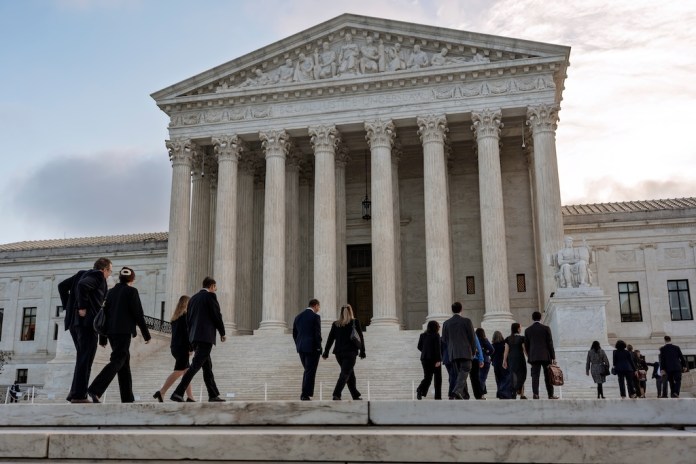
Supreme Court takes up another case over the First Step Act brought by inmate
The U.S.Supreme Court has agreed to hear **Maxwell v. Thomas**, a case that will examine how the **2018 First Step Act** applies to inmates seeking faster transfers from prison to **lower-security settings** like halfway houses. The dispute centers on how prisoners can challenge the **time credits** they earn through good behavior and related programming,and specifically whether those challenges must be brought via a **habeas corpus** petition.
The petition was first filed by inmate **William Maxwell** without a lawyer, though he later had counsel submit a reply and is expected to have legal portrayal when argued. The Court is expected to hear the case between **October 2026 and April 2027**.
This decision comes shortly after the Supreme Court issued other rulings involving the First Step Act, including a decision in **Rutherford v. United States** about whether changes to mandatory minimum sentences can be considered in compassionate-release eligibility. The court also plans to continue issuing opinions through the end of its current term and has already started building its docket for the term beginning in october.
The Supreme Court added a case to its next term on Monday that addresses how the First Step Act applies to inmates seeking quicker transfers from prison to lower-security confinement, such as a halfway house, marking the latest instance of the justices reviewing the scope of the 2018 criminal justice reform law.
The high court said it will hear the case Maxwell v. Thomas in its upcoming term. That case focuses on how applicants seeking to challenge the time credits they’ve earned through good behavior via provisions in the law may do so in federal court. The First Step Act, signed into law in 2018, allows inmates to earn time credits for recidivism-reduction programming or productive activities, which can be used to secure early release from secure custody into halfway houses or home confinement.
Recommended Stories
The petition to the Supreme Court was initially filed by William Maxwell, an inmate serving a 20-year sentence for racketeering, pro se, meaning he filed his petition without an attorney, marking a rare instance of the high court taking up a case filed by an inmate himself. Maxwell later had a lawyer file a reply brief on his behalf, however, and will likely have a lawyer argue before the justices when the case is heard.
The question the justices will focus on is whether inmates may challenge the time credits via a habeas corpus petition, which is a legal challenge to their detention. The Supreme Court is expected to hear arguments in the case sometime between October 2026 and April 2027.
The decision to take up another case regarding the First Step Act comes days after the high court issued a pair of rulings over the 2018 law and its ability to secure early release for inmates under its revised sentencing guidelines. The Supreme Court ruled 6-3 in Rutherford v. United States that changes to mandatory minimum sentences cannot be retroactively considered when examining whether inmates are eligible for compassionate release.
THE MAJOR SUPREME COURT DECISIONS REMAINING FOR THIS TERM
The Supreme Court is expected to wrap up its current term later this month, when it finishes releasing opinions in the nearly two dozen remaining cases it heard arguments in earlier this term. The high court is next expected to issue opinions on Thursday.
For the high court’s upcoming term, which will begin in October, the justices have already taken up 11 cases and are expected to add dozens more to their docket in the coming months.
" Conservative News Daily does not always share or support the views and opinions expressed here; they are just those of the writer."
*As an Amazon Associate I earn from qualifying purchases