Supreme Court slams door on lawsuit over New York COVID-19 vaccine mandate
The Supreme Court declined to hear a lawsuit brought by anonymous New York healthcare workers challenging the state’s COVID-19 vaccine mandate, which they argued unlawfully limited religious exemptions in violation of Title VII. The case, Doe v. Hochul, was previously rejected by the Court, with three justices dissenting, led by Justice neil Gorsuch, who emphasized the importance of addressing the legal question. The healthcare workers used Gorsuch’s dissent to petition for rehearing, warning that upholding the lower court’s decision could undermine federal civil rights protections. However, the Supreme Court denied the rehearing, ending this legal effort. The vaccine mandate in New York had been repealed in late 2023. Meanwhile, the Court’s summer orders included finalizing petitions and pending cases, with upcoming sessions starting in October. Recent high-profile decisions have included allowing Trump’s mail-in ballot executive order and construction on the White House ballroom, while several emergency petitions remain under review.
The Supreme Court denied a last-ditch effort on Friday by a group of New York healthcare workers who challenged its denial of religious exemptions to the Empire State’s COVID-19 vaccine mandate.
The high court denied a bid to rehear the case Doe v. Hochul in an orders list, months after the justices rejected the initial petition urging them to review the case. There were no noted dissents in the denial of the rehearing, after three justices had dissented from the denial of the original petition in June.
Recommended Stories
The case, brought by a group of anonymous New York healthcare workers, claimed that the state’s COVID-19 vaccine mandate for healthcare workers unlawfully blocked religious accommodations in violation of Title VII of the Civil Rights Act. The state argued that its mandate did allow for certain religious accommodations but blocked blanket exemptions from the COVID-19 vaccine. The vaccine mandate was repealed in late 2023, but the lawsuit kept going, with the fired healthcare workers arguing that lower-court rulings set a bad precedent for future mandates attempting to undermine Title VII protections.
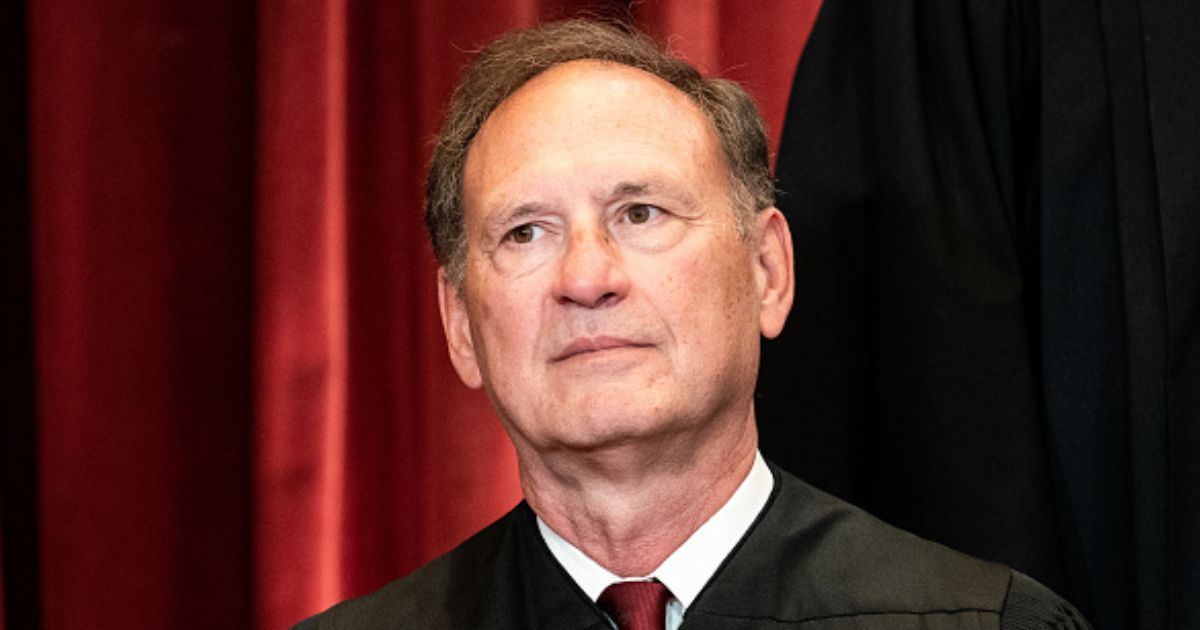
The high court needs four of the nine justices to agree to take up a case for oral arguments. When the high court denied taking up the case in June, three justices dissented from the decision. Justice Neil Gorsuch wrote a dissent in the June denial, joined by Justices Clarence Thomas and Samuel Alito, in which he said the “case raises an important and recurring question of federal law that warrants this Court’s attention.”
“Put simply, addressing this case is well worth our time—and correcting its error should have been an easy business,” Gorsuch wrote, arguing the case should have been taken up by the high court.
“I can only hope that lower courts will more carefully consider in future cases whether a defendant can successfully mount a Title VII undue hardship defense simply by pointing to a state-law mandate,” Gorsuch added in his eight-page June dissent. “I hope, too, that one day soon this Court will choose to settle the question so that other Americans seeking to vindicate their civil rights do not suffer the same fate as those now before us.”
The group of fired New York healthcare workers used Gorsuch’s dissent as a key part of its petition to request a rehearing, warning of the impact of leaving the lower appeals court’s ruling in place.
“As he noted, ‘I fail to see how a state law (especially an unconstitutional state law) prohibiting an accommodation can always and automatically supply an employer with an ‘undue hardship’ defense under federal law.’ In essence, denying certiorari in this matter—and concomitantly leaving the Second Circuit’s adjudication intact—’leave[s] States free to strip individuals of the protections guaranteed by so many federal civil rights statutes … all by the simple expedient of proscribing accommodations those statutes promise,’” the petition for rehearing reads, emphasizing points made by the justices who dissented from the denial of the initial petition.
The denial of the rehearing is the end of the road for this lawsuit, as it is the final appeal effort that can be taken after the Supreme Court initially denies a petition for writ of certiorari.
TRUMP ASKS SUPREME COURT TO LIFT BLOCK ON USPS MAIL BALLOT RULE
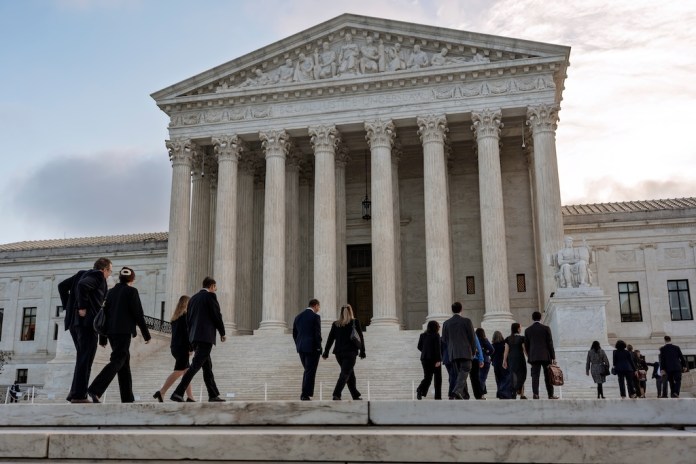
The Supreme Court’s orders list that included the denial of a rehearing for the New York COVID-19 vaccine case was the final of three summer orders lists, which typically clean out dozens of the high court’s pending petitions ahead of its new term. The justices will return to Washington on Sept. 28 for a closed-door conference to consider pending petitions, with oral arguments for the new term scheduled to begin on Oct. 5.
While the Supreme Court has been out of session since the end of June, the high court has issued several rulings on its emergency docket in recent weeks in several high-profile cases, including allowing Trump’s mail-in ballot executive order to go into effect and allowing construction on the White House ballroom to continue. The high court is currently weighing emergency petitions over allowing a new Postal Service rule governing mail ballots and whether to allow political parties to have access to cheaper campaign advertisement rates typically reserved for candidates.
" Conservative News Daily does not always share or support the views and opinions expressed here; they are just those of the writer."
*As an Amazon Associate I earn from qualifying purchases