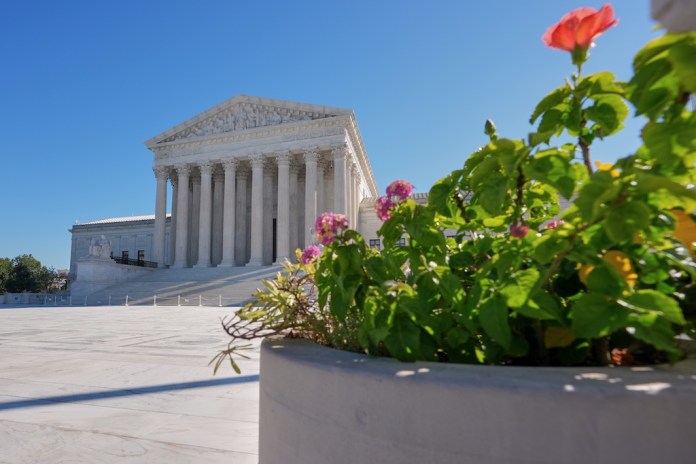
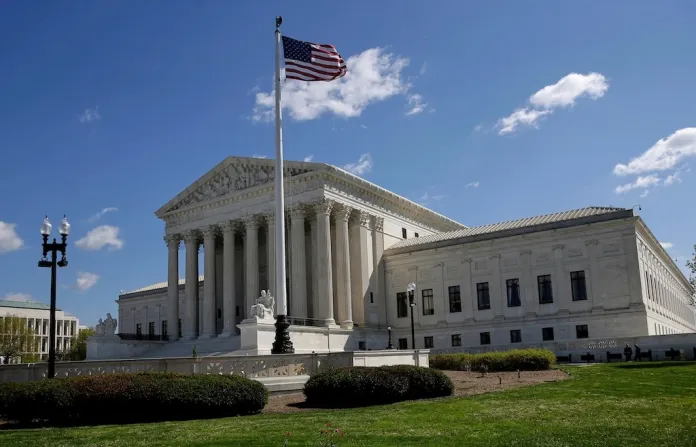
Supreme Court fans ballot fight over transgender athletes
The article discusses the upcoming political battle over transgender athletes, which will be focused on ballot measures in several states this fall. The recent Supreme Court ruling allowed states to restrict athletic participation based on biological sex, primarily affecting those states with existing restrictions. Supporters argue this ruling enables conservative states to enforce laws against transgender participation, while opponents claim it undermines protections for transgender athletes and emphasizes the opposition from many voters, including a majority of Democrats.
The ballot initiatives offer a way for voters to bypass state legislatures, which in many cases oppose such restrictions.Several states, including Colorado and Washington, already have measures qualified for the ballot, and activists are working to bring similar proposals to Maine, Arizona, and Nebraska. these efforts are part of a broader political strategy, with Republicans investing heavily in the issue as a wedge to energize their base, especially in more liberal states where restrictions are already in place or under consideration.
Opponents, including Democratic officials and advocacy groups, criticize some initiatives as motivated by ulterior motives, such as rallying voters around unrelated issues like tax repeals. Additionally, debates continue over the motives behind some efforts, with accusations that certain initiatives are aimed at disproportionately benefiting wealthy donors. The article also highlights the broader political context, including ongoing legal battles and the influence of campaign finance dynamics. the fights over transgender sports participation and related initiatives are emblematic of the broader cultural and political conflicts shaping U.S. elections and policies.
The next culture war battle over transgender athletes will be fought at the ballot box this fall after the Supreme Court ruled Tuesday that states could restrict access to sports by biological sex.
Voters in as many as five states are slated to weigh ballot measures in November that, if passed, would block biological males from competing in women’s and girls’ sports. Ballot language has already qualified for a vote in Colorado and Washington, while activists are fighting in court to get a similar measure on the ballot in Maine.
Recommended Stories
Supporters of transgender athletes emphasized that the Tuesday ruling, handed down by the Supreme Court’s 6-3 conservative majority, does not apply to states that already allow athletes to compete based on gender identity rather than sex.
That means the status quo is essentially preserved for the 23 states that have no restrictions on transgender athlete participation.
The decision was viewed as consequential, however, because some of the 27 states that do have restrictions were tied up in litigation and unable to implement them. And it meant that any successful ballot initiative in a new state this November is more likely to survive a future legal challenge.
Kristen Waggoner, the president of Alliance Defending Freedom, a legal group that helped win the Supreme Court case, said the outcome meant that red states such as West Virginia and Idaho can “confidently” enforce their laws.
“And the 23 states still on the sidelines have run out of excuses,” Waggoner posted on X, adding in a separate post: “Blue states with boys on girls’ podiums … you’re next.”
The ballot initiatives are taking place alongside a push by the Trump administration to overturn transgender policies in California, Minnesota, and beyond. Attorneys general in blue states denounced the ruling as giving states a “license to discriminate” against transgender athletes and vowed to preserve the laws currently on the books.
Repeated surveys show that the public broadly opposes biological males participating in girls’ sports, including a majority of Democrats. A New York Times poll from last year placed that level of opposition at 79%.
For that reason, Republicans have had success making the issue a political wedge on the campaign trail and spent well over $200 million in 2024 targeting voters on that issue alone. After the Supreme Court ruling, the National Republican Senatorial Committee put out a wave of press releases claiming Democrats would vote as “radical transgender defenders” if elected to Congress.
The states where conservatives hope to implement new restrictions this fall are generally more liberal and are represented by Democratic governors and legislatures.
But the ballot initiative process represents a rare chance to sidestep those elected officials entirely and isolate a particular issue that stands a greater chance of success. Democrats have pursued a similar strategy in GOP-led states to expand access to abortion after the Supreme Court overturned Roe v. Wade in 2022.
Two of the ballot initiative efforts, in Arizona and Nebraska, are in states where there are already restrictions in state law. The Arizona measure has already qualified, while Nebraska activists submitted more than 200,000 signatures on Tuesday.
Opponents of the initiatives suggest that Republicans have ulterior motives, with Rep. Pramila Jayapal (D-WA) accusing GOP donors of trying to boost turnout in Washington to overturn a separate millionaires tax that, as an issue on its own, might not be enough to animate voters. The state will decide as soon as this week whether a ballot measure repealing the new tax qualifies for the November election.
“It’s all about the billionaires continuing to get more than their share of resources, and not having them pay their fair share,” said Jayapal, a progressive Democrat who represents most of Seattle.
DEMOCRATS SAY CAMPAIGN FINANCE RULING AN ‘INVITATION FOR CORRUPTION’
The most important battleground state where a ballot measure on transgender athletes could appear is Maine, where activists fell around 500 signatures short of meeting the qualifying threshold. That outcome has been litigated for weeks, and the state Supreme Court will hear arguments Wednesday centered on whether to overrule Secretary of State Shenna Bellows.
President Donald Trump notoriously feuded with Maine Gov. Janet Mills (D-ME) over the state’s transgender policies, before walking back threats to pull the state’s child nutrition funding.
" Conservative News Daily does not always share or support the views and opinions expressed here; they are just those of the writer."
*As an Amazon Associate I earn from qualifying purchases