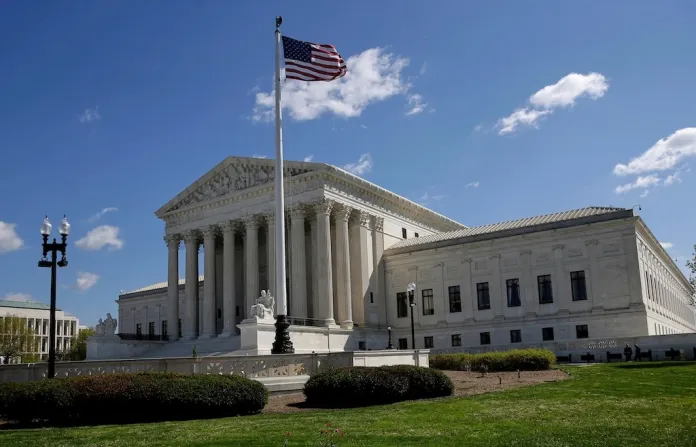
Supreme Court expands gun rights for marijuana users
The supreme Court ruled that prosecuting a marijuana user for firearm possession under federal law is unconstitutional, notably regarding Second Amendment rights. Justice Neil Gorsuch authored the 9-0 majority opinion, which found that criminalizing Ali Hemani for possessing a firearm due to his occasional marijuana use violated his constitutional right to bear arms. Though, the court did not decide on the legality of laws prohibiting addicts or intoxicated individuals from owning firearms, rather ruling narrowly in this case.Hemani challenged the federal gun law, arguing it infringed on his rights, leading to a unique coalition of supporters from both gun rights and anti-gun groups. During oral arguments, justices expressed skepticism about the broad scope of the law, with Gorsuch specifically questioning whether minimal marijuana use, like a gummy bear every other night, coudl disqualify someone from firearm ownership. This case is one of two gun-related cases the court is considering this term, with the other involving Hawaii’s law on concealed firearms on private property.
The Supreme Court found the Justice Department’s prosecution of a marijuana user under a federal law barring unlawful drug users from owning firearms was unconstitutional, handing down another key Second Amendment ruling on Thursday that will have implications for marijuana users across the country.
Justice Neil Gorsuch penned the majority opinion, finding that the federal government’s bid to prosecute Ali Hemani for possessing a firearm because he uses marijuana a couple of times a week violated his Second Amendment rights. The high court ruled 9-0 in siding with Hemani, but only six of the other justices joined Gorsuch’s opinion.
Recommended Stories
The high court said it ruled narrowly in United States v. Hemani, finding the prosecution of a regular marijuana user was unconstitutional under the Second Amendment but declining to decide on whether laws barring addicts or intoxicated drug users from possessing firearms are legal.
Hemani had challenged the constitutionality of a federal gun charge against him by alleging the law violated his constitutional right to bear arms. The charge was filed based on his admission to consuming marijuana “about every other day.” The Hemani case created unusual coalitions on both sides of the argument, with gun-rights groups siding with the drug user who brought the challenge, while the typically pro-gun Trump Justice Department defended the gun law and received support from various anti-gun groups.
During oral arguments in March, Gorsuch sharply questioned the DOJ, asking how much regular unlawful drug use would be needed to take away someone’s ability to possess a firearm. He, along with multiple other justices, appeared deeply skeptical of the legality of the sweeping federal law. Gorsuch at one point asked if “one [marijuana] gummy bear every other night” would disqualify someone from being able to own a firearm.
SUPREME COURT TO WEIGH SCOPE OF GUN RIGHTS FOR DRUG USERS
The Hemani case was one of two gun cases the Supreme Court heard this term. The other case, Wolford v. Lopez, examined the constitutionality of a sweeping Hawaii gun law that bars concealed firearms on private property unless the gun owner obtains permission from the property owner.
This is a breaking story and will be updated.
" Conservative News Daily does not always share or support the views and opinions expressed here; they are just those of the writer."
*As an Amazon Associate I earn from qualifying purchases