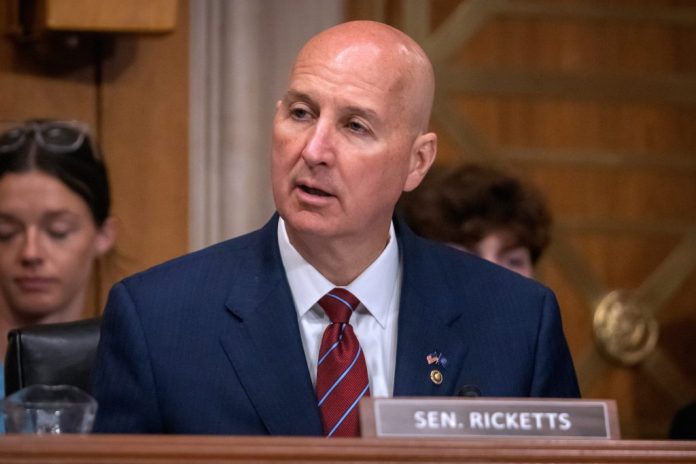
Senate to jam House with FISA extension that excludes CBDC ban
The Senate is considering a “clean” short-term renewal of Section 702 of the Foreign Intelligence Surveillance Act that would extend the government’s foreign surveillance authority for several weeks without the anti-central bank digital currency (CBDC) provision attached by House Speaker Mike Johnson. The House previously sent a three-year extension to the Senate that includes oversight safeguards and penalties,but also ties in a CBDC ban aimed at preventing the Federal Reserve from creating a digital currency,a measure opposed by some because it raises privacy-tracking concerns.
With the FISA program set to expire Friday at midnight, Senate Majority Leader John Thune warned that the House version would likely fail in the Senate and argued for moving forward with a 45-day extension while negotiations continue with Democrats over how long the patch should last. Thune and Johnson both signaled that the Senate’s best path forward may be passing a measure without the CBDC language first, to avoid delays tied to the required votes.
The Senate is thumbing its nose at a House-passed extension of a government surveillance program over the attachment of a central bank digital currency ban included by Speaker Mike Johnson (R-LA) as part of a deal with conservative holdouts.
Instead, the upper chamber plans to move forward on Thursday with a clean extension of section 702 of the Foreign Intelligence Surveillance Act, which will last several weeks and does not include the digital currency attachment. The Senate plans to send the clean extension back to the House and then leave Washington for more than a weeklong recess.
Recommended Stories
The FISA program is set to expire on Friday at midnight unless both chambers can pass an agreement to extend its authority, which grants the government warrantless spy powers over foreign nationals abroad.
The House sent its three-year extension of section 702 to the Senate on Wednesday. The House-passed legislation includes oversight guardrails and penalties for abuses of the spy program.
But as part of House GOP leadership’s deal with conservative holdouts, the digital currency ban was also attached to the reauthorization bill before it was sent to the Senate. The ban has long been a source of disagreement between the chambers. It would prohibit the Federal Reserve from establishing a digital currency, which proponents of the ban say would infringe on privacy rights because the federal government could more easily track digital currencies.
Senate Majority Leader John Thune (R-SD) has warned Johnson that the House version would be dead on arrival, given the need to overcome a 60-vote filibuster with Democratic support. Senate Republicans are pushing a 45-day clean extension, but were in negotiations with Democrats for as short as three weeks.
“In my view, it’s going to take a certain amount of time,” Thune told reporters Thursday while advocating a 45-day extension. “I think that gives us a sufficient amount of time.”
OVER 40 HOUSE DEMOCRATS BAIL JOHNSON OUT ON THREE-YEAR EXTENSION OF GOVERNMENT SPY POWERS
That same morning, Johnson said the “simplest” way to pass a reauthorization of the surveillance program would be for the Senate to pass the House’s three-year extension.
“That is the simplest way out of this,” Johnson said. “All that we did was add the anti-CBDC provision, and that’s something that’s broadly supported. Every House Republican does. I think some Democrats in the House support that provision.”
" Conservative News Daily does not always share or support the views and opinions expressed here; they are just those of the writer."
*As an Amazon Associate I earn from qualifying purchases