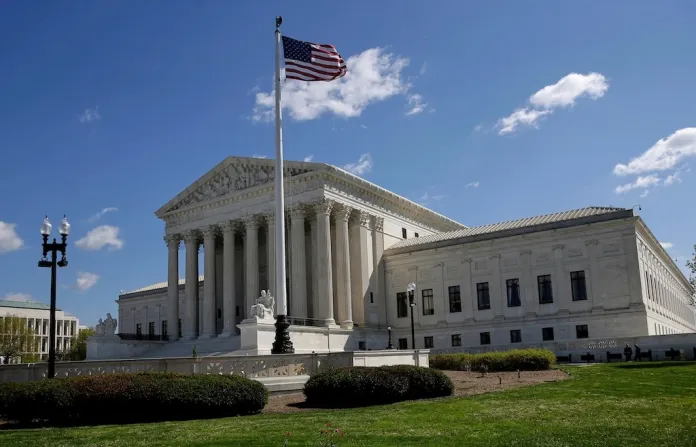
SCOTUS Will Decide On So-Called ‘Assault Weapons’ Bans
The Supreme Court is set to hear two significant cases in its October 2026 term that challenge state and local bans on “assault weapons,” including widely used semi-automatic rifles like the AR-15. These cases,Grant v. Higgins (Connecticut) and viramontes v. Cook County (Illinois), question whether such bans violate the Second and 14th Amendments, with plaintiffs arguing that the laws are overly broad and restrict commonly owned firearms protected by the Second Amendment. The cases address the vague term “assault weapon,” which critics say is a political label rather than a clear legal category,and emphasize that manny of these firearms are used for lawful purposes such as self-defense,recreational activities,and hunting.The Supreme Court’s decision could establish a clearer legal definition of assault weapons and influence the constitutionality of broad firearm restrictions nationwide. This is part of ongoing debates intensified by calls from Democratic figures for federal bans on assault weapons, which are often misunderstood due to the lack of a precise definition. The Court’s acceptance of these cases marks a potential turning point in Second Amendment jurisprudence regarding firearm bans.
On the heels of a big Second Amendment victory for gun owners in Hawaii, the U.S. Supreme Court announced that it will hear two cases challenging state and local “assault weapons” bans later this year.
The cases dispute laws in Illinois and Connecticut, questioning the constitutionality of banning “AR-15 platform and similar semi-automatic rifles” under the Second and 14th Amendments. Grant v. Higgins and Viramontes v. Cook County will be heard together in the Supreme Court’s October 2026 term.
Democrats like Kamala Harris have recently called for a federal ban on assault weapons, which she calls “weapons of war” that “have no place on the streets of civil society.” One of the major problems with that proposition is that Americans have no idea what Democrats mean by “assault weapons.” Even former President Biden’s ATF Director Steve Dettelbach would not offer a definition to Congress, leading Rep. Sheila Jackson Lee, D-Texas, to point out that “[i]f we laid a weapon on the table, you could pretty much say, ‘that falls in the category of assault weapon.’”
In its upcoming term, the Supreme Court may finally help outline a legal definition of assault weapons and judge on the constitutionality of broad firearm bans.
Grant v. Higgins challenges Connecticut’s state-level ban on the sale, transfer, or possession of “assault weapons,” which they define as “[a]ny selective-fire firearm capable of fully automatic, semi-automatic or burst fire at the option of the user.” Grant is not challenging the ban on automatic or burst-fire weapons, but the ban on all semi-automatic weapons that meet the state’s criteria. Among the banned firearms are many commonly used rifles, like the AR-15, along with semi-automatic pistols and shotguns.
Viramontes v. Cook County challenges a similarly broad ban on assault weapons in Cook County, Illinois. The law bans over 100 different rifles by name, including the “most popular long gun in the country,” the AR-15 platform rifle, and any other semi-automatic rifle that can fit a magazine capacity over ten rounds.
Both laws were upheld in the lower courts, leading the plaintiffs to bring their cases to the Supreme Court as a vital Second Amendment issue.
In their appeal, the plaintiffs argue that “the very term ‘assault weapon’ is a political slogan masquerading as a meaningful designation, designed to exploit ‘the public’s confusion over fully automatic machine guns versus semi-automatic’ firearms.”
Because of this vagueness, they argue, “’assault weapons’ laws restrict many perfectly ordinary and common firearms,” which are “functionally identical to every other semi-automatic firearm in the way they fire,” and are “exceedingly common and fully protected by the Second Amendment.” They further argue that the 14th Amendment incorporation doctrine means that the individual states must recognize their citizens’ Second Amendment right to keep and bear arms.
According to the appeal, Supreme Court precedent holds that a firearm cannot be banned if it is “in common use for lawful purposes.”
“If the most popular rifle in the country is not in common use, it is hard to see what that phrase could possibly mean,” the plaintiffs argue.
According to a Washington Post/Ipsos survey, the most-common lawful use of these so-called “assault weapons” is for self-defense, and Americans reportedly own over 32 million AR-15 platform firearms. There are thousands of defensive gun uses in the United States every day, along with heavy recreational and hunting use.
The state of Connecticut argued in their response brief that the United States has a “longstanding tradition of restricting novel weapons that are particularly suited for criminal violence,” and that there is ““no direct historical precedent for the contemporary, growing societal concern over and fear of mass shootings resulting in ten or more fatalities.”
As previously reported by The Federalist, this Supreme Court rejected cases challenging similar laws in Maryland and Rhode Island last year, with only three justices signaling a willingness to hear the cases (Associate Justices Clarence Thomas, Samuel Alito, and Neil Gorsuch). The “rule of four” means that there must be at least four justices who agree to hear a case to bring it before the whole court, but now the justices have finally agreed to hear and decide on an assault weapons ban case.
Luke Miller is a contributor for The Federalist who is studying political economy and journalism at Hillsdale College.
" Conservative News Daily does not always share or support the views and opinions expressed here; they are just those of the writer."
*As an Amazon Associate I earn from qualifying purchases