SCOTUS Showdown Over Gun Suppressors Looms After Appeals Court Creates ‘Circuit Split’
A recent ruling by the U.S. Court of Appeals for the Fifth Circuit could substantially influence second Amendment jurisprudence by determining that suppressors (silencers) qualify as “arms” protected under the Second Amendment. This decision may prompt the Supreme Court too resolve a split among federal appellate courts regarding whether suppressors fall under the legal definition of “arms.” The Fifth Circuit’s stance contrasts with other circuit courts, notably the ninth Circuit, which has interpreted the law differently. If the Supreme Court takes up the case, it could have broad implications for gun regulation, especially concerning laws enacted under the National Firearms Act of 1934, which taxes and regulates suppressors and other weapons. The ruling emphasizes that suppressors facilitate self-defense and are protected by constitutional rights, challenging the Justice Department’s earlier position that they are not “arms.” The ongoing legal debate highlights the potential for future Supreme Court review and the importance of resolving circuit disagreements on firearm-related legal definitions.
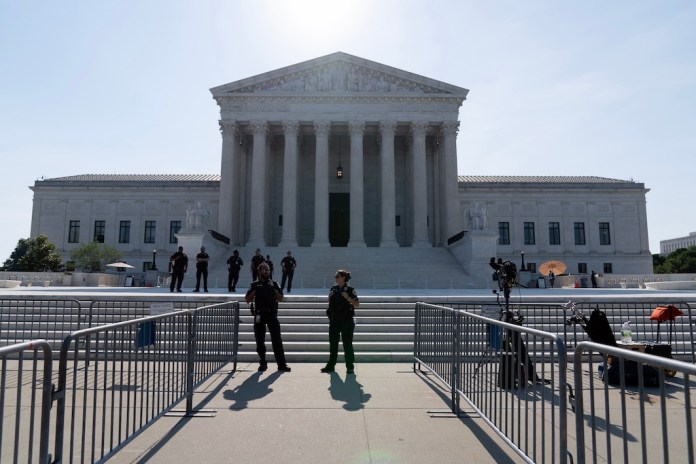
A federal appeals court’s Thursday ruling could force the Supreme Court to decide if suppressors and magazines fall under the definition of “arms.”
The United States Court of Appeals for the Fifth Circuit ruled Thursday in Comeaux v. United States that suppressors fall under the category of “arms” and are protected under the Second Amendment. The Second Amendment Foundation noted the “circuit split,” when two appellate circuits disagree on similar cases, in a series of posts on X, while SAF Director of Legal Research and Education Konstadinos Moros specifically mentioned the Ninth Circuit case Duncan v. Bonta.
“There is now a circuit split on whether suppressors are arms,” Moros posted. “This is of critical importance to those of us in states that totally ban them. While everyone else is arguing about whether registration is constitutional, we can’t even register them under the NFA if we wanted to!”
The National Firearms Act, passed in 1934, imposed a $200 tax on suppressors, fully automatic firearms, “short-barreled” rifles and shotguns, and other weapons, and required they be registered with the Bureau of Alcohol, Tobacco, Firearms, and Explosives.
A surprise second major ruling to cover today, because the Fifth Circuit just became the first to agree that suppressors are “arms” under the Second Amendment.
This is of massive importance considering that other circuits have ruled the opposite, and it puts further pressure on… https://t.co/e8XXu2XRSK pic.twitter.com/Cy7EytEe3s
— SAF (@2AFDN) June 18, 2026
When a “circuit split” occurs, the Supreme Court tends to be more likely to hear the case to resolve the disagreement among the lower courts. The Fifth Circuit ruling decisively rejected the Justice Department’s arguments that suppressers were not arms in the unanimous ruling.
“First, Bruen explained that Second Amendment ‘Arms’ need not be necessary for a firearm’s functioning but instead must only ‘facilitate armed self-defense,” the opinion said. “And second, the Supreme Court has cautioned lower courts against the trapped-in-amber approach that the government attempts to use by limiting the definition of ‘Arms’ to those devices required for militia service at the Founding. Silencers are ‘Arms.’”
The Supreme Court invalidated New York’s “good cause” requirement for pistol permits in June 2022 with a 6-3 ruling in New York State Rifle and Pistol Association v. Bruen. Associate Justice Clarence Thomas, who authored the court’s opinion, cited historical gun laws and the debate around the ratification of the 14th Amendment as reasons New York’s law was unconstitutional.
While the Fifth Circuit found that suppressors were protected under the Second Amendment, it upheld the conviction of Comeaux because the National Firearms Act of 1934 operates similarly to a “shall issue” system for administering applications for concealed carry permits.
In another sign that the high court could take this case up, the Ninth Circuit case Moros cited as causing the potential “split,” Duncan v. Bonta, has been relisted 21 times as of Thursday, according to the Supreme Court’s docket.
In that case, a federal district court initially found California’s ban on detachable magazines holding more than 10 rounds unconstitutional, but was overturned on appeal by an “en banc” panel at the appellate court, which has a long-standing reputation as one of the most left-leaning federal appellate courts in the country.
The Supreme Court has overturned almost four out of every five decisions the Ninth Circuit has issued since 2007, according to the Pacific Research Institute, with the high court reversing 94 percent of the circuit’s rulings in the term ending in June 2021. The Trump administration has sought to prod the Supreme Court to hear more Second Amendment cases.
“We’re identifying places where we can help make new law or create a circuit split for purposes of ultimate Supreme Court determination,” Assistant Attorney General for Civil Rights Harmeet Dhillon told the DCNF in a previous interview.
All content created by the Daily Caller News Foundation, an independent and nonpartisan newswire service, is available without charge to any legitimate news publisher that can provide a large audience. All republished articles must include our logo, our reporter’s byline and their DCNF affiliation. For any questions about our guidelines or partnering with us, please contact [email protected].
Advertise with The Western Journal and reach millions of highly engaged readers, while supporting our work. Advertise Today.
" Conservative News Daily does not always share or support the views and opinions expressed here; they are just those of the writer."
*As an Amazon Associate I earn from qualifying purchases