Review of ‘Little House on the Prairie’ remake
The article critiques Netflix’s eight-episode remake of “Little House on the Prairie,” arguing that it distorts the original’s themes and characters. Despite initial fears about controversial content, the show is largely a sanitized and politically correct version that downplays the pioneering spirit and historical tensions present in the books. It features modern, progressive characterizations-such as Caroline Ingalls transforming from a conventional figure to an antiracist, proto-feminist-and alters Native American depictions to be less culturally distinct, promoting a message of racial harmony that sidesteps historical realities. The series simplifies complex issues, replacing rugged individualism with a more idealized, uniform moral universe. the critique concludes that the show offers a watered-down, politically motivated reinterpretation of Wilder’s work, failing to capture the novel’s sense of danger, tension, and authenticity. The reviewer views it as a lesser, modernized version that sacrifices depth for contemporary social commentary.
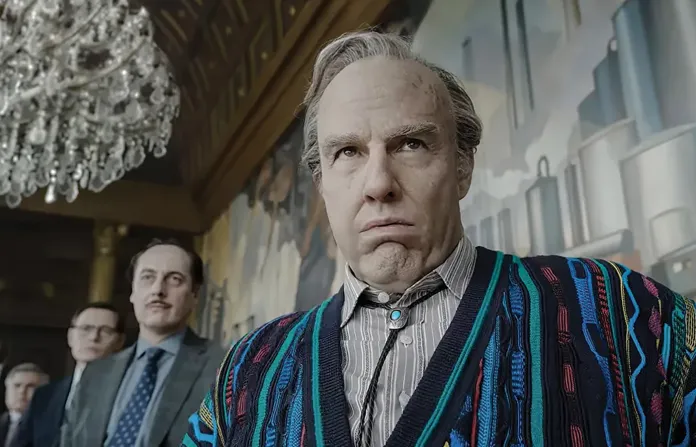
It turns out that conservatives’ direst fears about the new Little House on the Prairie remake — Ma is a sex worker! Pa is trans! — were overblown. Still, Netflix’s eight-episode production is strangely unreal, like a two-legged horse or a pitchfork with no tines. A sanded-down work of historical bowdlerization, the show reimagines Manifest Destiny as the westward spread of social justice. Worse, it’s boring. Watch if you must, but don’t expect any improvement on the Michael Landon original, to say nothing of Laura Ingalls Wilder’s books.
Recommended Stories
The trouble starts in episode one, which sees the Ingalls family departing Wisconsin, not in search of wide-open spaces but to escape an extended-family quarrel. This is a neat bit of revisionism, substituting as it does a therapeutic narrative for Charles Ingalls’s (Luke Bracey) right-coded pioneer spirit. Indeed, individualism and the frontier creed get short shrift throughout the series, replaced as often as not by something like their opposite. “It is a myth that men can make it out here alone,” says George Tann (Jocko Sims), a kindly black doctor whom the family meets upon arriving in Kansas. “Isn’t that why we’re all here?” a neighboring homesteader scoffs. “To make a new America? Whatever that might be.”
These deviations (or deviancies) might be less bothersome if the show got its leads right. It doesn’t. Though Bracey summons the same rugged gentleness that Landon once brought to the role of Pa, the words coming out of his mouth are too often a deconstructionist’s egalitarian fantasy. “I could say I’m your father and I know best,” Charles tells his oldest daughter, Mary (Skywalker Hughes), “but I’m not sure that’s true anymore.” Caroline Ingalls (Crosby Fitzgerald), meanwhile, is even more greatly altered than her husband, transformed from a “canceled” Indian-hater and tradwife to a headstrong antiracist and proto-feminist.
The pair’s marriage is naturally the site of many of these changes. Unhappy on the prairie, Caroline lets slip that she is considering taking the children and going home to Mother. Charles, having stayed out all night without warning, can “make [his] own breakfast,” for all his wife cares. It is possible that Caroline and Charles Ingalls — the actual historical figures who were Laura Ingalls Wilder’s parents — behaved and spoke this way, but I very much doubt it. What is absolutely certain is that the books’ characters “Ma” and “Pa” didn’t. Nor would Ma, as Netflix’s Caroline Ingalls does, have stormed out of a women’s society meeting over its refusal to include a black merchant. I applaud that moral stance, but don’t, for an instant, believe it.
” data-large-file=”https://cndimages.nyc3.cdn.digitaloceanspaces.com/breaking-news/wp-content/uploads//2026/07/localimages/LA.TV_.072226.jpg?w=696″ height=”658″ width=”1024″ “https:>
The effect of these “updates” is a general smoothing of Little House on the Prairie’s rough edges. Gone is the frisson of watching period men and women enact their own ideals rather than ours. In its place is a Thomas Kinkade painting with the politics of ChatGPT. Consider, for example, the show’s treatment of the Osage Indians on whose land the family has settled. In Wilder’s beloved novels, the Osages are irretrievably “other,” a fact illustrated in one memorable passage by the appearance of Natives wearing (and unbothered by) odorous skunk-skin loincloths. Netflix’s series renders the same scene but puts the young men in Western clothing with Native accoutrements. Of course it does. To do otherwise would make plain that the racial tensions of the past were at least partly due to unbridgeable cultural divides.
Netflix would prefer to lay the entire blame on white settlers’ racism. How else to explain show creator Rebecca Sonnenshine’s decision to surround the Ingalls family with indigenous neighbors whose values and practices are essentially indistinguishable from those of the white pioneers? Having thus sung a few verses of “You and I Are No Different,” the series moves straight into a chorus of “Why Can’t We All Get Along?” Well, we could! — if everyone, including whites, behaved at all times like upstanding Quaker gentlemen.
There is presumably some truth to the notion that the real-life Ingalls clan would have met Westernized Natives as well as the “savages” described in Wilder’s novels. Which story to tell is nevertheless a political choice. Read today, the Little House books feel like time capsules containing their era’s prejudices and suppositions. Rest assured, however, that Netflix’s show is no less an artifact of our own day. We just can’t see it yet — or, at least, the people who write, direct, and green-light TV shows can’t.
APPLE TV’S ‘CAPE FEAR’ REMAKE FAILS TO DELIVER
Compounding these errors is a sense that Sonnenshine and company have barely skimmed the novels on which their series is based. Possessed of a likable Pa and a plucky Laura (Alice Halsey), the new show weirdly settles for a CliffsNotes version of its source material with little of the underlying danger, tension, and wonder. Yes, it hits the chapter-name highlights — “Indians in the House,” “Fever ‘n’ Ague” — but it fails to grasp what these moments would have felt like for those who actually experienced them. Given this incapacity, it is perhaps no surprise that Sonnenshine adds bland postmodern ingredients (e.g., a PTSD subplot) to her narrative stew. Trauma she understands; hardy self-sufficiency, not so much.
We have been here before, of course, most prominently with Netflix’s despicable Anne of Green Gables adaptation, Anne with an E (2017-19). The new Little House series is nowhere near as bad as that travesty, which sacrificed Lucy Maud Montgomery’s vision on the altar of gay rights and gender equality, but it is pretty bad nonetheless. One reads with horror that the TV revisionists have already started on Pride and Prejudice and Heidi, two works that desperately don’t need the Bold New Take treatment. Will I watch them? Most likely, yes. But only so you don’t have to.
Graham Hillard is the TV critic for the Washington Examiner magazine.
" Conservative News Daily does not always share or support the views and opinions expressed here; they are just those of the writer."
*As an Amazon Associate I earn from qualifying purchases