Raskin: SPLC Donors Won’t Sue Over Fraud Because It’s ‘Effective’
Jamie Raskin, D-Md., defended the Southern Poverty Law Center (SPLC) at a House Judiciary Committee hearing amid allegations that it committed federal fraud tied to how it investigated and used informants against groups it labeled “racist” or “extremist.” He argued that donors have not complained of being defrauded, implying the organization provided the value it’s supporters sought.
The article contends the SPLC’s work has been used to manufacture and amplify “hate” narratives that then fuel fundraising and influence politics. It cites SPLC involvement connected to the planning of the 2017 “Unite the Right” rally in Charlottesville and claims SPLC material helped shape later controversies, including the persistence of a “very fine peopel” claim attributed to Trump.It further argues the SPLC’s “hate map” has had real-world harm, including being used in targeting by an attempted mass shooter against the Family Research Council, and claims SPLC-linked efforts contribute to conservatives being de-platformed and financially restricted.
The piece also describes SPLC’s role in broader campaigns aimed at conservatives and says the organization is used by banks, payment processors, and technology companies to decide who can keep accounts and operate online. It argues the SPLC is selectively critical of conservatives and omits or downplays left-wing violent groups,while being consulted by the Biden governance.The author concludes that prosecutions or lawsuits have not materialized because the effect of SPLC-aligned pressure against conservatives is treated as acceptable by major institutional actors.
Rep. Jamie Raskin, D-Md., defended the far-left Southern Poverty Law Center (SPLC) from fraud allegations related to its funding of hate hoaxes, stating “what its donors love about the Southern Poverty Law Center is how effective it’s been.” After donors purchased a decade of race riots and left-wing violence to help Democrats, he must be right.
At a Wednesday hearing of the House Judiciary Committee, Raskin was attempting to defend the SPLC from a federal fraud indictment which showed how the organization that claims to dismantle “hate groups” actually funds them in order to manufacture hate and then fundraise even more off the chaos.
“The DOJ says that the SPLC defrauded its donors by paying undercover informants to infiltrate and collect intelligence on these racist groups, but where are all the donors complaining about having been defrauded?” he said. “To my knowledge, there’s not a single donor to the Southern Poverty Law Center who’s come forward to say that he or she was defrauded.”
He may be right, but the lack of fraud claims from donors suggests that they got exactly what they paid for. Why would donors be enraged when their return on investment was able to cripple the presidency of Donald Trump and dominate American politics through literal mob rule?
Democrat witness Maya Wiley, president and CEO of the Leadership Conference On Civil and Human Rights, and former NAACP and ACLU litigator, said the quiet part out loud, telling Judiciary chairman Jim Jordan, R-Ohio, that since the allegations against the SPLC have come out, “donors have supported it … the donors have spoken, and in fact, they’re trying to send more money now.”
The SPLC is accused of funding one of the chief organizers of the 2017 “Unite the Right” rally in Charlottesville, Virginia, as well as helping to plan it. The rally resulted in the death of one person, lit the fuse for national chaos, and created the basis for the “very fine people” hoax that mired Trump’s first term in office. Even since being heavily debunked, the hoax is still charged against Trump by Democrats like Raskin, who repeated the hoax at the hearing.
One witness at the hearing suggested that the SPLC’s involvement in Charlottesville likely made it much bigger than it otherwise would have been.
Left-wing extremists have also been inspired by SPLC’s campaign against conservatives. In 2012, a gunman attempted a mass shooting of Christians at the Family Research Council (FRC). The shooter told police he found FRC using SPLC’s “hate map.”
The would-be mass shooting was ultimately thwarted by FRC’s security guard, who was shot and survived, but the bodily threat and political chilling effect of simply operating as a conservative organization became real, and FRC President Tony Perkins said the attack cost the group $6 million in “security related costs.”
He added that the issue before the committee was “larger than SPLC fraud,” describing the group as the “hub” in a wheel that centralizes the “spokes” of a larger campaign to eradicate conservatives. That network includes groups like Black Lives Matter, Antifa, Jane’s Revenge, and others.
In 2016, SPLC President Richard Cohen published a full-throated defense of Black Lives Matter after a shooter murdered five police officers in Dallas, Texas, claiming “nothing at all to suggest that the bulk of the demonstrators hold supremacist or black separatist views.”
Police reported that the shooter said he was “was upset about Black Lives Matter,” and “was upset at white people. The suspect said he wanted to kill white people, especially white officers.”
“Black Lives Matter is not a hate group. But the perception that it is racist illustrates the problem,” Cohen wrote. “Our society as a whole still does not accept that racial injustice remains pervasive. And, unfortunately, the fact that white people tend to see race as a zero-sum game may actually impede progress.”
Black Lives Matter rioted in 2014 after the deaths of Eric Garner and Michael Brown.
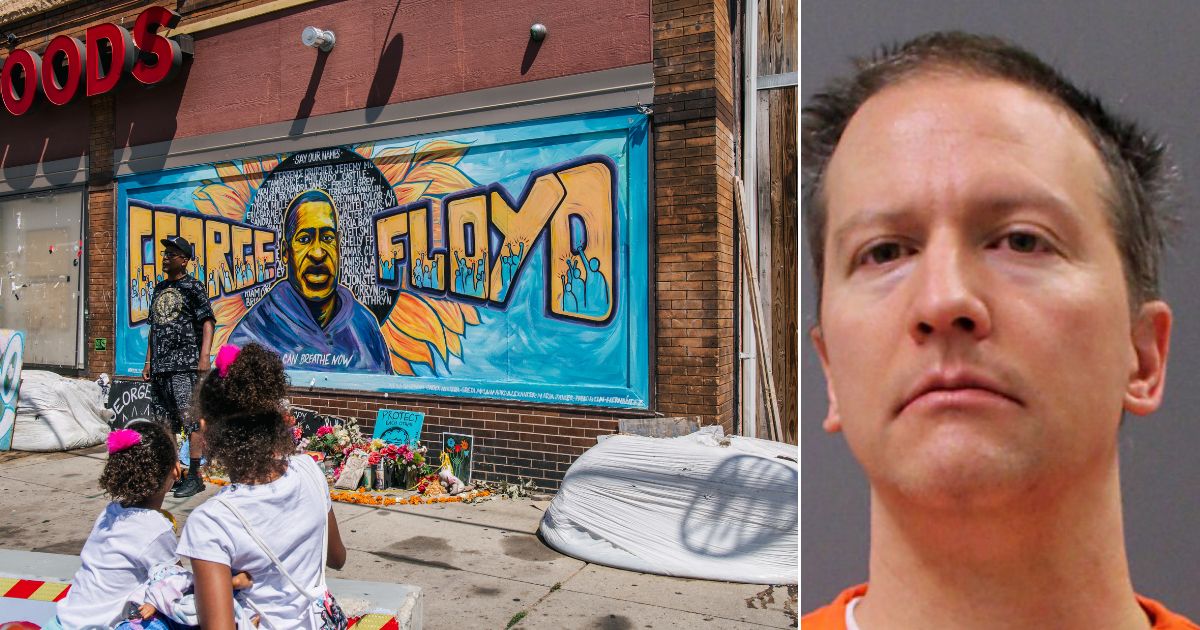
By 2020, when the Black Lives Matter-led George Floyd riots gripped American cities, causing numerous deaths and billions of dollars in property damage, SPLC was there to defend the group again, stating it “meets the moment.”
It worked like a charm, as far as SPLC donors are concerned: That summer changed the entire political landscape, and Joe Biden became president thereafter.
But the SPLC’s defense of hard-power politics is accompanied by its “hate map,” where it labels normal conservative organizations as “hate” groups on par with the Ku Klux Klan. That is how the FRC shooter got the information on who to target, and the SPLC has also targeted some of the other most effective groups in the conservative movement, like Turning Point USA and the Alliance Defending Freedom.
As Cohen stated in 2016, the group’s power is directly linked to its list, “which is cited extensively by journalists, academics and government officials alike, provides an important barometer — not the only one, of course — to help us understand the state of hate and extremism in America.”
Notably, it makes no mention of Black Lives Matter, or Antifa, or ICE Watch, or Jane’s Revenge, or any of the other violent, left-wing organizations that have destroyed cities, businesses, and the lives of countless Americans. But it was directly consulted by the Biden administration to provide a list of political enemies for it to attack.
Beyond being able to effectively direct government resources toward its political ends, other entities also fell in line to cripple conservatives and conservative organizations.
“SPLC’s intelligence project and associated labels became deeply influential on banks, payment processors, and technology companies” which “increasingly relied on SPLC classifications to decide which organizations could maintain accounts, process transactions, and operate online,” FRC President Tony Perkins testified at Wednesday’s hearing. “Around 2016 the SPLC began pressuring financial corporations and technology companies to de-platform and defund organizations that it labeled extremist.”
“Charlottesville was a catalytic event for SPLC as major corporations like Apple [and] JP Morgan Chase aligned with SPLC, contributing millions of dollars,” he added, noting that the SPLC’s Center for American Progress formed a coalition called Change the Terms, “establishing standards that would encourage companies to deny digital access and financial infrastructure to organizations.”
FRC experienced debanking and deplatforming from Truist Financial, BB&T, Fidelity Investments, and others, Perkins said.
When Jamie Raskin asks “Why has no one sued the Southern Poverty Law Center?” the answer is very clear: Because the violence against and annihilation of conservatives is a feature of premium membership.
Breccan F. Thies is the White House correspondent for The Federalist. He is a co-recipient of the 2025 Dao Prize for Excellence in Investigative Journalism. As an investigative journalist, he previously covered education and culture issues for the Washington Examiner and Breitbart News. He holds a degree from the University of Virginia and is a 2022 Claremont Institute Publius Fellow. You can follow him on X: @BreccanFThies.
" Conservative News Daily does not always share or support the views and opinions expressed here; they are just those of the writer."
*As an Amazon Associate I earn from qualifying purchases