Oil and economic news gives White House positive PR on Iran
Recent developments suggest an improved U.S. position in the ongoing conflict with Iran. Following the collapse of a peace agreement last month, headlines initially indicated stalemate and setbacks. However, positive news has emerged, including reports that the U.S. is successfully managing to get 10 million barrels of oil daily through the Strait of Hormuz-about half of prewar levels-by conducting covert nighttime operations to avoid Iranian detection. this suggests Iran no longer controls the strait as before, despite skepticism from some analysts who question the accuracy of these reports.
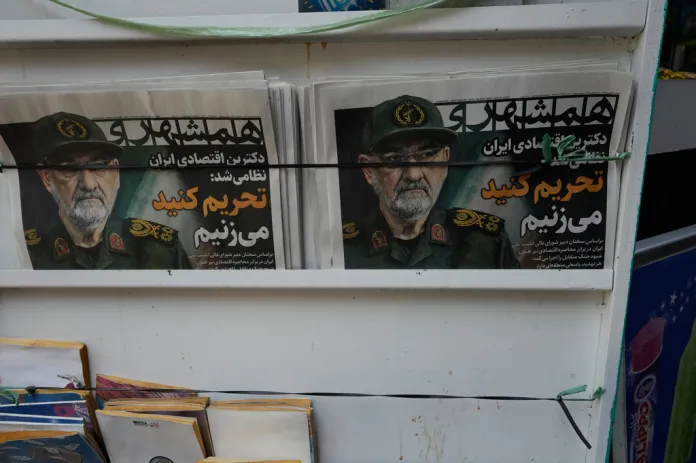
Meanwhile, Iran’s economy continues to deteriorate, with a plunging rial, soaring inflation (over 80%), and shortages in fuel and essential goods, fueling widespread public discontent and fears of unrest.The Iranian leadership is increasingly paranoid, with leaked discussions revealing concerns about growing opposition, social media influence, and potential protests. Internal dissent is also evident in the criticism of recent harsh laws and the recognition of the government’s wavering unity, even from some reformist figures.
On the diplomatic front, iran’s rhetoric appears less confident, and its foreign minister dismisses U.S.threats as diversionary. with both sides still at an impasse, the public narrative in the U.S. has shifted positively for the Trump management amid this backdrop of economic strain and strategic gains.
While the Trump administration has struggled to maintain a positive spin on the war with Iran, several recent developments have indicated an improved U.S. position in the conflict.
After the collapse of the U.S.-Iran peace agreement last month, the Trump administration has been plagued by worsening headlines as Washington and Tehran remain locked in a stalemate. Over the past several days, however, it has been granted some much-needed respite with a spree of favorable details hitting headlines, helping to ward off a sense of defeat.
Recommended Stories
President Donald Trump, though claiming Iran has been fully defeated for months, appears to have latched on to this perception, taking the initiative with a pledge to enact unparalleled economic punishment against Iran, termed an “ECONOMIC D-DAY.”
“These maniacs are on the ropes, and these HISTORIC MEASURES will cripple them and their ability to project terror worldwide,” Trump said Wednesday in a Truth Social post.
Breakthrough in the Strait of Hormuz
On Wednesday, a report from Axios citing two U.S. officials revealed the most positive development, claiming that the United States was getting 15-20 tankers carrying roughly 10 million barrels of oil through the Strait of Hormuz per day, amounting to half the prewar total of 20 million barrels per day. According to the officials, the vessels traveled via the southern U.S.-backed channel along the coast of Oman at night, avoiding Iranian detection.
” data-large-file=”https://cndimages.nyc3.cdn.digitaloceanspaces.com/breaking-news/wp-content/uploads//2026/08/localimages/straitofhormuz.png?w=696″ height=”683″ width=”1024″ “https:>
The operation was possible due to the two straight weeks of U.S. strikes on Iran carried out beginning in mid-July, which targeted radar and maritime surveillance systems.
“We have been controlling the southern lane of the Strait of Hormuz for two months now,” one of the U.S. officials with direct knowledge of the matter told the outlet. “The Islamic Revolutionary Guard Corps can be a nuisance, but they don’t control the strait. We do.”
If true, the operation indicates both that Iran no longer has the hold over the strait that it previously did and that the U.S. is effectively countering Iran’s energy card by getting enough oil through the strait to eliminate the effects of Iran’s blockade.
Overland pipelines currently transport about 9 million barrels per day around the strait, meaning that if the U.S. officials’ claims are true, the amount of oil flowing through or around the strait is nearly equivalent to the average of 20 million before the war.
However, some analysts were skeptical about the claim. One commodity analyst cited practical reasons for his disbelief, believing it impossible for observers to miss any ships traveling through the strait.
“Line of sight in nautical miles is 1.23 * sqrt (elevation of the observer + height of the object, in feets), given earth’s curvature,” the analyst argued. “So from 200 ft of elevation, you can spot a 100 ft high ship which is 21 miles away.”
Oil market researcher Rory Johnson noted that ship trackers have consistently put the total flow coming out of the Strait of Hormuz at 4 million-6 million barrels per day.
Analyst Alexander Stahel said the 10 million barrels per day is higher than his figures, but “not impossible.”
“We will know more by reconciling reported volumes with fixtures and vessel movements in the coming days, while @Kpler remains behind the curve due to the lack of satellite-image triangulation needed to capture this activity in real time,” Stahel said in a post on X. “For now, I keep an open mind.”
Whether true or false, the report injected much-needed optimism into Trump’s camp and gave the impression that the U.S. was wearing down Iran’s biggest asset. At the very least, the continued flow of oil through the Strait of Hormuz shows the situation has changed from the near-complete stoppage of oil passage that Iran achieved earlier this year.
Growing economic woes in Iran
Even before Trump announced plans for an “economic D-Day,” Iran’s economy has continued its free fall into new lows. The brief respite brought by the lifting of the blockade in June has largely been erased by the renewed blockade instituted last month. After rallying to above the prewar total upon the announcement of the peace agreement, the rial has since plummeted to about 1.88 million against the U.S. dollar. The rial has long been in decline but stood at 1.65 million per dollar before Feb. 28.
Though payments continue to be made in the rapidly declining rial, many, if not most, Iranians pay in dollars.
Annual inflation has surpassed 80%, according to state data, and key foodstuffs have skyrocketed in price. Cooking oil has shot up nearly 400%, milk and lentils have doubled in price, eggs are up 230%, tomatoes up 125%, and bread up 125%.
The National found widespread economic despair in its interviews with Iranians, most of whom reported having to take on multiple jobs to stay afloat and eliminate all nonessential spending.
“Every tomorrow has been worse than the day before,” one Tehran resident said. “If you can’t save, can’t buy what you want, and don’t have a predictable future, then what’s the point of working any more?”
A 27-year-old medical practitioner from Tehran said some Iranians were eschewing critical medical treatments over their prohibitive costs.
“It’s as if dying makes more financial sense than continuing an expensive treatment,” she told the outlet. “It’s very sad.”
One way Iran’s government could draw some public support was its subsidies for cheap gasoline, keeping one major cost of living abnormally low. That has now run out due to the blockade, and a growing fuel crisis risks sending public discontent over the edge.
“I went to three gas stations to fill up, and all three were closed,” a Tehran resident told Iran International on Wednesday. “One of them had put up a banner saying, ‘We have no gasoline.’”
Esmail Saqab Esfahani, the head of Iran’s Energy Efficiency Organization, estimated on Saturday that the country’s daily gasoline shortfall was more than 3.5 million gallons.
Iran’s unemployment rate hit 9.1% in June, and has almost certainly worsened since.
The declining economic metrics indicate that Trump’s strategy of holding off a risky military operation to instead inflict maximum economic pain is at least serving its direct purpose. The Trump administration reasons that enough economic pain will either force Tehran to strike a deal or trigger another uprising that will topple the government.
The pain is likely to receive a further bump over the cessation of trade with the United Arab Emirates, one of the lifelines of Iran’s economy. The country cut all trade with Iran after another attack this week.
The most recent data put the annual trade volume between the two at $28 billion in 2024, not to mention the financial channels that allow for side-stepping of some sanctions.
Cracks in Iranian unity
The growing economic woes in Iran have revived fears within its leadership that deteriorating living conditions could trigger another uprising. The winter protests were the biggest in the Islamic Republic’s history and represented the biggest existential threat to the government’s rule since 1979. They were triggered by poor economic conditions that are now much worse by every conceivable metric.
A rare insight into the government’s growing paranoia came in the form of a leaked audio recording obtained by Iran International from a meeting of the Basij paramilitary at the Media and Cyberspace Headquarters in Pakdasht, Tehran province. At the meeting, officials from the Islamic Revolutionary Guard Corps’s central pillar of repression voiced their fears that a new uprising could happen soon and lamented growing disillusionment with the government.
Though the government publicly claimed the killing earlier this month of Basij member and pro-government singer Hamidreza Rajabzadeh wasn’t politically motivated, those at the meeting appeared to believe it was. They voiced their anxiety that Basij members were vulnerable and faced social ostracism for their political affiliation — another subtle indication that the government is aware its public support is dangerously low.
Officials at the meeting said the banning of WhatsApp and Telegram had only made the problem worse and that social media such as Instagram was spreading public discontent. Other comments showed the growing paranoia of Basij officials, some of whom feared ChatGPT was listening to their conversations.
At the tail end of the meeting, one Basij official seemed to view another wave of unrest as inevitable, casually referring to the “next unrest.” He believed that growing fuel prices could lead to even more violent protests, targeting banks, fire trucks, ambulances, and Basij members.
Recent repressive moves by the government have also drawn rare displays of public dissent from some officials. The so-called “Infiltration Bill” is a sweeping proposal that criminalizes contact with most foreign media and sending any data, photos, or videos to non-Iranian media. Violators face prison terms, deprivation of rights, asset confiscation, and the dissolution of legal entities.
The draconian nature of the bill caused many reformist officials and outlets to break ranks from the unity shown earlier in the war to criticize it. The reformist daily Sazandegi said the proposal “not only fails to provide a proper definition of infiltration, but is also a warning sign of intensified censorship, greater restrictions and a widening social divide in the country.”
Sociologist Mohammad Rahbari said the approval of the bill would amount to Parliament shooting itself in the foot, Iran International reported, arguing that the offenses outlined are so broad that Parliament’s own research center could be targeted.
Public fractures in Tehran’s facade of unity extended beyond the bill to Iran’s own conduct during the war. Former Iranian President Mohammad Khatami came out with a rare public criticism of the government this week, effectively accusing it of being too warlike.
“Some say: ‘First, we will teach America a lesson here, then we will go to the heart of America and fight it there.’ But what reality is this based on?” Khatami said.
“My feelings were also wounded when they killed our commander, and one’s eyes could almost weep blood. But governing a society cannot be based on raw emotion,” he added. “We must consider what serves the ultimate interests of the country, the system, and Islam.”
Even Iranian rhetoric seems to have grown less confident. In response to Trump’s threats of an “economic D-Day,” Iranian Foreign Minister Abbas Araghchi timidly claimed it was a distraction from the U.S.’s own ballooning national debt.
“The so-called ‘Economic D-Day’ is a diversion from America’s own crisis: unprecedented debt & surging interest costs,” Araghchi said in a post on X.
AZERBAIJAN SUES CNN FOR DEFAMATION OVER IRAN WAR COVERAGE
“Doubling down on failed policies will only bring further defeat — and enmity of Iranians,” Araghchi added. “US economic terrorism threatens global economy and sovereignty worldwide.”
The U.S. and Iran remained locked in a stalemate with no signs of an imminent way out, but the public messaging momentum has shifted in favor of the Trump administration after a month straight of negative developments.
" Conservative News Daily does not always share or support the views and opinions expressed here; they are just those of the writer."
*As an Amazon Associate I earn from qualifying purchases