New York Times Issues Correction After Getting Called Out by Trump Admin Over ‘Fabricated Quotes’
The piece centers on The New York Times’ coverage of a proposed “Pax Silica” fund intended to reduce global dependencies in energy, minerals, and semiconductors, amid ongoing tensions in the Middle East. The article notes that the NYT was forced to issue a second correction after the Trump administration complained about its reporting on securing the supply chain for energy and technology during the war with Iran. The fund’s concept,described as a catalyst to mobilize serious capital,involves partners such as Singapore,the United Arab Emirates,qatar,and Sweden,with Under Secretary of state Jacob Helberg presenting the plan in Washington,D.C. The piece details two corrections: the first on March 23, 2026, changing the cited funding from $4 trillion to over $1 trillion, and the second on March 29, 2026, clarifying that while the members have over $1 trillion in assets under management, they have not committed to investing that amount, and that Helberg was misquoted. The article also touches on broader battles between the White House and The New York times, noting a defamation suit filed by Donald Trump and subsequent legal developments. Additionally,it covers Pentagon policy changes that critics say threaten press access,with NYT claiming the Pentagon violated a court order and a judge (Paul Friedman) ruling in a way that supported the Times on First Amendment grounds,while Pentagon officials maintain compliance. The narrative situates these disputes within a larger context of national-security reporting, media freedom, and ongoing political contention.
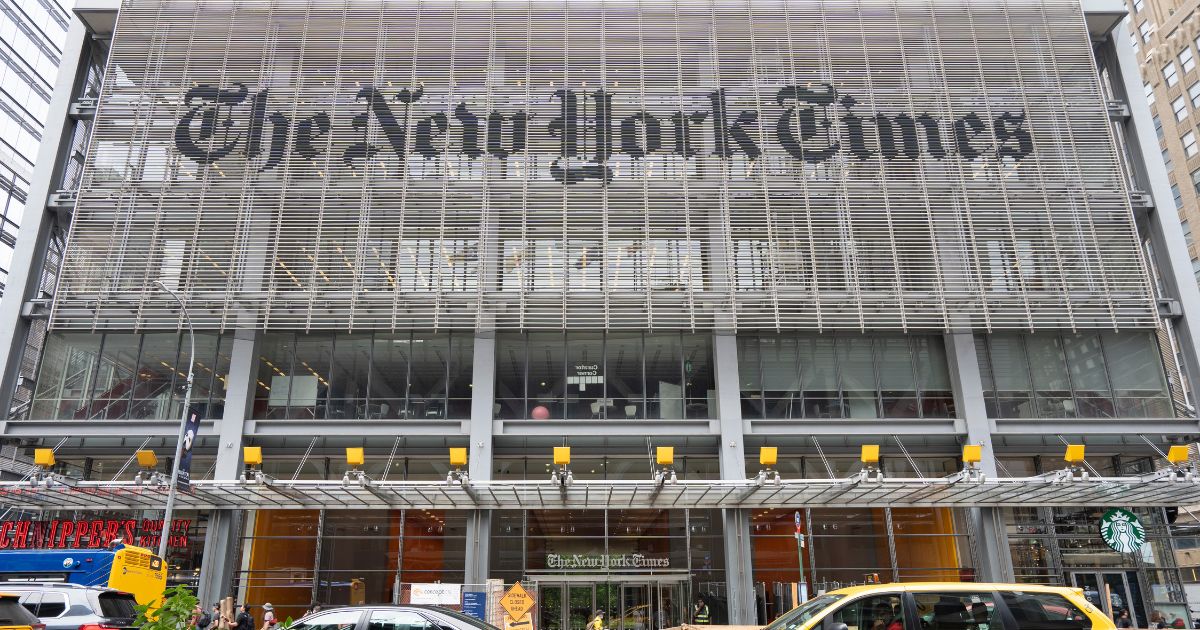
The New York Times was forced to issue a second correction following a complaint by the Trump administration regarding its article about securing the supply chain for energy and technology amid the ongoing war with Iran.
The story was titled, “Trump Sets Up ‘Pax Silica’ Fund to Reduce Global Dependencies,” referring to a fund that could potentially be invested in energy projects, minerals, and semiconductors.
Other countries, including Singapore, the United Arab Emirates, Qatar, and Sweden, will also be participating.
Under Secretary of State for Economic Affairs Jacob Helberg announced the news in Washington, D.C. last week.
“The fund will serve as a catalyst, a credible call to action for partners around the world to put serious capital behind d strategic objectives,” he said at a breakfast for the Hill and Valley Forum.
Helberg, however, posted his full remarks on the social media site X with the following message: “The @NYTimes completely FABRICATED quotes that never happened. We submitted corrections (multiple times). They ignored them. So for posterity, sharing my full remarks.”
The @NYTimes completely FABRICATED quotes that never happened. We submitted corrections (multiple times). They ignored them. So for posterity, sharing my full remarks.👇 https://t.co/IfEWvimG6i pic.twitter.com/TrW0OQG20Q
— Under Secretary of State Jacob S. Helberg (@UnderSecE) March 29, 2026
The first correction came on the same day the article was published.
“A correction was made on March 23, 2026: An earlier version of this article misstated the amount of funding being sought for a new investment consortium. It is over $1 trillion, not $4 trillion,” a note at the bottom of the story read.
Then, almost one week later, the newspaper updated the piece with a second correction.
“A correction was made on March 29, 2026,” the second note explained. “An earlier version of this article misstated the amount of money that would be invested in projects. The members involved in the consortium have over $1 trillion in assets under management. They have not committed to investing $1 trillion.”
“The article also misquoted Jacob Helberg, the Under Secretary of State for Economic Affairs,” it continued. “He called the situation unfolding in the Strait of Hormuz, where shipping traffic has been largely blocked, ‘a lesson,’ not ‘a blessing.’”
This isn’t the first time the White House has had to do battle with The New York Times.
President Donald Trump is still pursuing legal action against them after he initially sued the outlet for $15 billion over defamation claims linked to his financial history and taxes.
His original suit was dismissed, but the president refiled in October, and the case is now making its way through the courts.
Later, federal U.S. District Judge Paul Friedman, who is an appointee of former Democratic President Bill Clinton, sided with The New York Times in March, saying the Pentagon violated the First Amendment when it set new rules for reporters. Reporters walked out in defiance rather than sign on to the new standards, according to The Associated Press.
The new policy included terms that would have allowed the Pentagon to revoke press passes for anyone deemed a security threat. It said that possessing confidential or unauthorized information could be grounds for revocation as well.
Reporters were also asked to pledge that they’d obtain, or solicit, information only from authorized War Department officials, and the new rules also restricted access in certain cases.
Pentagon Spokesman Sean Parnell wrote on X earlier this month that, “We disagree with the decision and are pursuing an immediate appeal.”
Secretary of War Pete Hegseth has expressed frustration with information exposure, especially given the sensitive nature of national security matters. In April 2025, one of his top aides was escorted from the building after reportedly being identified during an investigation focused on leakers.
The saga didn’t end there, however. The New York Times claimed Monday that the Pentagon ignored Friedman’s order by instituting new policies as a workaround to the ruling, yet Pentagon officials maintained they are in full compliance with the judge’s requirements.
Advertise with The Western Journal and reach millions of highly engaged readers, while supporting our work. Advertise Today.
" Conservative News Daily does not always share or support the views and opinions expressed here; they are just those of the writer."
*As an Amazon Associate I earn from qualifying purchases