Netanyahu government says it will defy Israel’s Supreme Court, escalating crisis
Israeli Prime Minister Benjamin Netanyahu’s Cabinet has decided to challenge the country’s Supreme Court for the first time in history, intensifying a constitutional crisis. This move occurs amidst ongoing regional conflicts and a domestic power struggle over judicial authority. The government’s decision to defy the court relates to a dispute over the authority of Israel’s Second Authority for Television and Radio, with the government justifying the action by claiming the judiciary oversteps its bounds and violates legislative law. Several resignations from the broadcast regulator had previously reduced its quorum, but the Supreme Court ruled that the regulator could continue operating, criticizing the resignations as government-manipulated. The government,led by Ministers Shlomo Karhi and Yariv Levin,refused to recognize the court’s rulings until a quorum was met,asserting that the judiciary’s rulings exceed their legal authority. Opponents, including former military and political leaders, condemned the move as a threat to democracy and warned it could lead to chaos and the dismantling of the state. The controversy is also linked to the potential sale of a major TV network, Reshet 13, which critics believe is driven by government efforts to influence media coverage ahead of upcoming elections. These judicial and political tensions have previously sparked large protests, which were disrupted by Hamas’s surprise attack on October 7, 2023.
Israeli Prime Minister Benjamin Netanyahu’s Cabinet unanimously decided to defy Israel’s Supreme Court for the first time in the nation’s history, escalating its constitutional crisis.
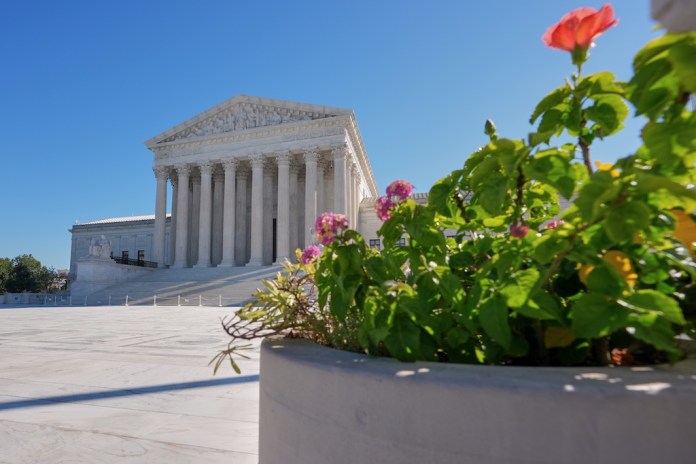
In parallel to the regional wars Israel has been fighting, Netanyahu has also been embroiled in an escalating domestic crisis around the power of the judiciary. This crisis reached new heights on Sunday after the government voted to defy the nation’s highest court over a dispute regarding the authority of Israel’s Second Authority for Television and Radio, the country’s equivalent to the U.S. Federal Communications Commission.
Recommended Stories
Over the past few months, enough members of the 15-member broadcast regulator resigned to strip it of the two-thirds quorum required by law to operate. However, the Supreme Court ruled on June 17 that the council could continue operating as usual, arguing that the resignations weren’t organic but instead brought about by the government’s “deliberate obstruction and paralysis.”
The resolution to defy the order, brought forward by Communications Minister Shlomo Karhi and Justice Minister Yariv Levin, argued that the government wouldn’t recognize the rulings of the council until a quorum was reached. In justifying the decision, the government argued that the judiciary was overstepping its authority by ruling against the explicit text of a law passed by the judiciary, going beyond simple interpretation.
“High Court judges are not the Knesset, and a fit of power does not grant authority to erase an explicit threshold condition from the law, even if it is inconvenient for them. The rule of law is not the rule of the judges. Today the government has clearly stated: when the High Court tramples the law, the state will not lend a hand to it. Two-thirds is a legal requirement, not a recommendation, and a council that does not meet the threshold conditions set by the legislature does not exist, and its decisions are worth as much as a nutshell,” Karhi said in a statement.
Israel’s opposition was outraged, arguing the decision could plunge the country into anarchy. Former Israel Defense Forces Chief of Staff Gadi Eisenkot said the decision amounted to the government “raising its hand against Israeli democracy.” The appeal to democracy was used by both sides; Karhi explicitly framed the decision as returning power to the Israeli people rather than dictatorial judges.
Former Prime Minister Naftali Bennett warned that the move to disobey a Supreme Court ruling “brings anarchy to the streets and the dismantling of our state.” Opposition leader Yair Lapid argued that any government that rejects a ruling of the Supreme Court “immediately becomes an illegal government whose rulings and decisions we will not accept.”
BELEAGUERED HEZBOLLAH USING RESPITE FROM CEASEFIRE TO REARM AND RECONSTITUTE: EXPERTS
The decision to ignore the ruling came as the Council of the Second Authority is considering approval of the resale of Reshet 13 to a group of tech entrepreneurs, a major commercial TV network influential in shaping public opinions. Critics argue that the government is vying to push the sale through to secure favorable coverage of the next elections, which are required to be held before the end of October.
The authority of the judiciary was the central issue that sparked massive protests and a political crisis before it was interrupted by the Oct. 7, 2023, surprise attack by Hamas.
" Conservative News Daily does not always share or support the views and opinions expressed here; they are just those of the writer."
*As an Amazon Associate I earn from qualifying purchases