Nearly 200 Democrats oppose GOP-led stock trade curb
The House passed a GOP-led bill aimed at increasing openness and restricting stock trading among lawmakers. The bill requires a seven-day public notice before lawmakers, their spouses, or dependents can sell stocks and would prohibit Congress members from purchasing new publicly traded stocks while in office, though they can keep existing holdings. Despite bipartisan support, the measure faced opposition, notably from Democrats concerned it doesn’t address conflicts of interest from existing stock ownership. Republican leadership also added voter ID requirements to the legislation, making it less appealing to Democrats. The bill’s passage was supported by most Republicans and a few Democrats, but it received limited bipartisan backing due to the additional provisions and opposition to the voter ID language. Critics argue that the bill does little to prevent conflicts of interest since it doesn’t ban current stock holdings and was seen as a move to block stricter reforms. The legislation,introduced by GOP House leaders,faces uncertain prospects in the Senate,especially given the attached voter ID stipulations and previous unsuccessful efforts to pass similar measures. The existing stop Trading on Congressional Knowlege Act lacks teeth, with minimal penalties for violations. the bill reflects ongoing partisan debates over congressional stock trading and efforts to enhance transparency.
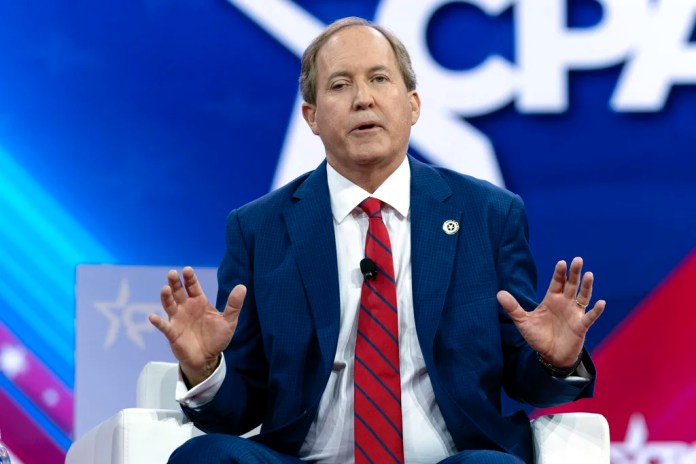
The House passed a GOP-led bill to require a public seven-day notice before a lawmaker, spouse, or dependent can sell stock, which also included voter identification language in the legislation, with 199 Democrats voting against the measure.
The House advanced the Stop Insider Trading Act—232-198—Wednesday afternoon that appeases some concerns about congressional stock trading, but would still allow lawmakers to retain their existing stock holdings, a provision that has been forcefully rebuked by Democrats. GOP leadership also attached provisions that require voters to show a valid ID when they go to vote, making it a nonstarter for many Democrats.
Recommended Stories
The bill would prohibit members of Congress, their spouses, and dependent children from buying publicly traded stocks while in office, but would be able to keep the individual stocks they currently have.
Thirteen Democrats crossed over to support the bill, in addition to every Republican and Rep. Kevin Kiley (I-CA).
“We are voting on a stock trading ban for members of Congress… BUT Republicans added voter-ID in the legislation,” Rep.Thomas Massie (R-KY) wrote on X. “Not to get Dems to vote for voter-ID, but to get them to vote against the stock trading ban, so they can use it in the Nov. election.”
But other Republicans called on Democrats to “get on board.”
“I fully support the Stop Insider Trading Act and look forward to voting for its passage,” Rep. Byron Donalds (R-FL) wrote on X. “I’ve never traded my own stocks in Congress, and everyone else needs to be held to that same standard. It’s past time to get this done for the American people. House Democrats need to get on board.”
“Too often, Americans struggling to make ends meet have watched as lawmakers have entered office to leave as multimillionaires,” House Speaker Mike Johnson (R-LA) said at a press conference Tuesday. “There’s a handful of glaring examples. A couple of those people are still serving, notably on the Democrat side…. Democrats only talk about corruption. Republicans are actually delivering real solutions to restore the public’s faith in our institutions.”
The GOP-led bill garnered minimal bipartisan support after Republicans opted to nix bipartisan legislation crafted by a group of lawmakers earlier this Congress, as well as the addition of the voter ID language.
Reps. Seth Magaziner (D-RI), Pramila Jayapal (D-WA), and Alexandria Ocasio-Cortez (D-NY) wrote in a joint statement, before the bill passed out of committee earlier this year, that the legislation does “nothing to remove conflict of interest that arises from owning or selling existing stocks.”
The bill, backed by GOP leadership, was introduced by House Administration Committee Chairman Bryan Steil (R-WI) to “prohibit Members of Congress, spouses, and dependent children from purchasing publicly traded stocks.”
House Administration Democrats offered a handful of amendments earlier this year, before the bill passed out of committee, all of which were struck down, including one that would have imposed a ban on stock trading for the president, vice president, federal judges, and senior congressional staff.
GOP LEADERSHIP FLOATS FOURTH RECONCILIATION BILL TO APPEASE HARD-LINE HOLDOUTS
A stock trade ban for members of Congress has been a longtime issue in both chambers with little movement over the years. This issue has undergone numerous pushes but has never been fully successful in either chamber. With the voter identification language attached, the bill has little chance of passage once it reaches the Senate.
The Stop Trading on Congressional Knowledge Act, signed into law in 2012, prohibits members from acting on insider information and requires them to report their trades within 45 days, but the law acts more as a slap on the wrist. The penalty is a mere $200 fine, and members have not been punished for said violations.
" Conservative News Daily does not always share or support the views and opinions expressed here; they are just those of the writer."
*As an Amazon Associate I earn from qualifying purchases