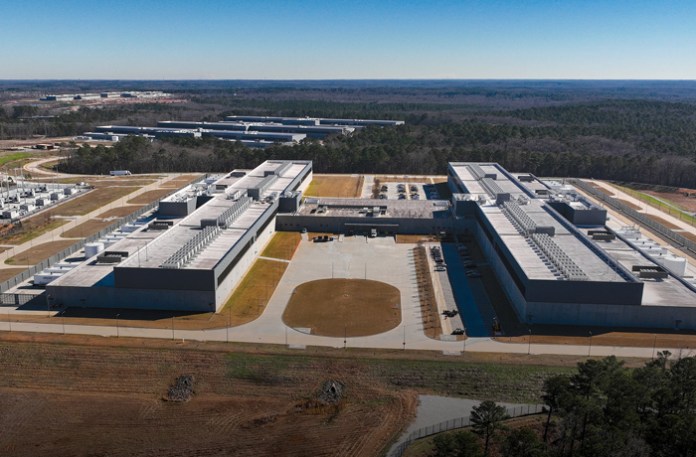
Nation’s Largest Grid Operator Warns Drastic Measures Required as Data Centers Come Online
PJM Interconnection says it’s power grid is under increasing strain as electricity demand rises-driven largely by rapid growth in large-load data centers and wider electrification-while new generation is slowed by environmental and permitting delays, supply-chain issues, and the retirement of dispatchable plants. In a white paper,PJM warns the region is shifting from managing excess supply to managing potential scarcity,with long timelines for building new resources.
To address reliability concerns, PJM lays out three approaches: (1) stabilizing markets through long-term forward commitments, including hedging and/or a tiered multiyear capacity market; (2) implementing “differential reliability,” potentially curtailing flexible or large new loads first while protecting existing residential customers; and (3) moving toward more supply-and-demand pricing over time while keeping long-term contracting options so consumers are protected from energy-price volatility.
The article also notes that regulatory actions by the Trump management aimed to speed up permitting, but major changes would still require Congress, and proposed legislation to modify the National Environmental Policy Act has stalled in the Senate.
The largest U.S. grid operator proposed cutting power to newcomers during periods of high demand in a Wednesday white paper.
PJM Interconnection serves over 67 million consumers across its operational area. Its infrastructure is now strained by data center expansion and disruptive environmental policy, according to the operator’s “Powering Reliability Through Market Design” document.
“Unprecedented surge in demand driven by the rapid expansion of large-load data centers and broader economy-wide electrification,” is noted by PJM as one of the the three drivers of grid strain, alongside “the accelerated retirement of dispatchable generation due to environmental policy and economics; and significant supply chain and permitting frictions that have extended the time required to bring new resources online.”
Data centers are the primary drivers of rising electricity consumption, according to the U.S. Energy Information Administration (EIA). The EIA expects electricity demand to grow by 1 percent in 2026 and 3 percent in 2023, potentially outpacing new energy supply.
“The result is a transition from an era of managing surplus to an era of managing scarcity,” the memo continues, highlighting long lead times on new energy developments. “Construction timelines have doubled,” the report continues.
“Today, a new natural gas turbine plant – the reference technology for the capacity market – requires at least four years under optimistic assumptions from financial investment decision to commercial operation.”
Permitting requirements contribute considerably to long development times. The average environmental review takes over four years to complete, according to the Council on Environmental Quality.
PJM’s white paper highlights three paths toward keeping the grid solvent.
Path A aims to stabilize markets “through long-term forward commitments either through mandatory Load Serving Entity (LSE) hedging requirements or through a PJM-administered, long-term procurement, such as a tiered, multiyear capacity market.”
LSE is a catchall term for any authorized seller of electricity to its principal users.
Alternatively, PJM’s Path B institutes differential reliability.
“This could be implemented geographically (different states or zones procuring different levels of reliability) or by customer class (for example, with residential and native loads insulated from curtailment while unbacked new large load additions are curtailed first),” the memo notes.
Under the differential reliability model, data centers using preexisting supply would be subject to throttling during periods of high demand. Residential consumers who contributed to existing supply would be prioritized for output.
Path C aims to partially transition grid use to a supply-and-demand pricing model, while maintaining long-term contract optionality.
PJM would “pursue a deliberate, phased shift of revenue recovery from the capacity market” combined with “long-term forward energy contracting requirements to protect consumers from increased energy price volatility and to support investment.”
“Constrained supply” is at the heart of PJM’s complaints. This shortage largely stems from the many regulatory reviews required to break ground on energy developments, according to the Consumer Energy Alliance.
The Trump administration has employed statutory actions to cut regulation and expedite permitting, notably overturning the Obama-era endangerment finding that allowed for federal regulation of carbon emissions.
These actions have not been made law by Congress. Though the House of Representatives passed the Standardizing Permitting and Expediting Economic Development Act in December 2025 to modify the National Environmental Policy Act, the legislation is frozen in the Senate.
All content created by the Daily Caller News Foundation, an independent and nonpartisan newswire service, is available without charge to any legitimate news publisher that can provide a large audience. All republished articles must include our logo, our reporter’s byline and their DCNF affiliation. For any questions about our guidelines or partnering with us, please contact [email protected].
Advertise with The Western Journal and reach millions of highly engaged readers, while supporting our work. Advertise Today.
" Conservative News Daily does not always share or support the views and opinions expressed here; they are just those of the writer."
*As an Amazon Associate I earn from qualifying purchases