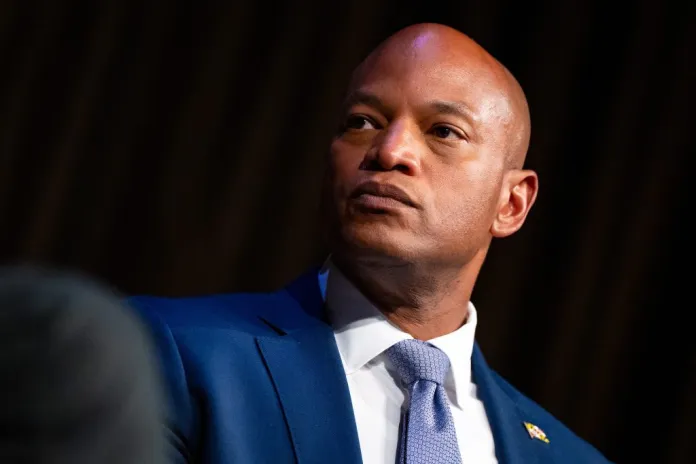
Mississippi governor eyes ‘complicated’ redistricting fight
Gov. Tate Reeves (R-Mississippi) outlined a broad redistricting agenda, signaling that the GOP may redraw not only Mississippi’s Supreme Court districts but also legislative and congressional maps. He said he originally called a special session for Supreme Court redistricting after a federal court ordered the state’s Supreme Court district lines redrawn in response to claims under the Voting rights Act that the current map diluted Black voting power.
Reeves also referenced the Supreme Court’s decision in *Louisiana v. Callais*, which made it harder to prioritize race in redistricting, implying Republicans will re-examine the state’s majority-minority congressional district represented by Rep. Bennie Thompson. While he suggested lawmakers could address the congressional map at the earliest opportunity,he emphasized no congressional plan is final yet.
Gov. Tate Reeves (R-MS) on Wednesday previewed his agenda for redistricting in Mississippi, revealing he is eying redrawing a host of electoral maps, including the state’s legislative and congressional districts.
Reeves said in late April he was calling a special session to look at redrawing Mississippi’s judicial maps, through changing the boundaries of the state Supreme Court district lines. This week, the Republican expanded on that goal, saying he is considering going beyond redistricting judicial maps.
Recommended Stories
“We have Supreme Court districts, we have congressional districts – which is what everybody in Washington, D.C., cares about — and then we have legislative districts,” Reeves said during an interview with the Daily Caller.
“My initial call for a special session … was specifically for Supreme Court redistricting in the event that the federal judge forced our legislature to redraw those districts,” Reeves said. “I have the ability as governor, constitutionally, to either remove that call of the special session or to add to it for the purposes of any other topic, which could include other redistricting matter.”
The state has three districts in its Supreme Court map, with three justices elected from each. In August 2025, a federal court ordered the lines of these three districts redrawn. The plaintiffs in the case, residents of District 1 — called the Central District — argued that the lines violated Section 2 of the Voting Rights Act “by illegally diluting the votes of Black citizens in the Central District.”
The American Civil Liberties Union alleged that the district lines, which cut the Mississippi Delta in two, split black voters, thus preventing black judges from being elected. Four black justices have served on the state’s Supreme Court in Mississippi’s history, all appointed by the governor.
The governor’s comments respond to a recent Supreme Court ruling that pushed back racial gerrymandering and protections for majority-black districts. In Louisiana v. Callais, the majority of justices agreed that states should be given more freedom to redraw political maps without prioritizing racial outcomes, marking a setback for race-based districting.
In Mississippi, Reeves argued that Callais “reaffirms what we’ve known all along, which is that all Americans, regardless of race, are equal.” He suggested Republicans will push to redraw the state’s one majority-minority district represented by Rep. Bennie Thompson (D-MS), a move that would boost the GOP’s margin of power in the House. Still, the governor emphasized that no congressional redistricting plans are final.
“We know that Mississippi’s majority-minority district was drawn race-consciously,” Reeves said. “I anticipate that the Mississippi Legislature certainly will reevaluate our state’s congressional map at the earliest opportunity that they have.”
Mississippi is not the only red state emphasizing redistricting in the wake of Callais. Republicans in Georgia are pressuring Gov. Brian Kemp (R-GA) to do the same, though he has thus far resisted, citing the state’s ongoing elections.
TRUMP SETS HIS GERRYMANDERING SIGHTS ON SOUTH CAROLINA AFTER INDIANA VICTORY
Reeves said Mississippi’s conversations on the matter are distinct due to their sweeping ambitions.
“Whereas there are a lot of states that are looking at and having conversations around, ‘Hey, what would this district or this district look like in congressional races,’” Reeves said, “in our state, it’s a little more complicated, because we’re dealing with Supreme Court redistricting, legislative redistricting and congressional all at the same time, all with different time frames.”
" Conservative News Daily does not always share or support the views and opinions expressed here; they are just those of the writer."
*As an Amazon Associate I earn from qualifying purchases