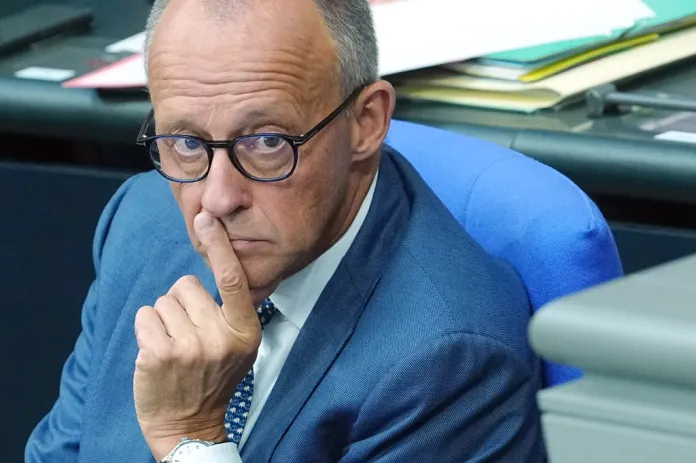
Merz ends first year as most unpopular German chancellor in post-war history
Friedrich Merz, elected German chancellor in February, has seen his approval collapse within a year, with polling indicating record-low satisfaction and growing gains for his opponents-especially the AfD. Surveys cited report that only 11% of voters are happy with his coalition and that 58% doubt it will last until the 2029 election.
Domestically,critics say his agenda is full of “announcements without result” and broken promises. On mass migration, he has been criticized for slow action. On energy affordability, promises have translated into only limited short-term relief tied to fuel costs. Merz also refuses to cooperate with the far-right AfD, keeping them behind a parliamentary “firewall,” but this limits his coalition options and leaves his center-right/left-wing partnership unstable and hard to reform.Public backlash also followed incidents in which his responses to citizens drew anger, including claims of proposed government pay increases for top officials.
Abroad, Merz has leaned on his foreign-policy instincts against Trump, but relations have frayed after comments about Iran’s pressure on the Strait of hormuz. Trump responded swiftly, announcing a drawdown of U.S. troops in Germany and publicly criticizing Merz’s focus at home.
With the CDU potentially losing ground to the AfD, Merz remains in office largely becuase other parties fear that any break or reconfiguration would promptly benefit the hard-right. Merz has ruled out governing with afd backing, while AfD leaders portray his stance as evidence that his government is failing and merely fighting to survive.
When German Chancellor Friedrich Merz was elected in February of last year, he warned the political mainstream that it was “five minutes to midnight” before outside parties consumed the nation’s center.
Exactly a year since taking office, it seems those five minutes have passed — centrist Merz is suffering the lowest approval rating of any chancellor in the nation’s post-war history, and his most feared opponents are eating up the electorate.
Recommended Stories
A recent survey from the polling firm Forsa Institute found that a mere 11% of German voters are satisfied with the chancellor’s coalition, compared with a whopping 87% who said otherwise.
Another survey from the INSA Institute this week found that 58% of German voters don’t believe Merz’s coalition will last until the 2029 elections, compared with just 24% who think he can go the distance.
These are only some of the recent poll data that assert Merz is the most unpopular democratically elected leader in the world.
‘Announcements without consequence’
The chancellor’s problems begin at home, where poll responses show he is most criticized for “announcements without consequence” and “broken election promises.”
Most obvious among these has been his sluggish moves to curb mass migration, the single most important issue in the 2025 election. Promises to make energy more affordable — exacerbated by the Iran war’s effects on global fuel costs — have amounted to a tax break of 0.17 euros per liter for two months.
He has refused to cooperate with the right-wing Alternative for Germany party, preferring to keep them behind the oft-touted “firewall” in the Bundestag, despite the fact that the AfD leads the Christian Democratic Union of Germany 27% to 24% in national polls as the most popular party in the country.
Merz’s commitment to keep AfD at bay means his only viable coalition partners have been the left-wing Social Democratic Party of Germany. The unstable and conflicting posture of this center-left and center-right alliance has gummed up the German government’s capacity to make drastic changes.
When Merz attempts to speak in his government’s defense, it often only makes things worse. At a recent event intended to celebrate local journalism, a disgruntled citizen suffering from terminal cancer demanded the chancellor answer for proposed pay increases to government officials while she struggles to obtain proper healthcare.
The chancellor denied the accusation and scolded the dying woman for spreading falsehoods. But a draft law from the Interior Ministry had indeed proposed increasing top civil servant salaries by €40,000 ($47,000) and the chancellor’s by €65,000 ($76,000). These proposed increases were reduced following public backlash.
Trump headwinds
In the face of criticism for his domestic governance, Merz has always leaned on his diplomatic skills in foreign affairs. He has touted his ability to handle President Donald Trump at a time when many European leaders have been on the receiving end of punitive trade penalties and suffered frayed alliances.
That talking point evaporated after the chancellor told a group of schoolchildren that the United States is being “humiliated” by the Iranian regime with the ongoing closure of the Strait of Hormuz.
Trump responded quickly, announcing a 5,000-troop drawdown in Germany with potential further personnel reductions elsewhere on the continent.
“The Chancellor of Germany should spend more time on ending the war with Russia/Ukraine (Where he has been totally ineffective!), and fixing his broken Country, especially Immigration and Energy,” Trump wrote on Truth Social.
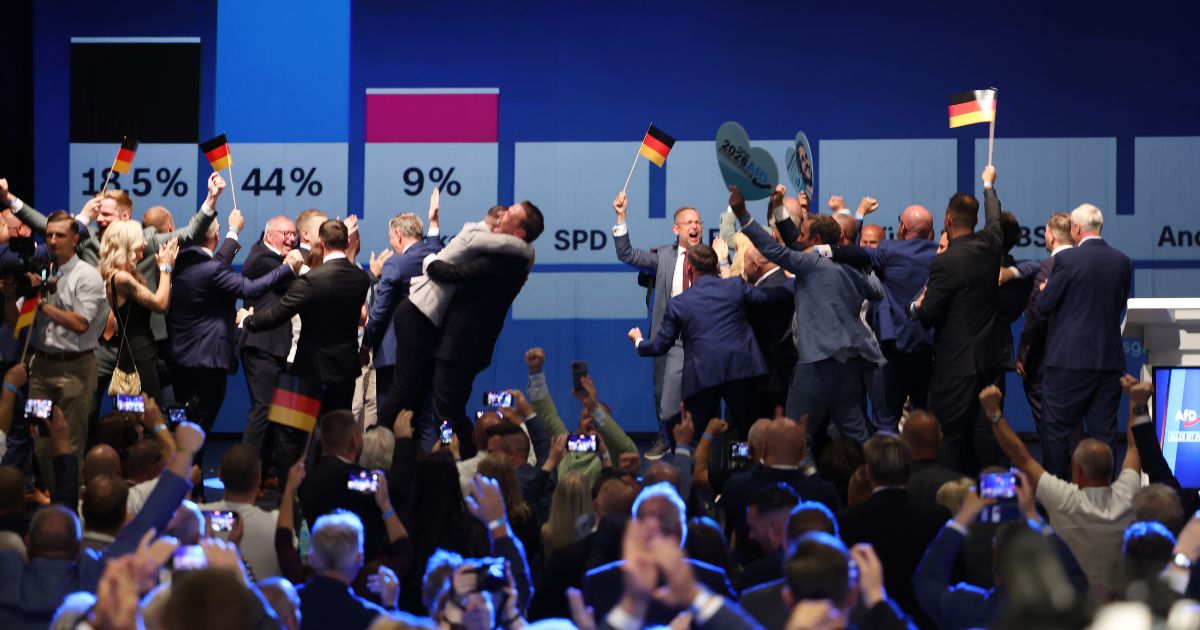
Christian Buchholz, a former member of the Berlin Parliament who is running again as an AfD candidate in September, told the Washington Examiner that his party is feeling “optimistic” and “enthusiastic” as they watch each “unbelievable blunder” the chancellor makes.
Asked about the party’s game plan as the CDU falters, Buchholz boasted: “Absolutely nothing new because what we have done led us to the point where we are now.”
He claims that the chancellor has so thoroughly lost the support of the German public that the AfD would be hesitant to form a coalition with the CDU, saying such an alliance would benefit his party only “if a significant part of the leadership of the CDU would change.”
“There’s no trust,” he added.
TRUMP’S TROOP DRAWDOWN JOLTS EUROPE AS NATO CHIEF SAYS LEADERS GOT THE ‘MESSAGE’
The AfD’s potential to overtake the CDU is likely what is keeping Merz in office despite the grim polls.
Members of both the CDU and the Social Democratic Party of Germany have floated the idea of breaking up the coalition, but it’s generally accepted that the hard-right would be the immediate beneficiaries — an unacceptable outcome for both sides.
“Forget any hope that we could form a minority government tolerated by AfD. This will not happen with me,” the chancellor said in an interview this week.
AfD leader Alice Weidel scoffed at Merz’s remarks, calling them “a confession of his government’s failure” and proof of the CDU’s ongoing “political fight for survival.”
" Conservative News Daily does not always share or support the views and opinions expressed here; they are just those of the writer."
*As an Amazon Associate I earn from qualifying purchases