Katie Hobbs again refuses in-person face-off against GOP opponent
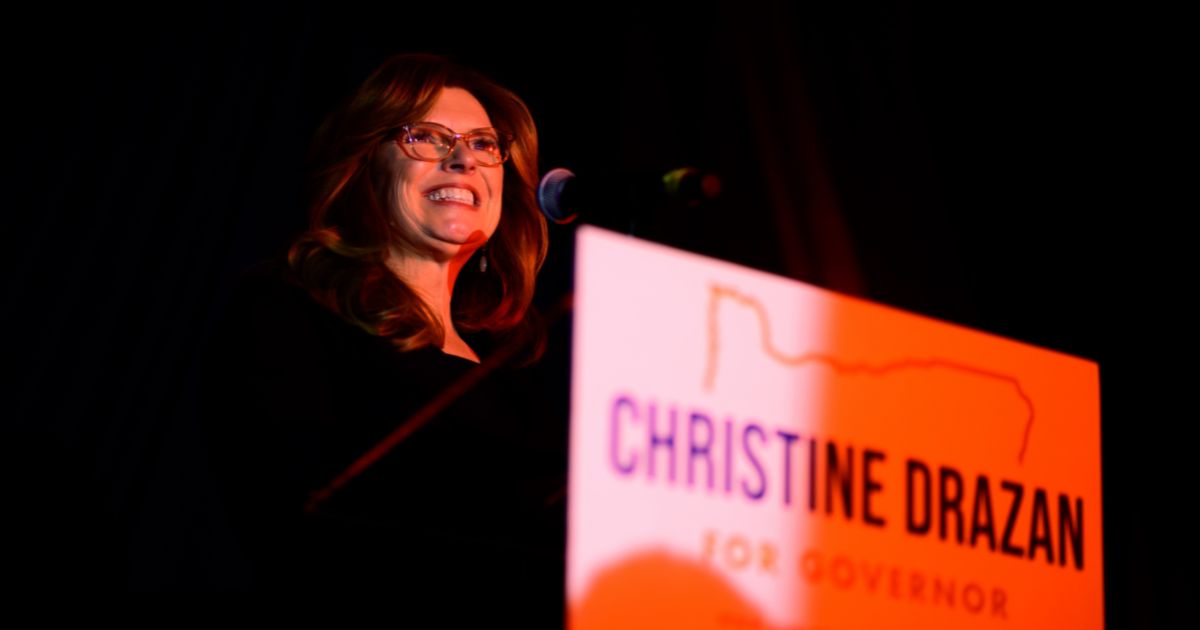
Governor Katie Hobbs (D-AZ) has once again declined to participate in a debate with her Republican challenger,rep. Andy biggs. This mirrors her decision four years ago, when she refused to debate Kari Lake, citing concerns that lake prioritized spectacle over substance. Hobbs, aged 56, narrowly won her previous race but now faces a different political landscape as an incumbent against a sitting Congressman. her campaign endorses direct voter engagement through events and interviews over staged debates, which they argue are more about media spectacle than substance. Despite her refusal,polls show Hobbs leading Biggs,and she maintains that debates could pose risks if teh race tightens,though some experts suggest that refusing debates may carry political costs.
The trend of incumbents skipping debates is influenced by strategic considerations.Notably, Donald Trump’s selective debate participation in 2016 shifted perceptions, demonstrating that avoiding debates can be beneficial.Strategists argue that debates can showcase skills like public speaking and critical thinking but frequently enough have limited impact on voters, especially in non-presidential races. Challengers may try to leverage an incumbent’s absence as evidence of avoidance or defensiveness,but many strategists believe that the structural difficulty of defeating incumbents makes debates less critical for them,and that refusing can sometimes be advantageous if it reinforces perceptions of inaccessibility or out-of-touch behavior.
The diminishing grip of local media and the rise of digital platforms further influence the debate landscape, as campaigns now more often communicate directly to voters via social media, podcasts, and short-form videos, reducing the importance of customary debates. Experts debate whether debates are becoming obsolete altogether, with some suggesting they are still valuable tests of candidate skills, while others note that most voters do not watch in-depth debates unless sensational moments occur. Hobbs’s strategy of avoiding debates has thus far proved politically effective, but some analysts warn that this approach may eventually carry risks if voter perceptions shift or if opponents successfully make her absence a liability. the evolving dynamics reflect a broader shift in campaign strategies where direct voter engagement and controlled messaging are increasingly favored over traditional debate formats.
Gov. Katie Hobbs (D-AZ) is once again refusing to debate a Republican challenger, reviving a question that could become increasingly difficult for incumbent governors to avoid: Can they get away with avoiding a face-off against their opponent, a staple of modern statewide campaigns?
Hobbs says she won’t debate Rep. Andy Biggs (R-AZ), the GOP gubernatorial nominee. Hobbs took the same approach four years ago, declining to debate Kari Lake in the 2022 race. Hobbs, then Arizona’s secretary of state, argued that Lake, a sharp-tongued former television newscaster, was more interested in political spectacle than substance.
Recommended Stories
Hobbs, 56, ultimately won by a bit over 17,000 votes out of more than 596,000 cast, good for a 50.32%-49.65% edge. This time, however, she is an incumbent facing a sitting member of Congress, and the political calculus may be different.
Her campaign says she has participated in more than 100 open-press events and interviews this year and argues that meeting voters directly is more valuable than appearing on a stage designed for “short soundbites and political theater.” Biggs, 67, has seized on the refusal, repeatedly challenging Hobbs to debate and making her absence itself part of his campaign message.
The standoff echoes a developing dynamic in California, Arizona’s behemoth neighbor to the west. There, Republican gubernatorial candidate Steve Hilton has repeatedly pressed Democratic front-runner Xavier Becerra to debate him. Together, the races raise a larger question about whether incumbents and front-runners increasingly calculate that debates offer more risk than reward, particularly when campaigns can communicate directly to voters through television, digital, and social media.
For incumbents, debates can do more harm than good
The shift is not entirely new. President Donald Trump helped demonstrate it in 2024. His lone debate against Joe Biden, both his successor and predecessor, forced the Democratic incumbent from the race. In the June 27 debate, put on by CNN, the then-president delivered a halting performance with a raspy voice, struggling with multiple stumbles and lost trains of thought. Following weeks of sharp drops in the polls and mounting pressure from Democratic leaders, Biden withdrew from the race against Trump. His vice president, Kamala Harris, stepped in as the Democratic nominee but lost to Trump in November, giving him a second, nonconsecutive term.
Trump, during that lone debate with Biden, was relatively subdued, at least by his standards. But Trump’s long history of debate participation, or lack thereof, has led candidates in both parties to rethink the wisdom of participating at all. Going back to Trump’s 2016 Republican primary bid, he beat a slew of establishment politicians by participating in debates only when he felt like it.
“Trump changed the calculus on debates,” Democratic strategist Nick Smith told the Washington Examiner. “Period. He skipped every Republican primary debate, dominated the media anyway, and cruised to the nomination. He proved that refusing to debate is no longer the political death knell it once was.”
Hobbs, Smith noted, has already tested the strategy herself.
“She refused to debate Kari Lake, took a beating for it, and still won by 17,117 votes,” he said. “And Lake wasn’t starved for attention — she had Trump and national media behind her.”
An AARP poll conducted in late July found Hobbs leading Biggs 52%-44%.
“So if I’m Hobbs and I’m leading Biggs 52%-44%, I don’t debate,” Smith said. “Why give the guy who’s 8 points down a free shot at changing the race?”
That calculation could change if the race tightens.
“If the economy, wars, or political environment move against her and that lead shrinks to 2 points, ask me again,” Smith said. “Debates aren’t dead. The idea that you have to debate is. Trump killed that rule.”
But Aaron Kall, director of debate at the University of Michigan, said they remain an important political norm.
“They are an excellent demonstration of political skills that are needed for success in public office,” Kall told the Washington Examiner, citing public speaking, critical thinking, answering questions candidates have not previously considered, thinking on their feet, and operating under pressure. Kall argued debates serve as a rare test of how candidates respond to unscripted questions and pressure.
Garry South, a veteran California Democratic strategist, said the electoral impact of gubernatorial debates is nevertheless often overstated.
“The overwhelming majority of voters don’t spend an hour or 90 minutes of their time watching debates for offices other than president,” South told the Washington Examiner. “Except in cases where one candidate has a complete meltdown, like Biden in ’24, debates are almost never as decisive or determinative as the candidate who is behind talks themselves into believing.”
Biggs has to turn the refusal into a liability
Republican strategist Jeff Burton called debates in today’s climate “just another campaign tactic.”
“If I were advising Gov. Hobbs, I’d tell her to do whatever helps her win,” said Burton, who previously was deputy executive director of the National Republican Congressional Committee. “There’s no extra credit in politics, and the burden is on Andy Biggs to convince voters she’s avoiding him because she can’t defend her record. There’s no upside to her to commit to a debate right now.”
But Republican strategist Mike Ricci, a partner at Seven Letter who was former Maryland Gov. Larry Hogan’s communications director, said the strategic advantage for incumbents does not necessarily mean they should refuse to debate altogether.
“Start with the structural reality: incumbent governors are incredibly difficult to knock off,” Ricci said. “That alone shapes the debate calculus. Challengers need the debates more, while incumbents want to avoid putting them on equal footing or creating opportunities for gaffes or viral moments that can turn into TV ads.”
Ricci said challengers can turn an incumbent’s refusal into a campaign issue — if they do it effectively.
“They have to make the refusal politically damaging without sounding like they’re whining or getting pulled off message,” he told the Washington Examiner. “It will all sound like inside baseball to voters unless the refusal reinforces something they already suspect, that a governor is inaccessible, out of touch, or acting like the rules don’t apply to them.”
He added that, given how close her race was last time, “her team has plenty of reason to view a debate as high risk and low reward.” Still, Ricci said he would advise an incumbent to agree to at least one debate under controlled conditions.
Reach of local media adds to the equation
The decline of local media may also be changing the incentives around debates.
Fewer local outlets can force candidates into sustained public exchanges, while campaigns increasingly have their own platforms to reach voters.
“It’s tough to see this pendulum swinging back, especially with local and statewide campaigns increasingly looking like federal races, with fewer people watching debates, more hostility toward the outlets that host them, and more candidates choosing social media and other controlled platforms where they can plausibly argue they reach more people,” Ricci said.
Rodd McLeod, a Phoenix-based Democratic strategist, argues the question should be framed differently.
The issue is not whether voters are being denied the opportunity to watch candidates debate each other, but whether they are being denied opportunities to see candidates “get challenged, or take tough questions,” he told the Washington Examiner.
Presidential debates still attract large audiences, but gubernatorial debates are different. The first and only Republican gubernatorial primary debate in Arizona this year, which included Biggs and Rep. David Schweikert (R-AZ), drew only a fraction of the state’s electorate online. McLeod argues that campaigns are increasingly operating through short-form video, podcasts, and direct-to-voter communication.
“The people who attend in-person debates and forums already know who they are voting for,” he said. “Televised debates offer the public a look at the candidates but get skimpy viewership.”
For Hobbs, the decision to avoid a debate may therefore be less about fear of Biggs than whether the event would provide enough benefit to justify the risk.
Are debates becoming obsolete?
Biggs’s campaign has an obvious incentive to keep pressing the issue. He has used Hobbs’s refusal as a recurring line of attack, arguing that an incumbent should have to defend her record before voters. But Kall said Hobbs’s approach remains an outlier among major candidates and could eventually carry a political cost.
“Gov. Hobbs has built an anti-debate brand that has proved politically effective and astute to date,” Kall said. “She clearly believes the potential upside from debating her opponents is outweighed by what could happen: negative reviews, a major disqualifying gaffe, etc.”
So far, that calculation has worked. But Kall said he would advise Hobbs to debate Biggs, particularly because the Republican is not especially known as an astute political debater. Hobbs’s refusal also stands out compared with other gubernatorial candidates, Kall said.
PROGRESSIVES WANT TO SKIRT PAST THEIR ‘WOKE’ PASTS. CENTRISTS WON’T LET THEM
Texas Attorney General Ken Paxton has avoided debates in the past but is expected to debate Democratic Senate nominee James Talarico. At the same time, Becerra has participated in numerous California gubernatorial debates ahead of the June 2 all-party primary, events that included Hilton. Becerra has said he will eventually debate Hilton ahead of Election Day, Nov. 3. That creates a familiar political paradox: The candidate who most wants a debate is often the candidate who needs it most, while the candidate who has the most to lose can decline.
Whether the strategy carries a political cost may ultimately depend on Biggs. If he can convince voters that Hobbs’s refusal reflects an unwillingness to defend her record, it could become a liability. If voters barely notice, Hobbs may have avoided the downside of a debate without sacrificing much in return.
Barnini Chakraborty (@Barnini) is a senior political reporter at the Washington Examiner.
" Conservative News Daily does not always share or support the views and opinions expressed here; they are just those of the writer."
*As an Amazon Associate I earn from qualifying purchases