Iran’s rial currency hits new record low as US prepares to announce more sanctions
Iran’s currency has reached a historic low,dropping to 2.02 million rials per U.S. dollar on informal markets, amid impending U.S. sanctions deemed an “economic D-Day” to intensify pressure on Iran’s already struggling economy.Despite official rates at around 1.5 million rials, most Iranians transact at the lower informal rate. Prior to these developments, Iran’s currency was under severe pressure due to ongoing sanctions, the U.S.adn Israel attack on February 28, and nearly six months of war impacting the country’s economic stability.
Efforts to negotiate relief include discussions between Iran and oman over joint management of the Strait of Hormuz, a vital waterway crucial for global oil trade, which Iran and Oman are close to finalizing. The U.S. has increased sanctions efforts, with Treasury Secretary Scott Bessent warning of stronger measures targeting countries that continue to trade with Iran-actions that Iran’s authorities have condemned as acts of war. Meanwhile, the united Arab Emirates has suspended all trade with Iran, further isolating the country economically, despite being one of Iran’s largest trading partners. Iran’s leadership, including the supreme National Security Council, has responded strongly to U.S. sanctions, viewing support for such measures as a declaration of war.
DUBAI, United Arab Emirates (AP) — Iran’s currency hit a record low Monday as Washington prepared to announce new sanctions it said would be an “economic D-Day” and would add further pressure on an economy already battered by previous sanctions and a U.S. naval blockade.
The rial dropped to 2.02 million to the U.S. dollar as trading opened on informal currency markets. Iran’s official Central Bank rate stood at around 1.5 million rial to the dollar, but the informal rate is what most Iranians pay.
Recommended Stories
The currency had already been under pressure before the U.S. and Israel attacked Iran on Feb. 28, with double-digit inflation and negative growth, but has been hitting new record lows as nearly six months of war have taken an even greater toll.
Still, U.S. President Donald Trump has been unable to win concessions from Iran, which continues to keep a firm grip on shipping through the Strait of Hormuz, the key waterway through which a fifth of the world’s traded oil transited freely before the war began. Iranian attacks and threats have severely hampered that traffic during the war.
Iran and Oman, which is on the opposite side of the strait, are reportedly in the final stages of agreeing upon a plan for joint management of the waterway, which regional officials have said would include having ships to enter the Persian Gulf through an Iranian-controlled route and exit through a route controlled by Oman.
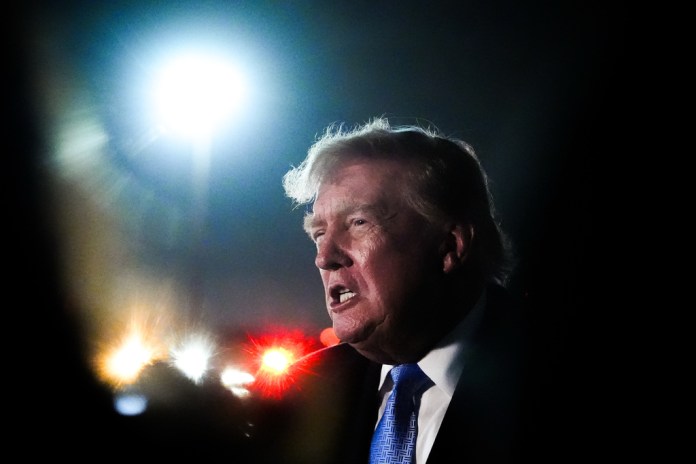
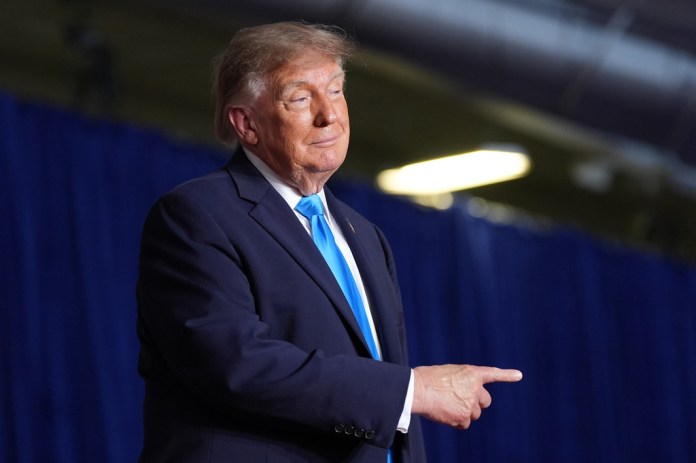
Trump has been sharply critical of Oman, an American ally, threatening to bomb the country if it “gets in the way.”
Oman’s foreign minister was to visit Iran on Tuesday for new talks.
In an attempt to break the impasse with Iran, U.S. Treasury Secretary Scott Bessent promised even stronger sanctions than those already in place would be announced Monday, including secondary sanctions on countries that continue to do business with Iran.
“President Trump decimated Iran’s economy to a point where the rial has never been weaker and inflation has rarely been higher,” Bessent wrote Sunday in an opinion piece in the Financial Times. “The regime’s final refuge now lies in the self-deception of fearful nations that still believe accommodating aggression can secure a durable peace.”
Already last week, the United Arab Emirates announced that it was suspending all trade with Iran. Trump had called the leader of the UAE, Sheikh Mohammed bin Zayed Al Nahyan, the day before the announcement.
The UAE has long been one of Iran’s largest trading partners and its biggest source of imports, as well as a major re-export and financial hub for Iranian businesses.
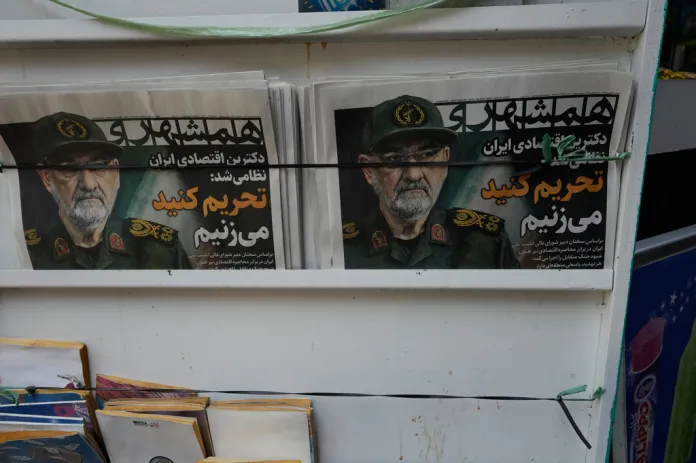
Following Bessent’s remarks, Mohsen Rezaei, the hard-line leader of Iran’s Supreme National Security Council, said in a post on X that any country’s support for new American economic measures would be seen as an “act of war.”
" Conservative News Daily does not always share or support the views and opinions expressed here; they are just those of the writer."
*As an Amazon Associate I earn from qualifying purchases