Iowa and Montana plot taking Paramount merger to Supreme Court
Iowa and Montana are urging the U.S. supreme Court to intervene in the dispute over Paramount Skydance’s $111 billion merger with warner Bros. Discovery, which is currently blocked by California and 11 other states.These states argue that the merger should not be delayed, claiming that federal law gives the Supreme Court exclusive jurisdiction over interstate disputes and that the lawsuit impacts their residents and economies. They seek to allow the merger to proceed, asserting it would enhance competition and denying concerns about monopolistic effects. California and its allies contend that the merger would diminish competition, controlling about 27% of relevant markets, although the DOJ and international regulators have cleared the deal. The states’ request aims to expedite the case,which has implications for jobs and economic stability. Tensions include California’s Attorney general canceling a settlement meeting with Paramount after disputes over confidentiality, amidst broader debates over regulation and the potential economic impact of the merger.
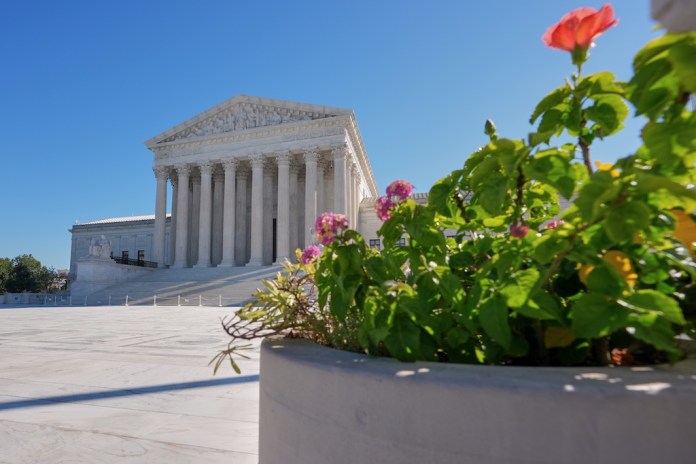
Iowa and Montana are planning to ask the Supreme Court to intervene in the fight over Paramount Skydance’s $111 billion acquisition of Warner Bros. Discovery, arguing California and 11 other states should not be allowed to block a transaction with nationwide consequences.
The Republican-led states asked the justices for permission to sue California, Arizona, Colorado, Connecticut, Massachusetts, Minnesota, Nevada, New Jersey, New Mexico, New York, Oregon, and Washington. Those states sued Paramount in July and obtained a temporary restraining order preventing the companies from completing the merger until next year.
Recommended Stories
The pair of states also asked the Supreme Court to expedite the case, require the plaintiff states to respond by Sept. 15, and consider the dispute at its Oct. 9 conference, according to filings obtained by the Washington Examiner.
“Twelve states have effectively vetoed a transaction that the other thirty-eight, and the United States, declined to challenge,” the two states said in their proposed complaint.
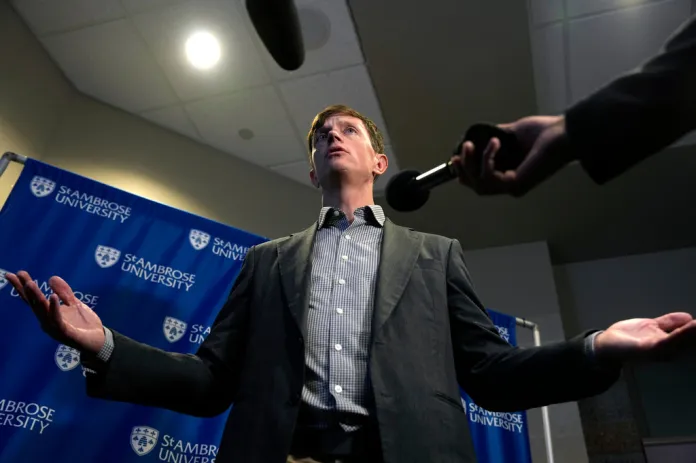
Iowa Attorney General Brenna Bird and Montana Attorney General Austin Knudsen, both Republicans, want the high court to declare that the merger does not violate federal antitrust law and prohibit the 12 states from continuing their case in the Northern District of California.
Their jurisdictional argument is that federal law gives the Supreme Court exclusive authority over disputes between states. Iowa and Montana contend that the California-led case impacts their residents and economies, transforming the merger litigation into an interstate controversy that a federal district court cannot resolve.
California and its allies argue that combining Paramount and Warner Bros. would reduce competition in theatrical film distribution and television programming. Their lawsuit alleges the merged company would control about 27% of the respective markets for distributing widely released theatrical films and licensing basic cable channels.
The Department of Justice closed its investigation in June without challenging the transaction, saying it was likely to increase competition. Regulators in the European Union, the United Kingdom, China, Canada, Mexico, and numerous other jurisdictions have also cleared the deal.
Bird defended the merger in a Tuesday op-ed for the Daily Wire, arguing that combining Paramount+ and HBO Max would create a stronger competitor to Netflix, Disney, and Amazon.
“California is once again trying to be the country’s regulator,” Bird wrote. “And once again California is defying common sense to raise costs around the country. That makes this a dispute between states, and the Constitution says those can only be heard in the U.S. Supreme Court.”
The state official concluded that the merger “helps our economy and our citizens” while pointing to the DOJ’s evaluation that the combined entity will increase competition in the theatrical market rather than reduce it. She denied there was any “monopoly problem.”
However, Bird neglected to mention the mass layoffs and job cuts that may arise from the $111 billion Hollywood merger if it closes. These concerns were laid out in a recent economic report from the Los Angeles County government.
Iowa and Montana say the delay is imposing costs that cannot be recovered later. Beginning in October, Paramount is contractually obligated to pay Warner Bros. shareholders roughly $7 million for each day the transaction remains incomplete. A trial in California is scheduled for March 2027.
“Mergers do not freeze well,” the states said in their motion to expedite. “The corporate officers, employees, suppliers, and contractors at Paramount and Warner Bros. are mired in uncertainty.”
California Attorney General Rob Bonta, a Democrat running for reelection this fall, is leading the antitrust lawsuit against the Paramount-Warner Bros. merger.
The Washington Examiner contacted Bonta’s office for comment on Iowa and Montana asking the Supreme Court to intervene.
Bonta called off Monday’s planned settlement meeting with Paramount representatives, accusing the company of leaking details regarding a private meeting to the press. He said the alleged leak demonstrated a “lack of good faith” on Paramount’s part.
The entertainment company denied leaking any information about settlement discussions and maintained it remains committed to acting in good faith as Bonta’s lawsuit proceeds in court. No follow-up settlement meeting has been scheduled yet, according to Bonta.
CALIFORNIA ATTORNEY GENERAL CANCELS SETTLEMENT MEETING WITH PARAMOUNT IN WBD MERGER
The Supreme Court action adds to the pressure facing officials in states challenging the merger. As the Washington Examiner first reported last week, Arizona state Senate President Warren Petersen, a Republican, called for a public hearing on the potential taxpayer exposure if a judge grants Paramount’s request that the plaintiff states post a $1.88 billion bond.
Petersen, who is running to replace Democratic Arizona Attorney General Kris Mayes, said Mayes should explain whether state money could be at risk and whether legislative approval would be required.
" Conservative News Daily does not always share or support the views and opinions expressed here; they are just those of the writer."
*As an Amazon Associate I earn from qualifying purchases