Supreme Court Affirms That Presidents Run The Executive Branch
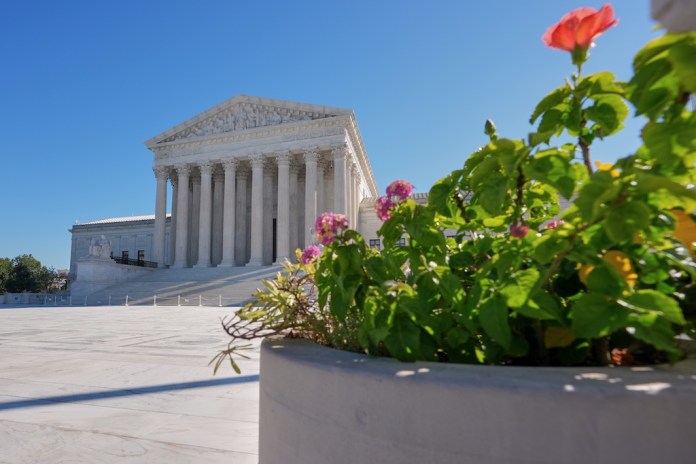
The U.S. Supreme Court has ruled 6-3 in favor of presidential authority to remove members of self-reliant agencies like the Federal Trade Commission (FTC), overturning a longstanding precedent from Humphrey’s Executor v. United States (1935). the case,known as Trump v. Slaughter, involved President Trump’s attempt to dismiss FTC member Rebecca Slaughter adn addressed whether statutes limiting presidential removal power violate the separation of powers.
chief Justice John Roberts, writing for the majority, emphasized that the FTC’s extensive powers-such as making and enforcing rules and collecting penalties-rightfully belong to commissioners who should be accountable to the president. He argued that restrictions on removals undermine presidential accountability and that such limits are unconstitutional, calling the constitutional need for the President to have trusted officers paramount.
This decision explicitly overturns the Humphrey’s precedent, which previously limited presidential removal of FTC commissioners due to the agency’s quasi-legislative and quasi-judicial functions. Roberts criticized this earlier ruling as lacking a solid rationale,asserting that independent agencies are not truly independent from presidential control,but rather insulated “from politics,” which can lead to increased congressional influence.
Justice Sonia Sotomayor dissented, warning that the ruling grants excessive power to the President, undermining the separation of powers and unfairly elevating presidential authority. She argued it disregards Constitutional principles and distorts American history.
Justice Neil Gorsuch, concurring, expressed concern about Congress delegating vast powers to agencies and questioned whether Congress would have restricted presidential control if it anticipated such authority. He called for a broader return of legislative and judicial powers to Congress and the courts, emphasizing that this ruling marks a step toward restoring constitutional balance.
The Court’s decision reverses the lower District Court ruling and sends the case back for further proceedings consistent with its majority opinion.
In a win for separation of powers, the U.S. Supreme Court affirmed on Monday that presidents can remove members of so-called “independent agencies” like the Federal Trade Commission (FTC). The huge 6-3 decision along ideological lines overturns longstanding precedent first established in Humphrey’s Executor v. United States (1935).
Known as Trump v. Slaughter, the case centers around a challenge to Trump’s removal of Democrat Rebecca Slaughter from the FTC last year. While the high court initially granted the Trump administration’s request to temporarily pause a lower court blockade on Slaughter’s removal, it also agreed to take up and address whether existing statutory restrictions on the president’s ability to remove members of so-called “independent agencies” like the FTC violate existing separation of powers.
Writing for the majority, Chief Justice John Roberts noted how the FTC “has accumulated vast rulemaking, enforcement, and adjudicatory powers under more than 80 statutes” since its creation in 1914, and how it creates rules “that carry the force of law … [and] enforces those rules against private parties, collecting civil penalties in the billions of dollars.” He further underscored how such expansive powers belong to the FTC’s appointed commissioners, whose removal is limited by those enacted by Congress. These limits, he said, are unconstitutional.
“To ‘discharg[e] the duties of his trust,’ the President must have the assistance of officers he can trust. … Although it is up to the Senate to decide whether to confirm those with whom the President would prefer to work, neither Congress nor the courts may saddle him with those with whom he cannot work,” Roberts wrote. “Subordinates who exercise the President’s power are subject to removal by him. Then, and only then, can they remain accountable to the President, and the President to the people.”
[READ:[READ:Vital SCOTUS Case Tests The President’s Absolute Authority To Remove Executive Branch Officials]
The chief justice went on to affirm that the court’s Slaughter decision overturns the precedent first established in Humphrey’s Executor, which dealt with President Franklin Roosevelt’s removal of William Humphrey, a Hoover appointee, from the FTC for partisan reasons. A subsequent challenge to Roosevelt’s actions under the FTC Act — which placed limits on a president’s removal of FTC commissioners — resulted in the Supreme Court unanimously holding Humphrey’s removal to be unlawful under the FTC Act. The court said the FTC was different than traditional executive agencies because Congress created it to perform “quasi-legislative” and “quasi-judicial” functions.
Roberts described the high court’s Humphrey’s decision as “a result in search of a rationale.” He noted that “every factor — the ‘quality’ of the decision’s reasoning, its ‘consistency’ with our other cases, the ‘workability’ of its rule, and the interests of those who have ‘reli[ed]’ on it … — counsels in favor of letting Humphrey’s go.”
“Slaughter argues that Congress has relied upon Humphrey’s to create agencies that are ‘insulated from presidential control.’ … That is precisely the problem. Despite what Humphrey’s may say, independent agencies are not ‘independent’ in the sense that they are free of the President and thus responsive ‘only to the people of the United States.’ …. Independent agencies are insulated ‘from the President,’ ‘not from politics,’” Roberts wrote. “Placing the power to administer laws in officers who enjoy ‘freedom from Presidential oversight (and protection),’ in other words, does not deliver us to a promised land of technocratic governance — it often results only in an ‘increased subservience to congressional direction.’”
Writing on behalf of her fellow dissenting liberal justices, Justice Sonia Sotomayor accused the majority of giving “the President a power unknown even to the English Crown against which the Founders revolted, elevating him above his once coequal branches by transforming a duty to take care that the laws be faithfully executed into a license to act in defiance of those very laws.” She further argued the court’s ruling “upends rather than upholds the separation of powers.”
“In granting the President this unbridled authority, the Court upends its precedent, misconstrues our history, and sheds any pretense of judicial modesty. I respectfully dissent,” Sotomayor wrote.
While joining the majority opinion in full, Justice Neil Gorsuch authored a concurrence in which he expressed concern about Congress delegating so much of its authority to the executive branch. While agreeing with the court’s decision and a president’s oversight of “independent agencies,” the Trump appointee questioned whether Congress would “have delegated so much power, including legislative and judicial power, to independent agencies had it known that the President would come to control them,” and how federal lawmakers will “respond now — if realistically [they] can.”
“The Court today takes a notable step back toward the Constitution,” Gorsuch wrote. “At the same time, it would be a grave mistake to think that step is enough on its own. The fact remains that Congress has endowed formerly independent agencies not just with executive authority, but with enormous legislative and judicial powers as well. And now the President enjoys control over all those powers too. From here, the only sure path is to finish the journey we start today and restore legislative and judicial powers to where they belong: in Congress and the courts. We have tolerated adventurous theories long enough. It is time to return, all the way, to the Constitution.”
The Supreme Court’s ruling reverses the D.C. District Court’s initial decision and remands the case back to the lower judiciary for further proceedings consistent with its majority opinion.
Shawn Fleetwood is a staff writer for The Federalist and a graduate of the University of Mary Washington. He is a co-recipient of the 2025 Dao Prize for Excellence in Investigative Journalism. His work has been featured in numerous outlets, including RealClearPolitics and RealClearHealth. Follow him on Twitter @ShawnFleetwood
" Conservative News Daily does not always share or support the views and opinions expressed here; they are just those of the writer."
*As an Amazon Associate I earn from qualifying purchases