Fraud Is Costing Taxpayers Up To Half A Trillion Dollars A Year
The piece examines how fraud in government-funded services remains a massive, multi-trillion-dollar challenge adn how different branches of government are responding. It contrasts a small victory-the DOJ’s fraud division thwarting about $340 million in benefit schemes in one week-with the much larger,annual loss cited by the GAO: an estimated $233 billion to $521 billion lost to fraud between fiscal years 2018 and 2022. The article notes that $340 million represents only a tiny fraction (roughly 0.06%) of the problem, highlighting the scale gap between headlines and the overall issue. It than surveys political moves: Republicans have introduced several “fraud” bills, such as H.R. 8028 (the SNAP Fraud Reporting Act of 2026) and H.R. 8312, but the bills appear unlikely to enact, with GovTrack rating H.R. 8312 at only a 3% chance. The private coordination group NAAG is shown as not prioritizing fraud in its agenda, and The Federalist reports not receiving a response to questions about anti-fraud efforts.
On the executive side, the article describes a March 16 executive order establishing a National Task Force to Eliminate Fraud, led by Scott Brady, which has led to actions such as suspending hundreds of hospices. It also highlights an April 7 DOJ memorandum creating a National Fraud Enforcement Division and directing a policy review to align with this restructuring. Together, these moves show a trend toward expanding anti-fraud staffing and policy reform, even as the author stresses the need for obvious, quantitative tracking of progress-investigators, prosecutors, arrests, and dollars recovered-to determine whether these efforts actually curb fraud. The piece ends with a call for ongoing accountability and data from federal and state programs administering federally funded initiatives.
Consider two numbers, side by side, and keep them in mind as you read news stories about fraud in government-funded services.
First number, from a news headline last week: “New DOJ fraud division thwarted $340M in benefit schemes during first week.” That’s M for million.
Second number, released by the Government Accounting Office during the same week: “In 2024, we estimated that the federal government loses between $233 billion and $521 billion annually to fraud, based on data for fiscal years 2018 through 2022.”
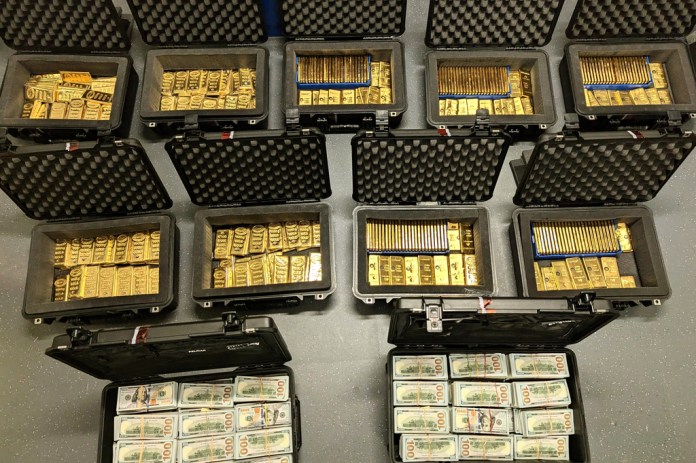
So a quarter to half a trillion dollars a year in fraud is being pushed back in increments of millions. $521 billion is 521,000 millions, so $340 million is about 0.06 percent of the problem.
The Trump administration has taken a series of significant steps against fraud, but so far they’re mostly going it alone.
Congressional Republicans, reacting to the high-profile scandal that followed Nick Shirley’s video series on fraud in daycare, hospices, and medical transportation firms, have introduced a series of bills with “fraud” in the title, but they don’t add up to much.
Among the many anti-fraud bills introduced in recent months, H.R. 8028, the SNAP Fraud Reporting Act of 2026, would require that “each State shall submit to the Secretary of Agriculture data on fraud that occurred in the supplemental nutrition assistance program for the then most recently concluded 5 fiscal years available.” Rep. David Taylor, an Ohio Republican, introduced the bill.
Rep. Pete Sessions, a Texas Republican, introduced another bill, H.R. 8312. It “requires the Treasury Secretary to make legislative recommendations to leverage and reinforce existing government-wide anti-fraud resources in any future emergency relief or recovery supplemental appropriations packages to avoid duplicative fraud prevention programs in the future.”
And so on, but they’re all about like that: We require that a report be provided to us. The website GovTrack gives H.R. 8312 a 3 percent chance of being enacted. Sessions’ office hasn’t responded to questions from The Federalist.
Similarly, the prevalence of fraud in programs that are funded by the federal government but administered by states will require an intensified effort by state law enforcement. But the National Association of Attorneys General (NAAG), a private organization that helps to coordinate the efforts of every state attorney general through training, research, and collaborative discussion, doesn’t include fraud on its long list of issues that are “of interest to attorneys general and their staff.” The Federalist asked NAAG about the importance of anti-fraud efforts to its members, but we haven’t received a response.
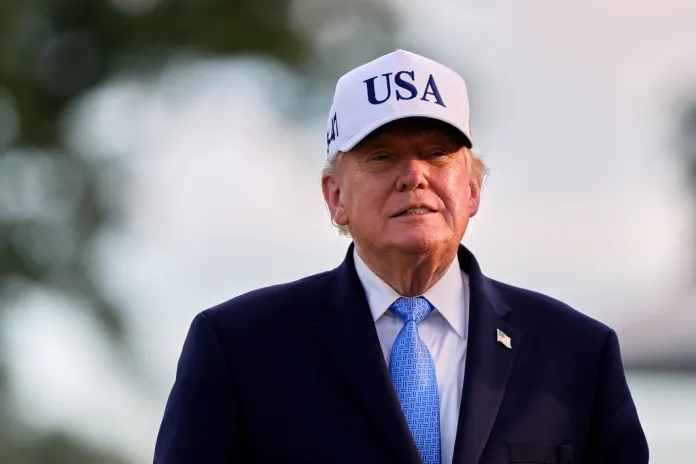
As is so often the case, that just leaves the Trump administration to confront a crisis. Trump’s March 16 executive order establishes a national “Task Force to Eliminate Fraud,” and that prevention-focused effort is making at least some progress. The Trump admin recently chose former federal prosecutor Scott Brady to lead the task force, and the work of the task force has led to the recent suspension of hundreds of allegedly (but quite plausibly) fake hospices.
RFK Jr: We’ve already shut down 500 hospices in Los Angeles, and incidentally we haven’t had one call, complaining because clearly these were fraudulent. pic.twitter.com/ztP1LWDunz
— Defiant L’s (@DefiantLs) April 17, 2026
If you want to watch the executive branch give birth to a new administrative priority, take a moment to read the April 7 Department of Justice memorandum that describes the establishment of a new National Fraud Enforcement Division, now under the leadership of the recently confirmed Assistant Attorney General Colin McDonald. That memo is full of directives like this:
Within 45 days of the realignment determination, the Office of Legal Policy shall review the Justice Manual, relevant Department guidance, regulations, and memoranda to determine whether updates or edits are required or prudent due to the creation of the National Fraud Enforcement Division.
So far, then, against up to half a trillion dollars a year in fraud, the federal government is adding anti-fraud staff, preparing a plan to ramp up prevention and prosecution, and rewriting some policy. The effects of that nascent effort will have to be tracked carefully, as the bonfire of taxpayer money continues.
The Federalist is asking federal offices, and state offices that administer federally funded programs, to quantify their anti-fraud efforts: number of investigators, number of prosecutors, number of arrests, dollar figures recovered from fraud cases, and so on. The answers are slow in coming, but the questions will continue. They have to.
Chris Bray is a senior correspondent at The Federalist and a former infantry sergeant in the U.S. Army. He has a history PhD from the University of California Los Angeles, not that it did him any good. He also posts on Substack, at “Tell Me How This Ends,” here.
" Conservative News Daily does not always share or support the views and opinions expressed here; they are just those of the writer."
*As an Amazon Associate I earn from qualifying purchases