Exclusive: DOJ, South Carolina Reach Deal On UOCAVA Voting
The U.S. Department of Justice has reached an agreement with South Carolina to ensure that overseas and military voters receive absentee ballots ahead of a forthcoming special election triggered by the death of Senator Lindsey Graham.Due to the state’s expedited election schedule, the agreement modifies the usual 45-day ballot request period mandated by the Uniformed and overseas citizens absentee Voting Act (UOCAVA), allowing South Carolina to hold the primary on August 11 with a potential runoff later in August. This cooperation aims to protect voters’ rights despite the shortened timeline. The special election features candidates such as graham’s sister, Darlene Graham, and other Republican contenders, with candidate filing closing shortly before the election. The agreement includes provisions for instant runoff voting and ensures communication with overseas voters to facilitate ballot transmission. Experts highlight ongoing concerns about voting security under UOCAVA, especially regarding eligibility and identification for overseas voters, with calls for legislative reforms to strengthen ballot protections and prevent potential misuse by non-residents.
The U.S. Department of Justice has come to terms with the state of South Carolina to make sure uniformed and overseas voters receive absentee ballots in advance of a rapidly approaching special election following the recent death of incumbent Republican Sen. Lindsey Graham, according to a DOJ memo exclusively obtained by The Federalist.
DOJ officials have signed the Memorandum of Agreement with Conway Belangia, executive director of the South Carolina State Election Commission, and the agreement is expected to bring the state into compliance with the Uniformed and Overseas Citizens Absentee Voting Act. UOCAVA stipulates election officials must send “validly-requested absentee ballots to UOCAVA voters no later than 45 days before an election” — including a special election — for a federal officeholder if the request is received at least 45 days before Election Day.
But South Carolina election administrators don’t have the luxury of that kind of time.
Crowded Field
South Carolina’s special primary election must occur on Aug. 11, in accordance with state law. A runoff primary election, if necessary, is to take place two weeks later.
Graham, first elected to the Senate in 2002, died suddenly on July 11 after suffering a cardiac incident. He was 71.
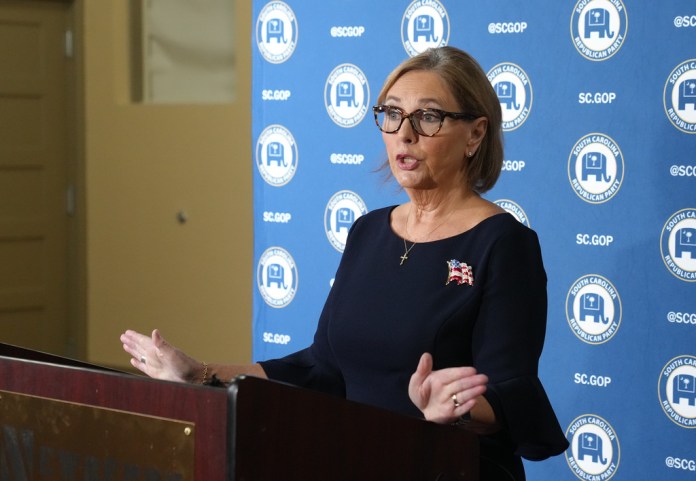
South Carolina Gov. Henry McMaster, a Republican, quickly appointed the Republican senator’s sister, Darlene Graham, to serve out the remaining months of her late brother’s term. She has the endorsement of President Donald Trump. She recently announced that she will campaign for a full six-year term in November’s election. The senator was in the middle of his reelection campaign when he died.
Darlene Graham is not the only candidate running in the Republican primary. South Carolina Rep. Russell Fry, a Trump ally, announced this week that he was throwing his hat in the ring. Rep. Ralph Norman has signed on, as well as businessman Mark Lynch, who lost to Sen. Lindsey Graham in this year’s primary.
“A number of other Republicans are mulling runs as well, including former Gov. Mark Sanford and Lt. Gov Pam Evette, who lost her own bid for governor a few weeks ago in spite of Trump’s endorsement,” Politico reported.
‘To Safeguard Voting Rights’
In South Carolina, candidates seeking to fill a Senate seat left vacant by the death of a senator must file a statement of intention of candidacy, a filing period clock that starts the “second Tuesday after the death,” according to the memo. Candidate qualifying closes on July 28, next Tuesday.
“The special primary election must then occur ‘on the second Tuesday immediately following the close of the filing period,’” the agreement notes.
It’s all kind of morbid, but it is the law.
So the expedited schedule forces election officials to hold the special primary election and runoff well before UOCAVA’ s 45-day requirement in which uniform and overseas citizens need to request their absentee ballots.
The agreement between the Department of Justice and the State Election Commission allows for the shorter timeline and avoids the “burden and expense of litigation,” the memo states.
“As consideration for this Agreement, the United States has agreed to forgo litigation under UOCAVA as to the August 11, 2026, Federal special primary election and any August 25, 2026, Federal special runoff election subject to compliance with the terms of this Agreement,” the document states.
Under the terms, “each ballot also includes instant runoff voting,” a DOJ press release noted, so UOCAVA voters will be able to choose a candidate should a runoff election be needed on Aug. 25. Election officials will have to contact UOCAVA voters without standing requests for ballots to inform them of the special election deadlines “and offer to send ballots by electronic mail if they would like to participate.”
Assistant Attorney General Harmeet K. Dhillon of the Justice Department’s Civil Rights Division said the memorandum of agreement reflects the DOJ’s commitment “to protecting the right to vote for members of our armed forces deployed around the world, their families, and U.S. citizens overseas, and ensuring that these voters are afforded a meaningful opportunity to vote in all federal elections.”
“South Carolina officials worked with the department immediately to find a resolution to safeguard voting rights for the state’s military and overseas voters in the upcoming primary election and potential runoff,” she said in a press release.
Securing UOCAVA
The election integrity challenge is to ensure that only eligible voters receive ballots under UOCAVA. The law originally was designed to serve only active military and federal government employees residing outside of the United States, but today mostly nonmilitary citizens use it, The Federalist has reported.
Election integrity groups such as the Michigan Fair Elections Institute and the Election Integrity Network have called on lawmakers to reform the law to include key ballot protections. Congress, they say, should require civilians overseas to send photocopies of their passports or other acceptable identification with their hand-signed ballots, and the application reform should require citizenship verification.
As The Federalist has reported, several states allow civilians residing overseas to vote in elections in a state in which they have never lived — with some states allegedly doing so in violation of their state constitutions. The Republican National Committee has filed multiple lawsuits over so-called “never residents” allowed to vote in federal elections.
Matt Kittle is a senior elections correspondent for The Federalist. An award-winning investigative reporter and 30-year veteran of print, broadcast, and online journalism, Kittle previously served as the executive director of Empower Wisconsin.
" Conservative News Daily does not always share or support the views and opinions expressed here; they are just those of the writer."
*As an Amazon Associate I earn from qualifying purchases