Environmental groups urge high court to keep costly climate change lawsuits alive
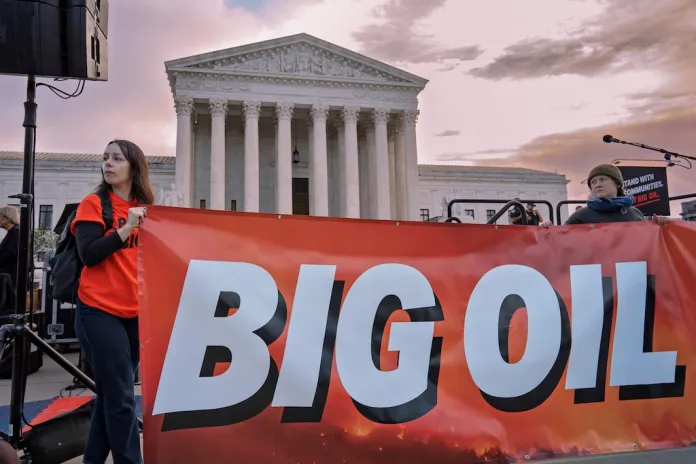
The Supreme Court will hear a significant case this fall that could perhaps block future lawsuits against oil companies over their alleged contribution to global climate change. Environmental groups and Democratic politicians are advocating for the lawsuits to continue,arguing that they highlight the environmental damages caused by fossil fuel companies. The case,Suncor Energy v. County Commissioners of Boulder County, is set to begin its oral arguments in October and could have broad implications for similar climate litigation conducted by activists and jurisdictions aligned wiht climate action.
Supporters of Boulder County’s case, including the Natural Resources Defense Council and legal advocates like Our Children’s Trust, argue that the science behind climate change is clear and that the lawsuits serve an essential role in holding polluters accountable. They contend that federal law,specifically the Clean Air act,does not preclude such claims and that state courts should be trusted to manage these disputes.
Conversely, opponents such as the Justice Department, certain oil companies, and conservative groups argue that these lawsuits are barred by federal law and should be dismissed. A coalition of former EPA officials also supports Boulder County, emphasizing that the Clean Air Act encourages states to implement their own regulations and that Boulder’s claims do not conflict with federal objectives.
This case marks the beginning of the Supreme Court’s next term, which will feature other high-profile issues including the constitutionality of assault weapons bans and restrictions on Catholic preschools in Colorado. A ruling is expected in the following months, potentially shaping the federal government’s and states’ roles in climate and environmental regulation.
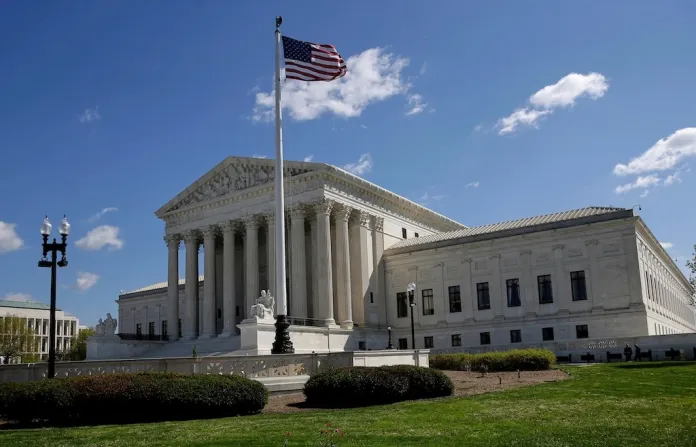
The Supreme Court will hear a major case this fall that could shut down costly lawsuits against oil companies over their alleged role in global climate change, and both environmental groups and Democratic politicians have urged the justices to keep those lawsuits alive.
The high court will hear arguments in Suncor Energy v. County Commissioners of Boulder County to begin its term in October, with the case set to have sweeping ramifications for similar lawsuits that climate activists and Democratic-led jurisdictions have attempted to bring against oil companies, either allowing them to proceed or shutting them down as barred by federal law. The Justice Department, oil companies, and various conservative groups have asked the high court to shut down these lawsuits, while various left-wing groups have urged the Supreme Court to consider the environmental harms at the center of the lawsuits and allow them to proceed.
Recommended Stories
The Natural Resources Defense Council, an environmental group, argued in its brief in support of Boulder County that the argument advanced by the oil companies, that individualized contributions to global climate change cannot be identified and quantified, is untrue. The NRDC also advises that the court allow the case to proceed, so that Boulder County’s merits arguments can be presented.
“The Court should disregard Petitioners’ mischaracterization of the science and affirm the Colorado Supreme Court’s decision if it does not dismiss for lack of jurisdiction,” the NRDC brief said. “Boulder should have an opportunity to proceed to the merits of its case and show that its harms are attributable to Petitioners’ greenhouse gas emissions.”
Our Children’s Trust, a left-wing law group that specializes in climate litigation, filed a brief to the high court emphasizing the harm that wildfires and other natural disasters, which they claim are fueled by global climate change, can have on children globally.
“Youth Amici have experienced firsthand the devastating toll that wildfires and smoke take on their community. They know climate change makes such fires more likely and more destructive. Beyond wildfires, climate change is also causing dangerous
heat, extreme precipitation events, drought, low snowpack, and other climate instability throughout Boulder. Heat and poor air quality take a toll on Youth Amici’s bodies, forcing them to miss school, work, or cancel plans with family and friends,” the group said in their brief.
A coalition of Democrat-led states, led by Colorado and California, urged the Supreme Court to side with Boulder County to uphold that state climate laws are not preempted by federal law, and therefore the lawsuit may go forward.
“Concerns regarding the merits of Boulder’s suit are not a valid basis for preempting state common law tort claims. State common law provides not only remedies for injured parties, but also protections for alleged tortfeasors, such as proximate cause, allocation of fault, foreseeability, and others. State courts should be trusted to faithfully apply the law, and any suggestion that merits concerns justify preempting state common law claims should be rejected,” the brief said.
“If Boulder’s claims are meritless, state courts can dismiss them on that basis. Preemption is not the answer,” the brief reads.
Boulder County has also received support from a coalition of former Environmental Protection Agency administrators and other former EPA officials, who argued that the Clean Air Act should not foreclose any climate lawsuits in state courts.
“The central purpose of the Act is to reduce air pollution to protect public health and welfare. Far from vesting the EPA with exclusive federal control over all emissions, the Act expressly provides for a significant state role in devising additional mechanisms for helping to achieve that broad public policy goal,” the brief said.
“Indeed, every major program under the Act is structured to permit the EPA to set minimum emission standards or controls, while in most instances authorizing the states to regulate those same emissions more stringently,” the brief continued. Boulder’s claims, which principally target Suncor’s allegedly deceptive and tortious sales conduct, pose no obstacle to the statutory goals and structure.”
SUPREME COURT TO OPEN NEXT TERM WITH MAJOR CLIMATE CHANGE CASE
The Supreme Court will hear oral arguments in the Suncor case on Oct. 5 at 10 a.m., with a ruling expected by the high court in the succeeding months.
The Suncor case will be the first oral arguments of the Supreme Court’s next term, which will include several high-profile cases, including the constitutionality of state “assault weapons” bans and Colorado barring Catholic preschools from its universal preschool program.
" Conservative News Daily does not always share or support the views and opinions expressed here; they are just those of the writer."
*As an Amazon Associate I earn from qualifying purchases