DOJ targets DC firearm suppressor ban in amended complaint
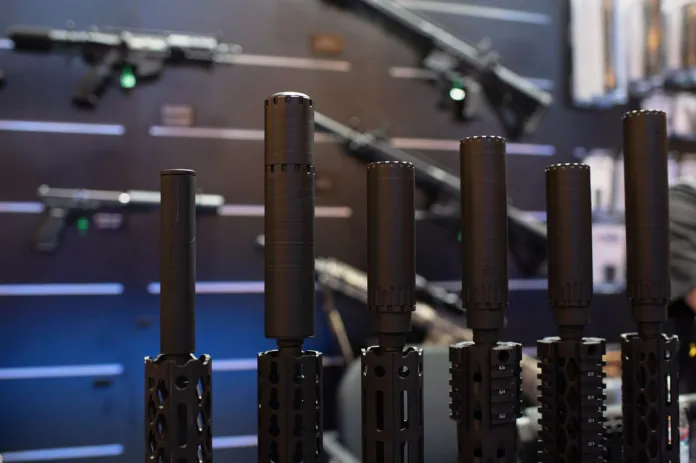
The U.S. Department of Justice, via an amended complaint filed by Assistant Attorney General Harmeet Dhillon, is challenging Washington, D.C.’s laws that ban firearm suppressors. DOJ argues the District’s categorical ban goes further than the federal National Firearms act and violates the Second amendment, noting suppressors are already regulated federally and are commonly used by law-abiding people.
The complaint also contends that dismissing suppressors as a public-safety threat is misleading, citing figures that millions of suppressors are registered and that ATF data shows suppressor-related prosecutions are relatively rare. It argues that blanket bans on “an arm in common use” are constitutional “policy choices” that cannot be categorically barred under past firearm-regulation traditions, using the Supreme Court’s *Bruen* two-step framework.
This approach mirrors DOJ’s earlier lawsuits against gun restrictions in other jurisdictions, including challenges to Denver’s “assault weapons” ban and litigation involving bans on high-capacity ammunition magazines in Washington, D.C.’s region.
The Department of Justice is putting the firearm suppressor ban in Washington, D.C., in its crosshairs, arguing the local regulation violates the Second Amendment.
In an amended complaint filed Thursday, Assistant Attorney General for Civil Rights Harmeet Dhillon said suppressors are already regulated under the National Firearms Act. Therefore, the district government is going beyond the 1934 federal law by categorically banning silencers.
Recommended Stories
“Categorically banning an arm is different in kind and not merely in degree from regulating it,” the complaint reads. “The District may enact a wide variety of firearm regulations, but the Second Amendment ‘takes certain policy choices’—including a categorical ban of an arm in common use—’off the table.’”
Dhillon made the case that the ban doesn’t hold up because suppressors are commonly used by people who follow the law. She also disputed the “myth” that criminals often use suppressors.
“According to the American Suppressor Association, as [of] April 2026, there are approximately six million registered suppressors in the United States,” the complaint states. “Yet, according to acting former ATF Deputy Director Ronald B. Turk, they are rarely used in criminal shootings and should not be viewed as a threat to public safety. Indeed, in 2017, the ATF reported that it had recommended prosecutions in only 44 suppressor-related cases on average per year.”
The original version of this lawsuit targeted the district’s AR-15 ban, which the DOJ contends is also unconstitutional because law-abiding people commonly use AR-15-style rifles. The department cited a recent comment from Supreme Court Justice Brett Kavanaugh to highlight this point.
“Given that millions of Americans own AR–15s and that a significant majority of the States allow possession of those rifles, petitioners have a strong argument that AR–15s are in ‘common use’ by law-abiding citizens and therefore are protected by the Second Amendment,” Kavanaugh said regarding a case about a Maryland law banning AR-15s.
Separately, Supreme Court Justice Elena Kagan noted AR-15 style weapons are “the most popular rifle in the country.”
The DOJ’s Civil Rights Division applied the Bruen framework, a two-step legal test to evaluate Second Amendment challenges, to the district’s AR-15 and suppressor bans.
The first step says that if the “plain text” of the Second Amendment covers an individual’s conduct, then that conduct is “presumptively” protected by the Constitution. The second step puts the burden on the government to justify the regulation in question by “demonstrating that it is consistent with the Nation’s historical tradition of firearm regulation.”
The DOJ argues the district’s “ban on a weapon in common use” doesn’t have precedent in U.S. history.
DOJ SUES DENVER OVER SEMIAUTOMATIC RIFLE BAN AS MAYOR REMAINS DEFIANT
Earlier this month, the DOJ sued Denver over its longtime ban on “assault weapons.” The federal government’s argument was very similar to the amended complaint concerning the district’s firearm laws.
Regarding Denver, the DOJ followed up with a separate lawsuit against the Colorado capital’s ban on high-capacity ammunition magazines holding more than 15 rounds.
" Conservative News Daily does not always share or support the views and opinions expressed here; they are just those of the writer."
*As an Amazon Associate I earn from qualifying purchases