Citizenship Has Become A Financial Product
The article discusses how birth tourism in the United States has transformed citizenship into a commodified product, primarily valued for the ability too access social benefits and economic support. It highlights how foreign visitors, such as wealthy Russians or others, come to U.S.clinics or cities to give birth, effectively purchasing citizenship for their children, which they see as a way to secure a lifelong right to live, work, and collect benefits in the U.S. Citizenship is portrayed not as a matter of loyalty or identity but as a financial asset, with the government providing future social security, tuition, and other benefits. The piece notes that this market is dynamic, with businesses thriving on repeat customers and elaborate arrangements like luxurious birth hotels. The author emphasizes that this transactional view diminishes the meaning of citizenship, framing it as a cheap, low-entry program designed for economic gain rather than allegiance or shared values. The judicial discussions and policy debates are shown to overlook the economic incentives driving birth tourism, which undermine the traditional concept of citizenship as a societal and political bond. Ultimately, the piece critiques how this financialized approach reduces citizenship to a benefit-based commodity, stripping away its traditional meaning of belonging and civic participation.
The United States of America, now with 20 percent more benefits than the American Express Platinum Card®.
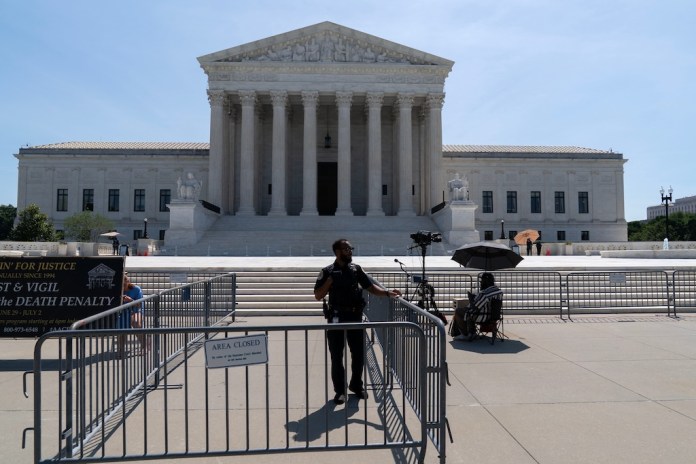
Legal systems talk about legal doctrine, and the Supreme Court’s opinions in the birthplace citizenship case decided this week kicked off with a discussion of 17th-century English precedent. The discussion between justices is anchored in centuries of history and theory, but it’s mostly not anchored in a more immediate question: When a pregnant “birth tourist” in another country pulls up the website for an American obstetrics clinic that specializes in delivering babies for foreign visitors, what does she think she’s trying to get? What is U.S. citizenship to parents who use a border crossing to obtain it for their children?
There are many businesses clustered around this industry, and there have been many more. They die and come back under new names as they get shut down. Suburban cities around Los Angeles have assigned police detectives and code enforcement officers to their birth hotel problem, because people buy houses and cram them full of beds for pregnant foreign visitors. Citizenship is a product, marketed like consumer goods.
Or, more simply, citizenship has become a consumer good.
In Florida, the business called Miami Mama catered to wealthy Russians. As a 2018 NBC News story explained, a U.S. passport is a status symbol in Russia, the beaches and hotels are nice while mom waits for the baby to drop, and the newborn “gets a lifelong right to live and work and collect benefits in the U.S.”
So what is citizenship? It’s a condition in which you can collect benefits. It means the government has to give you money. Citizenship is a future Social Security check.
Proving the point, a 2025 policy paper from the Migration Policy Institute (MPI), arguing against the repeal of birthright citizenship, warned that repeal would have “profound social and economic impacts.” People losing citizenship, the paper warned, would be “unable to access economic supports in times of need.” Oh no.
Among the other harmful impacts, MPI warned that people losing citizenship would lose “in-state tuition or financial aid for higher education in many states.” The discussion of citizenship is a discussion about cash value, and who has to pay the tuition at UCLA.
A 2020 fact sheet from the Center for Immigration Studies also discussed the example of birth tourists “who come to the United States to give birth and receive taxpayer-funded public assistance to cover the associated costs of their births,” so the economic benefits sometimes appear at the starting line.
So citizenship is collecting benefits, accessing economic supports, receiving financial aid. It’s not allegiance or affinity. It’s not loyalty. It’s not admiration for your supposed countrymen, or a yearning for Lockean pluralism, or a commitment to constitutional governance, or a willingness to support the American social and political order, or participation in a shared culture. Citizenship is a dollar value and a set of programs.
And about that set of economic supports: A 2022 Senate committee staff report on birth tourism presented evidence that birth tourists tend to be repeat customers, as “many birth tourists traveled to the United States several times to secure citizenship for their children.” The same report also discussed the chartered yacht available for pregnant customers of Miami Mama as they waited to give birth, if you’d like to see pictures of the boat. Yes, it had leather upholstery.
The justices weren’t entirely blind to the economic meaning of a debate about citizenship, and Associate Justice Samuel Alito made the problem explicit on the final page of his long dissent: “The Court’s interpretation preserves a powerful incentive to enter or remain in this country illegally. Immigrants naturally prefer affluent countries where economic opportunities are available. Other than Canada, the United States will be the only affluent nation where birth alone is enough to establish citizenship.” Of course the discussion was about economic incentives, and of course the court mostly didn’t notice that point.
The creation of a transactional “citizenship” diminishes citizenship. In the face of the great financialization of everything, we’ve turned a nation into a national cafeteria, bizarrely marketing a superior welfare state as a benefit of a kind of low-barrier-to-entry membership program. Get to El Paso by the middle of the eighth month, and your child wins a lifetime of free prizes.
Call that what you want, but it isn’t being a citizen.
Chris Bray is a senior correspondent at The Federalist and a former infantry sergeant in the U.S. Army. He has a history PhD from the University of California Los Angeles, not that it did him any good. He also posts on Substack, at “Tell Me How This Ends,” here.
" Conservative News Daily does not always share or support the views and opinions expressed here; they are just those of the writer."
*As an Amazon Associate I earn from qualifying purchases